American Kestrel (Falco sparverius)
- Size: 8.7–12.2 in (22–31 cm)
- Wingspan: 20–24 in (51–61 cm)
- Weight: 2.8–5.8 oz (80–165 g)
- Color: Males: blue-gray wings; Females: reddish-brown
- Call: Repeated “klee-klee-klee”
- Lifespan: 5–10 years (wild)
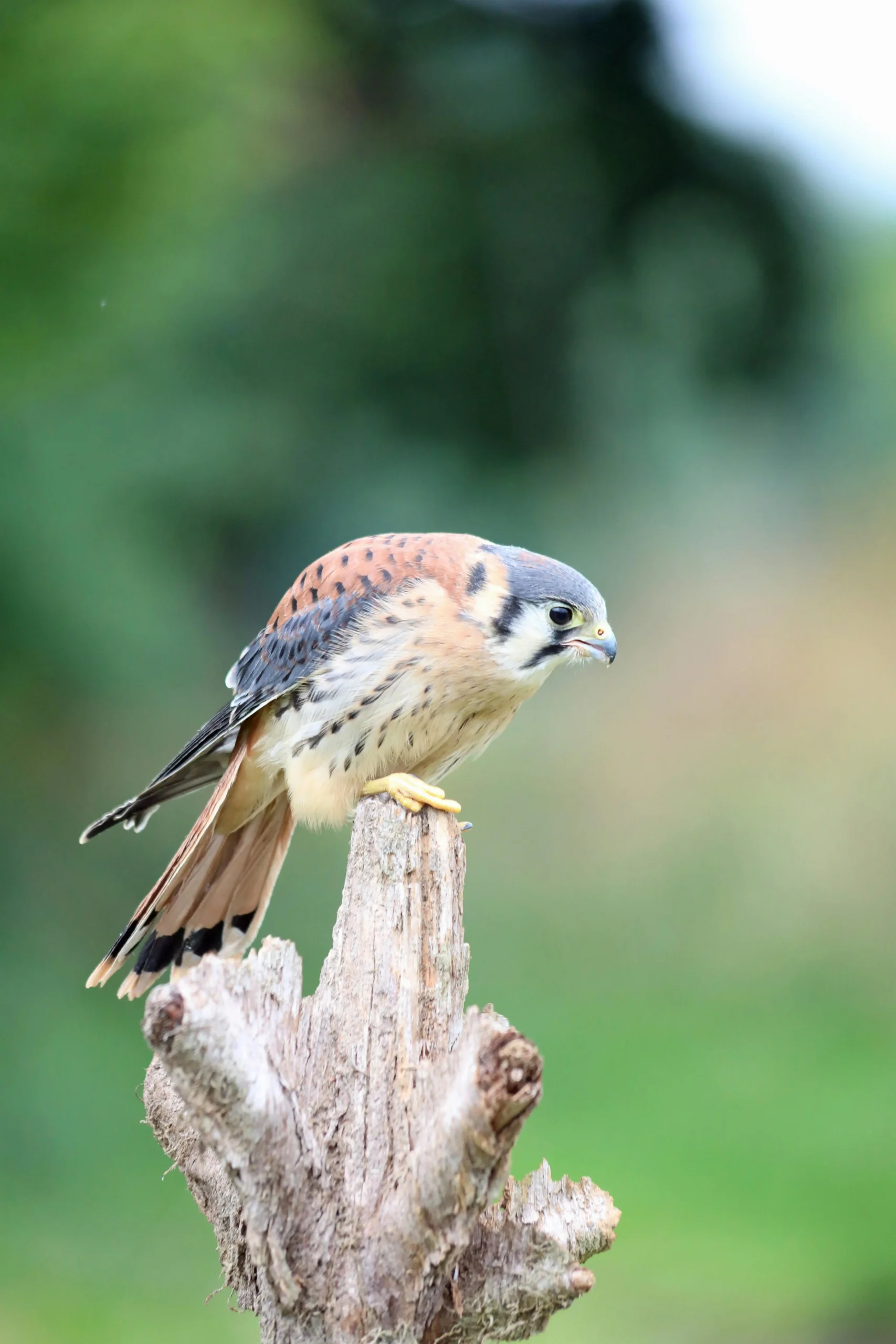
The American Kestrel is North America’s smallest and most colorful falcon. Known for its hovering flight and sharp hunting skills, this agile predator thrives in open fields, grasslands, farmland, and even urban areas.
Identification
This compact falcon shows a mix of rufous, blue-gray, and black markings. Males have blue wings and a rust-colored back, while females are barred and mostly reddish-brown. Both have two distinct vertical black facial stripes.
Range & Habitat
Found across almost all of North America:
- Open fields & meadows
- Grasslands & prairies
- Roadside wires & fence posts
- Suburban parks & farmland
They perch visibly while hunting, making them easy to spot.
Diet
An opportunistic predator with a varied diet:
- Grasshoppers & beetles
- Mice & voles
- Small birds
- Lizards & small snakes
Nesting
Nest in cavities—natural holes, tree snags, cliffs, and buildings.
- Clutch: 4–5 eggs
- Incubation: ~30 days
- Fledge: 28–31 days
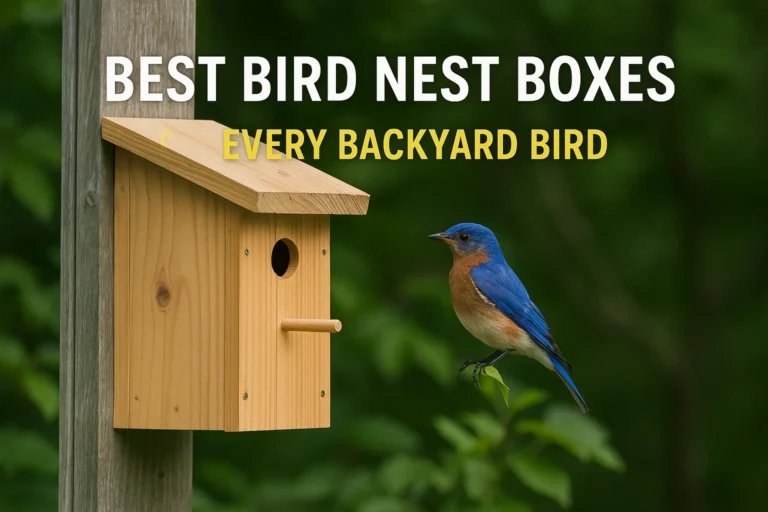
Kestrels readily use nest boxes in open habitats.
Behavior
They are famous for “hover hunting,” staying in place mid-air while scanning for prey. Often seen perched on wires or posts, wagging their tails for balance.
Conservation Status
Least Concern overall, but declining in some regions due to habitat loss and fewer nesting cavities.
FAQ
Why do American Kestrels hover?
Hovering helps them stay in one spot while locating prey in tall grass.
Are American Kestrels endangered?
No, but they face declines in some urbanized and agricultural regions.
Do kestrels use nest boxes?
Yes — nest boxes are an effective conservation tool for kestrels.
What is their main prey?
Grasshoppers, small rodents, and small birds.