
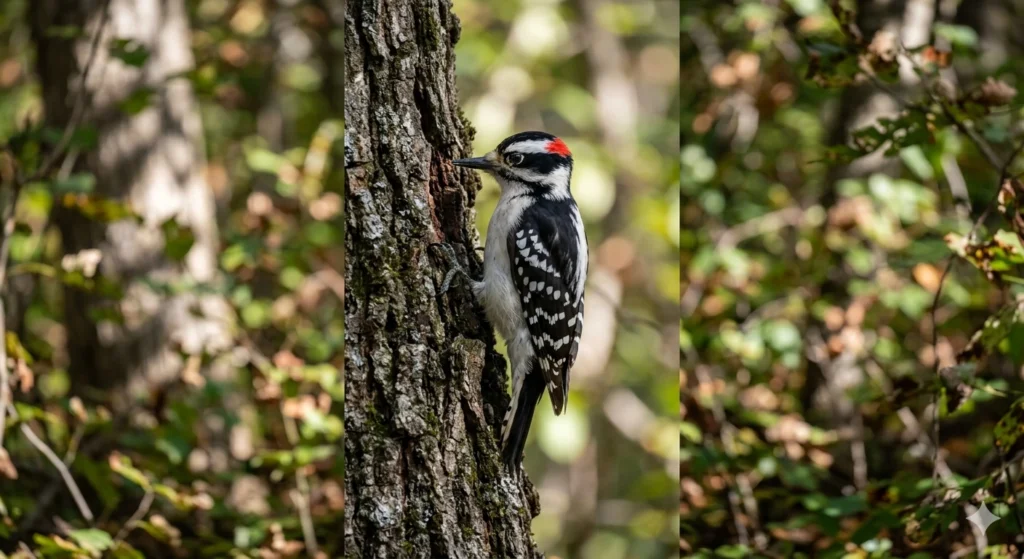
The Downy Woodpecker (Picoides pubescens) is North America’s smallest woodpecker and a frequent visitor to forests and suburban areas alike. With its distinctive black-and-white plumage and delicate features, it is often spotted drumming on tree trunks in search of insects. Known for its adaptability, the Downy Woodpecker is a fascinating species, equally comfortable in deciduous forests as it is in urban parks.
2. Lifestyle: Food, Habitat, and Behavior
Diet:
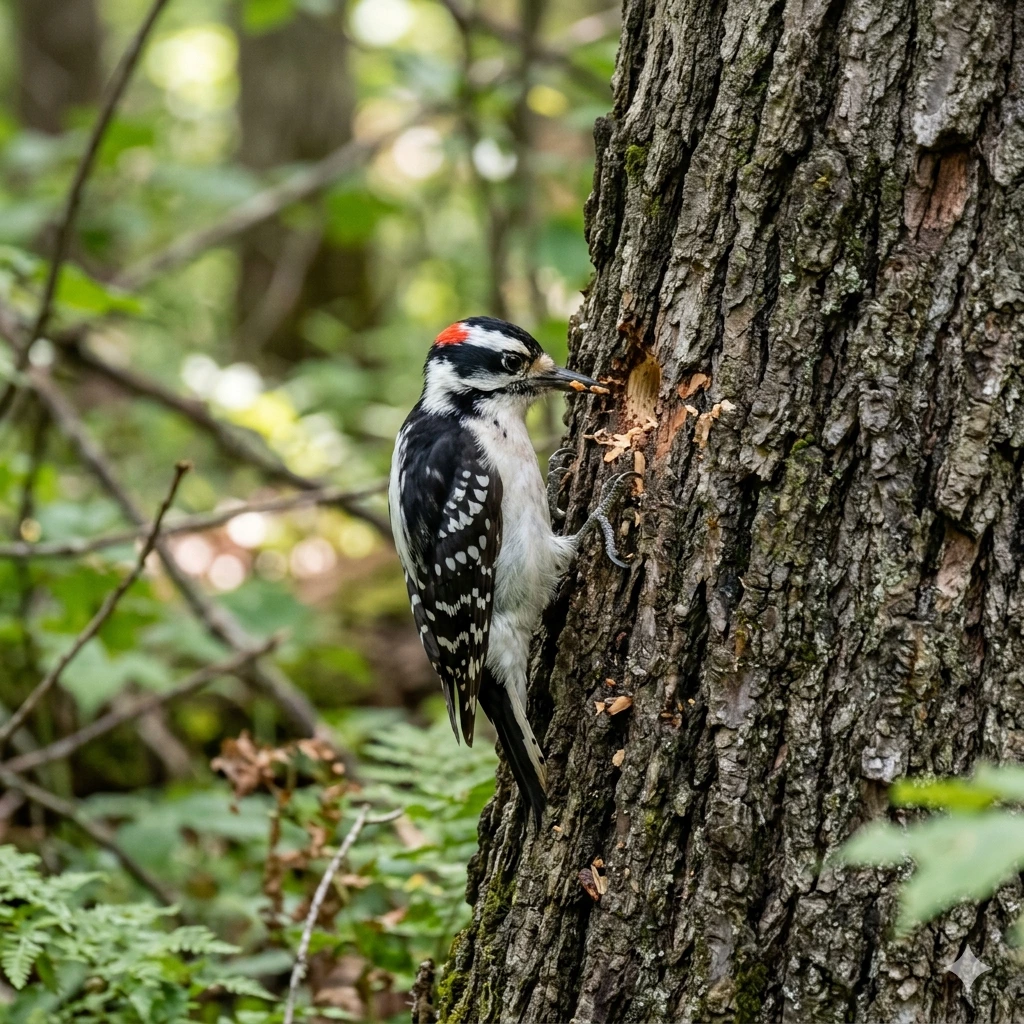
The Downy Woodpecker is an opportunistic insectivore, feeding on insects, spiders, and the sap from trees. Its diet primarily includes ants, beetles, and caterpillars, which it extracts from the bark and leaves of trees. In winter, it may also feed on bird feeders, especially suet, making it a common sight in suburban gardens.
Habitat:
Found across North America, the Downy Woodpecker prefers deciduous forests, woodland edges, and parks with a variety of trees. It is a year-round resident in most areas, although some populations migrate to warmer regions during the colder months.
Behavior:
The Downy Woodpecker is known for its drumming behavior, a unique form of communication used to establish territory and attract mates. This species often forages on the trunks and branches of trees, using its sharp bill to peck at the bark and find hidden insects. It also engages in drumming to mark its presence, typically at a lower pitch compared to other woodpecker species.
3. Habitat & Distribution
The Downy Woodpecker is widely distributed across North America, from Canada to the southern United States. It is commonly found in urban and suburban areas, particularly in parks and gardens with ample trees.
Key Locations:
- Canada: Found across the country in mixed and deciduous forests.
- United States: Common in the eastern and western parts, especially in woodland areas and suburban neighborhoods.
- Mexico: Present in some southern areas, particularly during migration.
4. Home, Nesting & Breeding
Nesting:
The Downy Woodpecker nests in tree cavities it creates by drilling into the bark or softwood. These nests are typically located in dead or decaying trees, providing a safe environment for both eggs and young. Males often take the lead in excavating a cavity, but females play a significant role in choosing the nesting site.
Breeding:
During the breeding season, which typically occurs in late spring, Downy Woodpeckers build their nests with meticulous care. They often lay 4-6 eggs, which both parents incubate. Once hatched, the chicks are fed insects and small invertebrates until they are ready to leave the nest.
Nesting Sites:
Downy Woodpeckers favor deciduous trees for nesting, but they will also use artificial structures like wooden fence posts and utility poles if natural options are scarce.
5. Trees and Plants That Attract Downy Woodpeckers
Downy Woodpeckers are particularly attracted to trees that provide easy access to their primary food sources—insects and sap.
Preferred Trees:
- Maples: Known for their sap, which Downy Woodpeckers enjoy.
- Birches: Softwood trees that are easy to drill into for nesting and foraging.
- Pines: These trees provide insects hidden within the bark.
Additionally, suet feeders in gardens can attract Downy Woodpeckers, especially in winter when natural food sources become scarce.
6. Fun Facts About the Downy Woodpecker
- Small Size, Big Impact: The Downy Woodpecker is the smallest woodpecker in North America, measuring just 6-7 inches in length.
- Distinctive Drumming: Unlike other woodpeckers, the Downy produces a softer drumming sound due to its smaller size and less powerful bill.
- Polygamous: While some species of woodpeckers are monogamous, the Downy Woodpecker can be polygamous during the breeding season, with males sometimes mating with more than one female.
7. Frequently Asked Questions (FAQs)
What do Downy Woodpeckers eat?
Downy Woodpeckers primarily feed on insects, including ants, beetles, and caterpillars. They also consume tree sap and suet from bird feeders.
Do Downy Woodpeckers migrate?
While most Downy Woodpeckers are year-round residents in the northern parts of their range, some populations migrate to warmer southern areas during the winter months.
How do you differentiate between Downy and Hairy Woodpeckers?
The easiest way to distinguish a Downy from a Hairy Woodpecker is by size. The Downy Woodpecker is smaller, measuring about 6-7 inches, while the Hairy Woodpecker is larger at 9-10 inches. Additionally, the Downy has a shorter bill, and its drumming sound is softer compared to the Hairy.
8. Identification Features of the Downy Woodpecker
Physical Appearance:
- Size: The Downy Woodpecker is smaller than many other woodpeckers, with a length of about 6-7 inches and a wingspan of 12-14 inches.
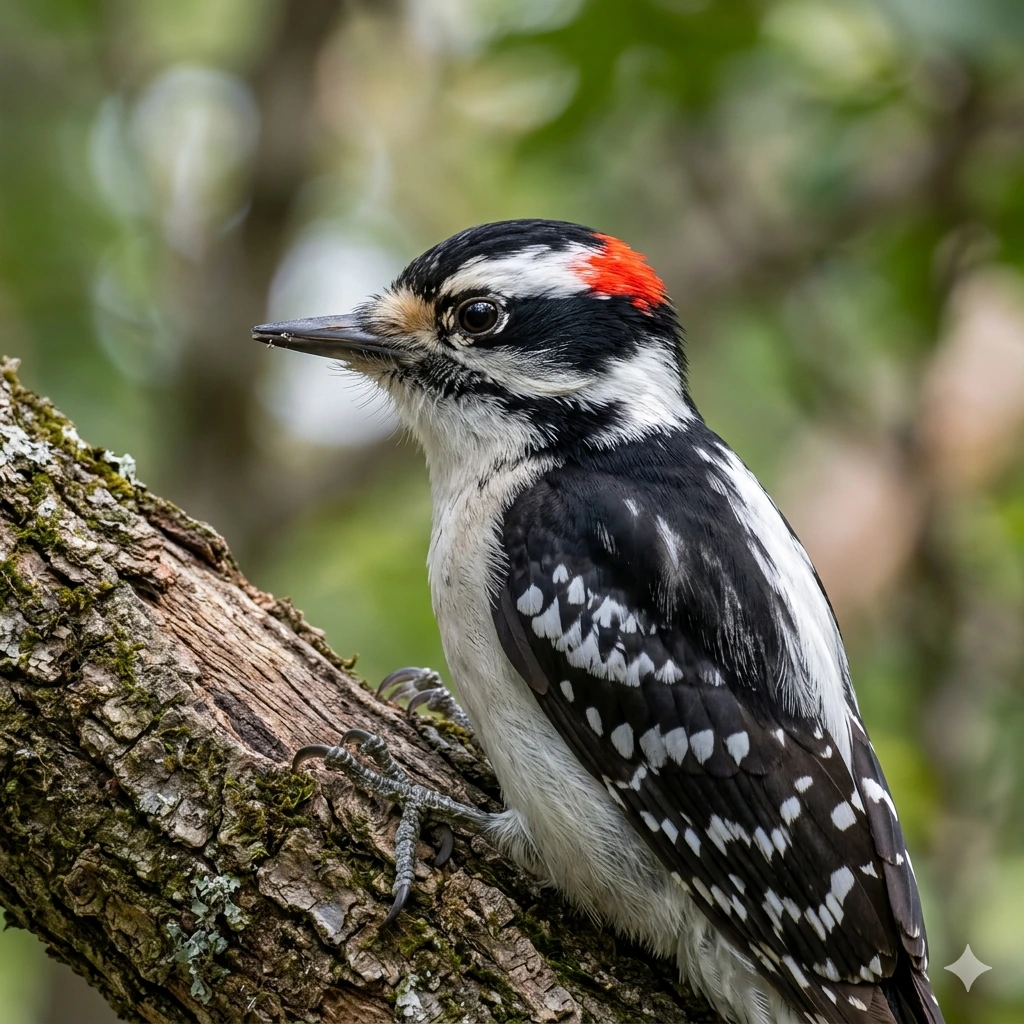
- Coloration: The Downy has a distinctive black-and-white pattern with a white belly, black wings, and a black-and-white striped head. Males often have a red patch on the back of their head.
- Beak: The Downy Woodpecker has a small, short bill compared to other woodpecker species, helping it to forage for insects in softwood bark.
Behavioral Features:
- Drumming: The Downy Woodpecker’s drumming is softer and faster than that of larger woodpeckers, producing a high-pitched sound.
- Flight: Their flight is characterized by short bursts of flapping, followed by gliding, and they often hover momentarily before landing on tree trunks.