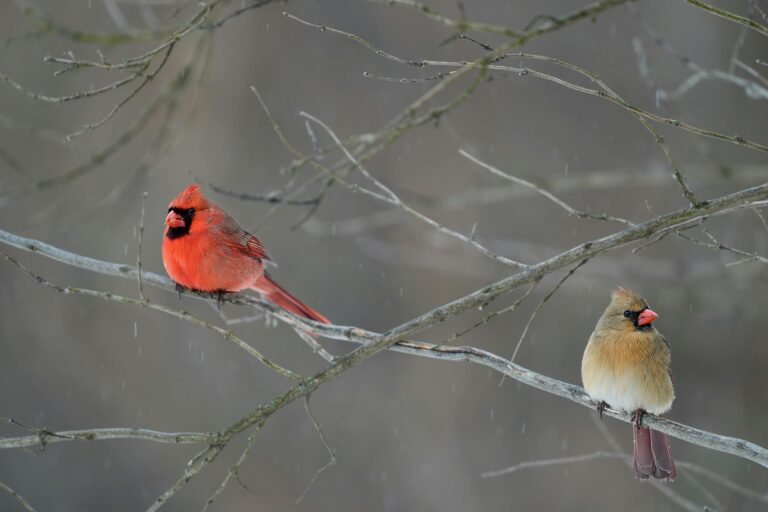
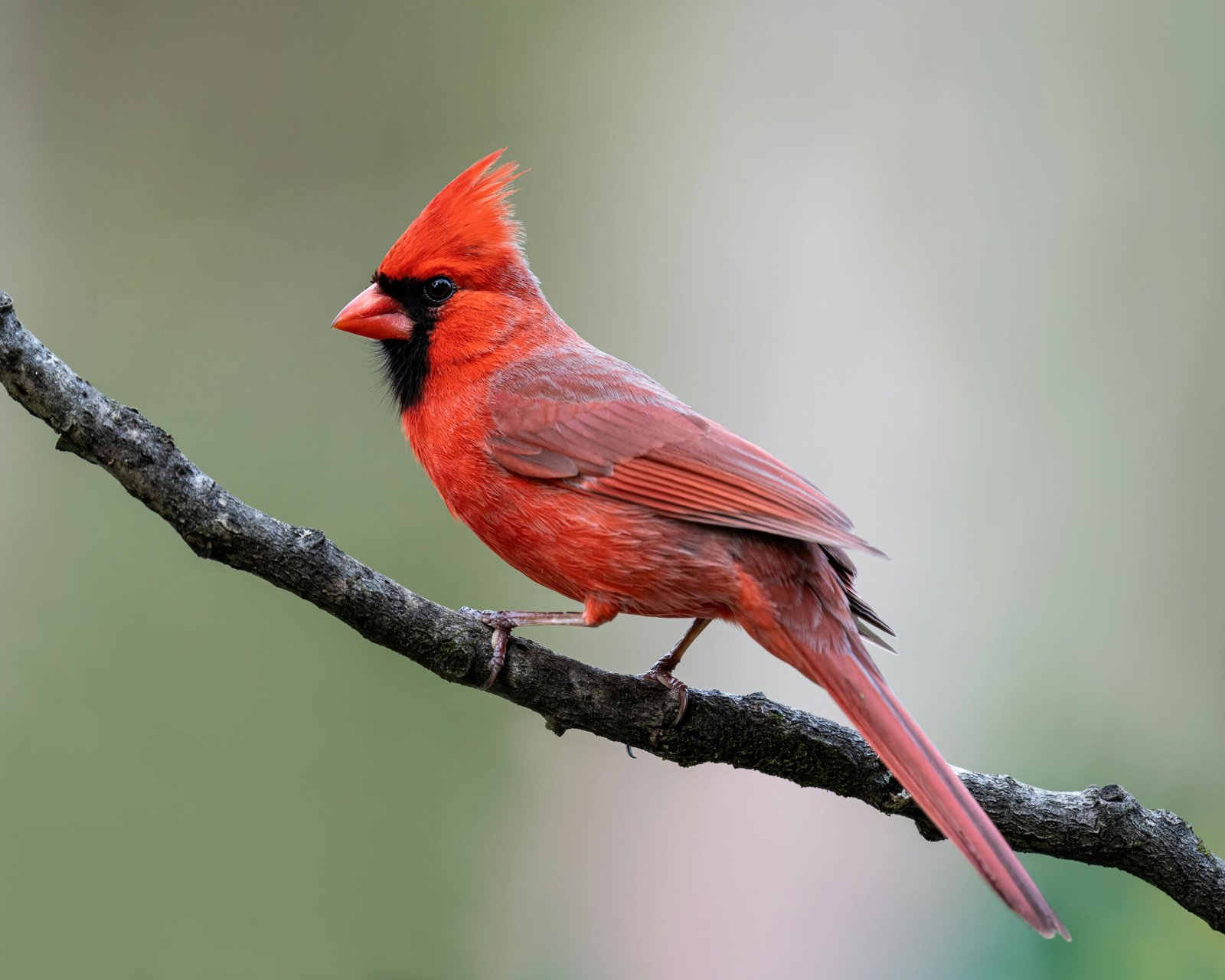
The Northern Cardinal (Cardinalis cardinalis) is one of North America’s most iconic birds. Renowned for its striking plumage and melodious songs, this species is a favorite among bird watchers and backyard enthusiasts. Male cardinals display brilliant red feathers and a bold black mask, while females exhibit warm brown tones with subtle red accents.
Quick Facts:
- Scientific Name: Cardinalis cardinalis
- Lifespan: 3–8 years in the wild
- Habitat: Woodlands, gardens, and urban green spaces
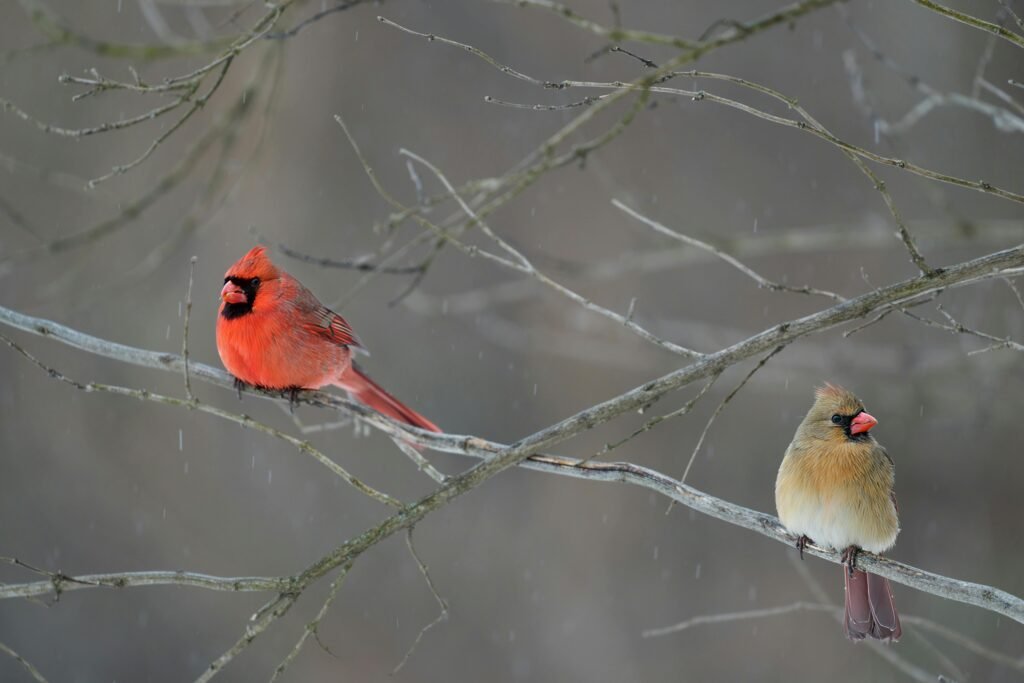
Physical Details: Size, Wingspan, and Audio
The Northern Cardinal is a medium-sized bird, measuring 8–9 inches in length with a wingspan of 9–12 inches. Adult males are vibrant red, while females are soft brown with reddish highlights. Juveniles are primarily brown with faint red streaks.
Diet and Feeding: Cardinals primarily eat seeds, berries, and insects. They are frequent visitors to backyard feeders, especially in winter.
Sounds and Calls:
Northern Cardinals are celebrated for their clear, melodic whistles, often described as “cheer, cheer, cheer” or “birdie, birdie, birdie.” These calls serve multiple purposes: defending territory, communicating with mates, and signaling alarm.
Identification Features
Male: Bright red body, black face mask, strong orange beak, prominent crest
Female: Warm brown with red highlights, soft face mask, rounded crest
Juvenile: Brown with subtle red streaks
Unique Variants: Rare leucistic or yellow cardinals are prized sightings. Bald-headed cardinals or other color morphs occasionally appear.
Other Distinctive Traits: Thick, conical beak ideal for seeds; medium-sized, rounded body; short tail; non-migratory behavior.
Habitat & Distribution
Northern Cardinals thrive in woodlands, shrublands, suburban gardens, and parks across the eastern and central United States. They are particularly common in Florida, Texas, Michigan, and Ohio.
These birds are non-migratory, staying within the same territories year-round. They adapt well to human-altered landscapes and are frequently observed at feeders or in backyard shrubs.
Nesting & Breeding
Northern Cardinals build cup-shaped nests using twigs, grasses, and leaves. Nests are usually 3–10 feet above the ground in dense shrubs or small trees.
Breeding Facts:
- Clutch Size: 2–5 eggs per nesting attempt
- Egg Appearance: Pale green to blue with brown speckles
- Incubation: 11–13 days, primarily by the female
- Fledging: Young leave the nest after 9–11 days
Cardinals are known to mate for life. Both parents actively feed and protect their young, ensuring high survival rates.
Plants and Foods That Attract Cardinals
To attract Northern Cardinals, provide:
- Feeders: Sunflower seeds are preferred
- Plants: Dogwood, honeysuckle, serviceberry, and berry-producing shrubs
- Water: Birdbaths or small ponds for drinking and bathing
Dense shrubs and trees provide safe nesting sites and cover. Bright flowers and berry bushes not only feed them but also enhance your backyard’s visual appeal.
Fun Facts
- Northern Cardinals are the state bird of seven U.S. states.
- Males sing year-round to defend territory and attract mates.
- Rare yellow cardinals are leucistic variants with a genetic mutation.
- Cardinals are non-migratory, visible in all seasons.
- Culturally, cardinals symbolize love, hope, vitality, and spiritual guidance.
What do Northern Cardinals eat?
Seeds, berries, and insects. They frequently visit backyard feeders, particularly in winter.
Where do Northern Cardinals live?
Eastern and central U.S., including Texas, Florida, Michigan, and Ohio. They prefer woodlands, gardens, and urban green spaces.
What do Northern Cardinal eggs look like?
Eggs are pale green to blue with small brown speckles. Typically, 2–5 eggs per clutch.
How can I attract Northern Cardinals?
Provide sunflower seeds, berry bushes, dense shrubs for cover, and birdbaths or small water sources.
Do Northern Cardinals migrate?
No. They are non-migratory and remain within the same territories year-round.
Do Northern Cardinals mate for life?
Yes. Cardinals often form long-term pairs and both parents feed their young.
What does a Northern Cardinal sound like?
They produce clear, melodic whistles such as “cheer, cheer, cheer” or “birdie, birdie, birdie.”
When do Northern Cardinals breed?
Breeding season is typically March through September, with peak activity in spring.