
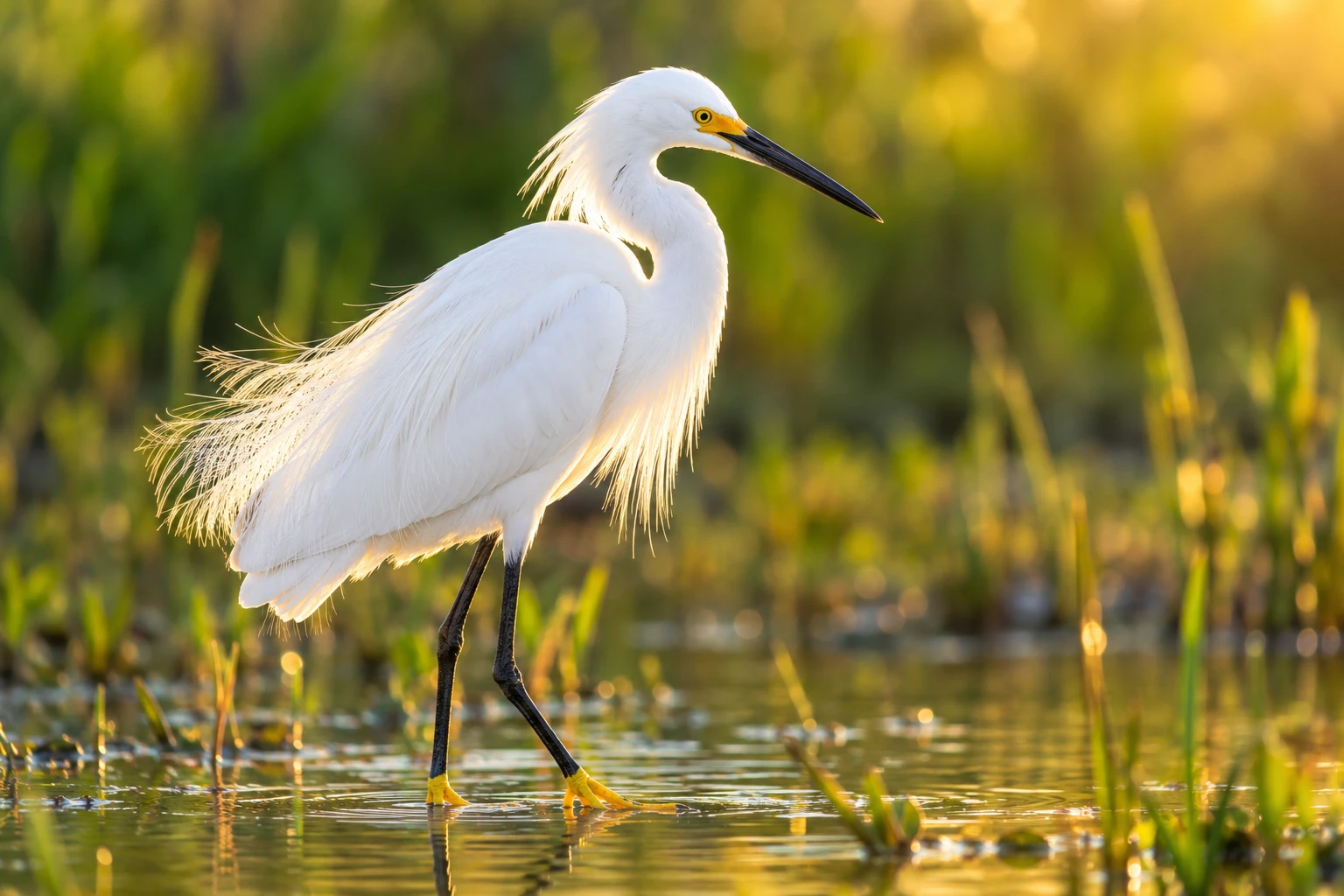
The Snowy Egret is a graceful white wading bird that stands out in American wetlands thanks to its slender black bill, long black legs, and bright yellow feet. Often seen walking through shallow water in search of food, this elegant bird is fascinating to watch in marshes, coastal areas, ponds, and other wetland habitats.
Whether you are a beginner birdwatcher or simply curious about birds found in the United States, this guide explains how to identify a Snowy Egret, where it lives, what it eats, and some surprising facts about its behavior.
What Is a Snowy Egret?
The Snowy Egret (Egretta thula) is a medium-sized member of the heron family, Ardeidae. It is known for its white plumage, slender body, long neck, and distinctive yellow feet.
Snowy Egrets are commonly found in coastal wetlands, marshes, mudflats, and shallow waterways. They feed mainly on small aquatic animals and often use active hunting techniques to catch their prey.
Quick Snowy Egret Facts
- Scientific name: Egretta thula
- Family: Ardeidae
- Main color: White
- Bill: Black
- Legs: Black
- Feet: Bright yellow
- Typical length: About 22–26 inches
- Wingspan: About 39 inches
- Main diet: Fish, frogs, crustaceans, worms, and insects
- Preferred habitat: Marshes, wetlands, mudflats, and coastal shorelines
These measurements are approximate and may vary slightly between individual birds.
How to Identify a Snowy Egret
Identifying a Snowy Egret becomes much easier when you know which features to look for. Its bright white body and yellow feet are especially helpful field marks.
1. Pure White Feathers
Adult Snowy Egrets have white plumage across their bodies. During the breeding season, adults develop delicate, wispy plumes on their heads, necks, and backs. These feathers can give the bird an especially elegant appearance in soft sunlight.
2. Black Bill and Black Legs
One of the most useful identification features is the Snowy Egret’s long, slender black bill. Its legs are also black, creating a striking contrast with its white feathers.
3. Bright Yellow Feet
The Snowy Egret’s yellow feet are its most distinctive feature. They can look like little golden slippers as the bird walks through shallow water.
The bird may also move its feet through the water or stir the muddy bottom to disturb small animals hiding nearby.
4. Long Neck and Slender Body
Like other herons, the Snowy Egret has a long neck, narrow body, and thin legs adapted for wading. It often stands nearly motionless before quickly extending its neck and bill to catch prey.
5. Seasonal Feather Changes
During breeding season, adult Snowy Egrets grow long, delicate ornamental plumes. These feathers are different from the bird’s ordinary body feathers and make breeding adults particularly striking.
Snowy Egret Size and Wingspan
The Snowy Egret is smaller than the Great Egret but larger than the Cattle Egret. Its long legs and neck make it appear taller and more slender than many birds of a similar body weight.
A typical adult measures approximately 22–26 inches in length and has a wingspan of around 39 inches. Its body is relatively lightweight, helping it move efficiently between feeding areas and nesting sites.
When flying, a Snowy Egret usually holds its neck folded back in an S-shape and extends its legs behind its body. This flight posture is common among herons and egrets.
Where Do Snowy Egrets Live?
Snowy Egrets use a wide range of wetland habitats across the Americas. In the United States, birdwatchers are especially likely to encounter them near coastal waters and shallow wetlands.
Coastal Marshes and Saltwater Wetlands
Coastal marshes, tidal channels, sheltered bays, and mudflats provide feeding opportunities for Snowy Egrets. These environments contain fish, crustaceans, and other small animals that the birds can catch in shallow water.
Freshwater Marshes and Swamps
Snowy Egrets also visit freshwater marshes, swamps, ponds, and temporary pools. They may feed along the edges of lakes and rivers, particularly where shallow water exposes small aquatic animals.
Beaches and Mudflats
Beaches and tidal mudflats can be excellent places to spot Snowy Egrets. The birds search for small fish and invertebrates while walking through the shallows.
Wet Fields and Agricultural Areas
Although strongly associated with water, Snowy Egrets sometimes forage in wet fields and other open areas. Insects and other small animals can make these places useful feeding grounds.
Where Can You See Snowy Egrets in the United States?
Snowy Egrets occur in many parts of the United States, with coastal regions offering particularly good opportunities for observation. They can be found in places such as Florida, the Gulf Coast, the Atlantic Coast, and the Pacific Coast.
Their presence changes with the season and local conditions. Some birds remain in warmer areas throughout the year, while others move south after breeding or travel between seasonal feeding and nesting locations.
To find a Snowy Egret, look for shallow water, exposed mudflats, and quiet wetland edges. Scan carefully for a white bird with black legs and a dark bill. Its yellow feet may be visible when it walks through clear, shallow water.
Use binoculars to observe the bird from a respectful distance, and avoid approaching nesting colonies.
What Do Snowy Egrets Eat?
Snowy Egrets are carnivorous birds that feed mainly on small aquatic animals. Their diet depends on what is available in their habitat.
Common foods include:
- Small fish
- Frogs and other amphibians
- Crabs, shrimp, and other crustaceans
- Aquatic insects
- Worms
- Other small aquatic invertebrates
Snowy Egrets are active hunters. They may stand still and wait for prey to approach, walk slowly through shallow water, or suddenly run after a small fish. Some also use their feet to disturb the water or mud, helping reveal animals that might otherwise remain hidden.
Their flexible hunting style allows them to feed in several different wetland environments.
Snowy Egret Behavior
Snowy Egrets can be patient hunters, but they are not always still. While searching for food, they may walk, run, hop, or flick their wings to startle prey into moving.
They also feed alongside other wading birds, including herons, ibises, and other species that use the same productive wetlands.
During breeding season, Snowy Egrets become more territorial around their nesting areas. Adults may raise their plumes, move their bodies in displays, and call to defend a territory or attract a mate.
Snowy Egret Nesting and Reproduction
Snowy Egrets usually nest in colonies, sometimes sharing nesting areas with other wading birds. They often choose protected islands, marsh vegetation, shrubs, or trees near suitable feeding grounds.
Their nests are shallow platforms made from small sticks, grasses, and other plant materials. The female and male both take part in caring for their eggs and young.
A typical clutch contains around two to six eggs. The eggs are pale greenish blue, and incubation generally lasts about 24–25 days. After hatching, the chicks remain in the nest while their parents provide food and protection.
Colonial nesting can offer opportunities for many birds to use a productive habitat, although nesting colonies can also attract predators and disturbance.
7 Fun Facts About Snowy Egrets
1. Their Yellow Feet Help Them Hunt
Snowy Egrets sometimes stir shallow water or muddy sediment with their feet. This movement can flush hidden prey into view, making it easier to catch small fish and other animals.
2. They Grow Beautiful Breeding Plumes
During the breeding season, adults develop long, delicate feathers on their heads, necks, and backs. These plumes are among the species’ most recognizable features.
3. They Were Once Heavily Hunted
In the late 1800s, Snowy Egret plumes were highly valued in the fashion industry. Hunting for these feathers caused severe declines in egret populations. Conservation efforts and protective laws helped the species recover.
4. They Can Hunt in Several Ways
A Snowy Egret may wait patiently, stalk prey slowly, run through shallow water, or flick its wings to disturb small animals. This variety makes it an interesting bird to observe.
5. They Nest With Other Wading Birds
Snowy Egrets often breed in mixed colonies with other herons and wading birds. Several species may use the same general nesting area.
6. Their Feet Can Change in Appearance
The yellow feet may become a richer yellow or orange-yellow during the breeding season. The bare skin near the bill can also change color seasonally.
7. They Are Found Beyond the United States
Snowy Egrets occur across much of the Americas, from North America through Central America and into parts of South America. Their distribution includes both coastal and inland wetlands.
Snowy Egret vs. Great Egret: What’s the Difference?
Snowy Egrets and Great Egrets are both white wading birds, so they can be confused at first glance. Looking at their size, bills, and feet makes identification much easier.
| Feature | Snowy Egret | Great Egret |
|---|---|---|
| Size | Smaller | Larger |
| Bill | Black | Usually yellow |
| Legs | Black | Black |
| Feet | Yellow | Black |
| Breeding plumes | Fine, wispy plumes | Long plumes on the back |
| Body shape | Slender and medium-sized | Taller and larger |
Easy identification tip: If you see a white egret with a black bill, black legs, and bright yellow feet, it is likely a Snowy Egret. A much larger white egret with a yellow bill is more likely a Great Egret.
Is the Snowy Egret Endangered?
The Snowy Egret is currently considered a species of Least Concern globally. Its populations recovered after historic feather hunting, thanks in part to conservation efforts and legal protection.
However, healthy wetlands remain important for its long-term survival. Habitat loss, pollution, human disturbance, and changes to coastal ecosystems can affect the places where Snowy Egrets feed and nest.
People can help by protecting wetlands, following wildlife-viewing guidelines, keeping waterways clean, and supporting responsible habitat conservation.
Frequently Asked Questions
What does a Snowy Egret look like?
An adult Snowy Egret is a medium-sized white wading bird with a slender black bill, black legs, bright yellow feet, and a yellow patch of bare skin near the bill. Breeding adults develop delicate ornamental plumes.
Where do Snowy Egrets live?
They live in coastal marshes, saltwater and freshwater wetlands, swamps, ponds, mudflats, and shallow waterways. They are found across many parts of the Americas, including the United States.
What do Snowy Egrets eat?
Snowy Egrets eat small fish, frogs, crustaceans, worms, insects, and other small aquatic animals. They often hunt by walking through shallow water and striking quickly with their bills.
Why do Snowy Egrets have yellow feet?
Their yellow feet are a distinctive identification feature. Snowy Egrets may also use their feet to disturb water or mud and help flush prey into view.
How big is a Snowy Egret?
A typical adult is about 22–26 inches long, with a wingspan of approximately 39 inches.
How can you tell a Snowy Egret from a Great Egret?
The Snowy Egret is smaller and has a black bill, black legs, and yellow feet. The Great Egret is larger and usually has a yellow bill and black feet.
Do Snowy Egrets migrate?
Some Snowy Egrets move seasonally, particularly those breeding in northern parts of their range. Others remain in warmer regions year-round. Movement depends on location, season, and food availability.
Final Thoughts
The Snowy Egret is one of the most recognizable white wading birds in American wetlands. Its black bill, dark legs, bright yellow feet, and delicate breeding plumes make it a rewarding species for birdwatchers to identify.
By learning about the Snowy Egret’s habitat, diet, behavior, and conservation history, you can better appreciate the role this bird plays in wetland ecosystems. If you visit marshes, beaches, ponds, or coastal waterways, keep an eye on the shallows—you may spot a Snowy Egret hunting for its next meal.
For more bird identification guides and backyard wildlife tips, explore Birdiy.