What Do Robins Eat?
Robins are among the most recognizable backyard birds in North America. Their bright orange breasts, cheerful songs, and habit of searching lawns for worms make them a favorite among bird watchers and gardeners.
But what do robins eat besides earthworms? These familiar birds have a varied diet that includes insects, fruits, berries, and other small food items. Their eating habits change throughout the year depending on the season and the availability of natural food.
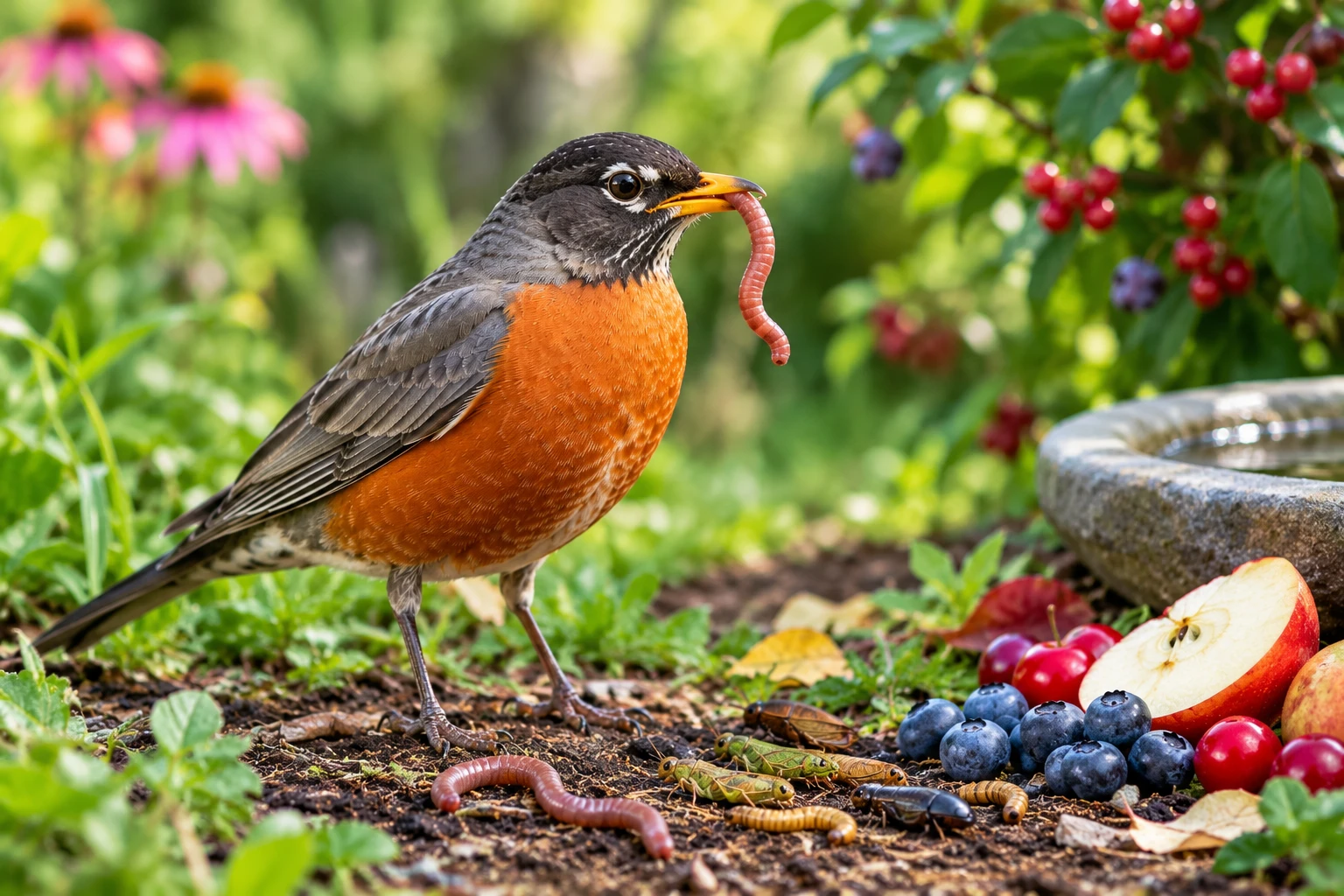
American Robins (Turdus migratorius) are omnivores. They spend much of their time searching for food on lawns, in gardens, and around trees and shrubs. During warmer months, they eat many worms and insects. In fall and winter, fruits and berries become increasingly important.
In this guide, you’ll learn what robins eat naturally, which fruits they prefer, what they eat in winter, whether they eat seeds, and how to offer safe foods in your backyard.
Quick Answer: What Do Robins Eat?
Robins commonly eat:
- Earthworms
- Beetles and other insects
- Caterpillars
- Grasshoppers
- Spiders
- Mealworms
- Blueberries and other berries
- Cherries and crabapples
- Other soft fruits
The exact diet depends on the season and what’s available nearby. Robins usually search for worms and insects on the ground, while fruit becomes especially important when insect prey is less available.
1. Earthworms
Earthworms are among the best-known foods in a robin’s diet. You may see a robin standing on a lawn, tilting its head, and then quickly pulling a worm from the soil.
Robins find worms in moist ground, particularly after rain or when the soil is soft. Earthworms provide protein and other nutrients that help support growth, daily activity, and reproduction.
To make your yard more welcoming, maintain healthy soil and avoid unnecessary pesticide use. Pesticides can reduce the availability of insects and other invertebrates that birds depend on.
2. Insects and Other Small Creatures
Insects are another major part of what robins eat, particularly during spring and summer. Adult robins search through grass, leaf litter, gardens, and soil for small prey.
Common foods include:
- Beetles and beetle larvae
- Caterpillars
- Grasshoppers
- Crickets
- Ants
- Spiders
- Other small invertebrates
These foods are especially important during the breeding season. Parent robins feed their nestlings a diet rich in animal prey to support their rapid growth.
You can encourage natural insect populations by maintaining a variety of plants and avoiding unnecessary insecticide treatments.
3. Fruits and Berries
Robins eat many kinds of fruit, especially when worms and insects are harder to find. Berries from trees and shrubs can be an important food source during fall and winter.
Fruits that robins may eat include:
- Blueberries
- Cherries
- Wild strawberries
- Crabapples
- Elderberries
- Holly berries
- Juniper berries
- Other locally available wild fruits
Not every fruit is equally attractive, and robins may prefer naturally available berries over food offered at a feeder.
If you want to attract robins, consider planting native berry-producing shrubs and trees suitable for your region. Native plants can provide food and shelter for many kinds of wildlife.
4. What Do Robins Eat Besides Worms?
Worms are only one part of the robin’s diet. These birds also eat insects, spiders, fruits, and berries.
During warmer weather, they often search for insects and worms in lawns and gardens. When the weather turns colder, they may spend more time feeding on fruit in trees and shrubs.
Robins may occasionally consume other plant material, but they are not typical seed-eating backyard birds. If you want to encourage visits, providing natural food sources and a safe feeding area is generally more useful than filling a standard hanging feeder with birdseed.
5. Do Robins Eat Seeds?
Robins are not primarily seed eaters. Unlike cardinals, finches, and many sparrows, they usually prefer animal prey and fruit.
Although robins may occasionally swallow seeds found in fruit or eat small amounts of other plant material, ordinary seed mixes are unlikely to be their main attraction.
To make your yard more robin-friendly, focus on:
- Healthy lawns and soil where worms and insects can be found
- Berry-producing trees and shrubs
- Mealworms offered as supplemental food
- A shallow birdbath with clean water
- Safe, sheltered spaces for feeding
If you also want to attract seed-eating birds, a separate feeder containing suitable seed can help bring more species into your yard.
6. Do Robins Eat Mealworms?
Yes. Robins can eat mealworms, which are often offered as supplemental food by backyard bird watchers. Mealworms provide animal protein and can be useful when natural prey is difficult to find.
You can offer mealworms in a shallow dish, ground tray, or sturdy platform feeder. Place the feeding station in a spot where robins can see approaching danger and where cats cannot easily ambush them.
Both live and dried mealworms may be accepted. If you use dried mealworms, following the product’s feeding instructions and offering fresh water nearby can help.
Remember that mealworms should supplement a varied natural diet, not replace it. Remove uneaten food regularly to prevent spoilage and discourage pests.
7. What Do Robins Eat in Winter?
Robins continue feeding during winter, but their food choices may change with the weather and local conditions.
When frozen ground makes worms harder to find, berries and other fruits can become especially valuable. Some robins also move to areas where food is more plentiful, while others remain in the same general region.
Winter foods may include:
- Wild berries
- Crabapples
- Juniper berries
- Holly berries
- Other available fruits
- Mealworms offered by people
You can help by planting native fruit-bearing trees and shrubs, keeping a birdbath clean, and providing a safe supplemental feeding area. In freezing weather, check water sources frequently so birds have access to fresh water when possible.
8. What Is the Best Food to Feed Robins?
The best supplemental foods are those that resemble the foods robins naturally eat. Mealworms and small pieces of suitable fruit are practical options.
| Food | Why it may help |
|---|---|
| Mealworms | Provide supplemental animal protein |
| Blueberries | Offer soft fruit |
| Small pieces of apple | Provide an additional fruit option |
| Chopped berries | Make fruit easier to eat |
| Natural worms and insects | Form an important part of the wild diet |
Offer only fresh, plain fruit in small quantities. Avoid moldy or spoiled food, salty foods, heavily processed snacks, and fruit coated in syrup or added sugar. Remove leftovers before they spoil.
Never feed robins chocolate, alcohol, or foods containing artificial sweeteners. When in doubt, prioritize natural food sources over human snacks.
For more backyard bird-feeding ideas, explore Birdiy’s bird-feeding guides.
9. What Type of Feeder Is Best for Robins?
Robins usually forage on the ground, so a traditional hanging feeder designed for small seed-eating birds may not work well.
Consider these options:
Ground Feeding Tray
A low, shallow tray can make mealworms or small fruit pieces accessible to robins. Keep it clean and position it where the birds have a clear view of their surroundings.
Platform Feeder
A sturdy platform feeder offers a flat surface for fruit and mealworms. Choose one that drains well and is easy to clean.
Natural Food Sources
Berry-producing shrubs and trees can provide a more natural way to support robins. Native plants may also attract insects that birds can forage on.
Clean feeders and dishes regularly, remove spoiled food, and keep feeding stations away from places where cats can hide.
10. How to Attract Robins to Your Yard
If you want to see more robins, focus on making your yard safe and providing the food and habitat they naturally prefer.
Try these tips:
- Maintain healthy soil. Healthy soil can support worms and other small invertebrates.
- Plant berry-producing shrubs. Choose native plants suited to your location.
- Avoid unnecessary pesticides. Chemicals can reduce natural food sources and may pose risks to wildlife.
- Offer mealworms occasionally. Use a shallow tray or platform feeder.
- Provide clean water. A shallow birdbath can support drinking and bathing.
- Keep cats away from feeding areas. Place food where birds have open sightlines and a chance to escape.
- Keep the yard bird-friendly. Include shrubs for shelter and avoid disturbing active nests.
For more advice, read Birdiy’s guide on how to attract birds to your yard.
Frequently Asked Questions
Do robins eat worms every day?
Robins often eat worms when they are available, but their daily diet varies. They also consume insects, spiders, fruits, and berries.
Do robins eat birdseed?
Robins are not regular seed-feeding specialists. They are more likely to seek worms, insects, and fruits than to visit a feeder filled with standard seed mixes.
Do robins eat apples?
Robins may eat small pieces of apple, along with other soft fruits. Offer fresh, plain pieces and remove leftovers before they spoil.
What do baby robins eat?
Parent robins feed their nestlings animal prey, including earthworms and insects. This food supplies nutrients needed for rapid growth. Do not attempt to feed or raise baby birds unless directed by a licensed wildlife rehabilitator.
How can I attract robins in winter?
Plant berry-producing trees and shrubs, provide clean water when possible, and offer small amounts of mealworms or suitable fruit. Natural food sources are particularly valuable during cold weather.
Do robins use bird feeders?
Robins may use ground trays or platform feeders that offer mealworms or fruit. They are less likely to rely on conventional hanging seed feeders.
Final Thoughts
So, what do robins eat? Their diet includes earthworms, insects, spiders, fruits, and berries, with the balance changing throughout the year. Worms and insects are particularly important in warmer months, while fruits can become a major food source during fall and winter.