Songbirds possess some of the most intense metabolic engines in the animal kingdom. A wild bird can burn through its entire reserve of body fat in a single freezing winter night just trying to maintain its core body temperature of 105°F to 111°F. Because their energetic output is so high, providing targeted, nutrient-dense foods at backyard feeding stations can significantly boost local avian survival rates.
However, modern avian nutrition requires moving past the outdated practice of scattering generic, cheap wild bird seed mixes across a lawn. To truly support your local flock, you must understand the specific dietary classifications of different bird species and learn to recognize common foods that are highly toxic to their delicate systems.
1. Dietary Classifications: Matching Food to Species
Wild birds are highly specialized foragers. Their bills have evolved over millennia to process specific types of food. To attract a diverse array of species, your feeding station must mirror these distinct dietary categories.
| Avian Classification | Primary Natural Diet | Favorite Backyard Supplements | Target US Bird Species |
| Granivores | Wild grass seeds, grains, weed seeds | Black oil sunflower, safflower, Nyjer (thistle), white millet | Northern Cardinals, House Finches, Goldfinches, Dark-eyed Juncos |
| Insectivores | Beetles, caterpillars, ants, spiders, grubs | Live or dried mealworms, crickets, suet blocks | Eastern Bluebirds, Carolina Wrens, Tufted Titmice, Chickadees |
| Frugivores | Wild berries, drupes, orchard fruits | Chopped seedless grapes, raisins, fresh orange halves | Baltimore Orioles, Gray Catbirds, Cedar Waxwings, American Robins |
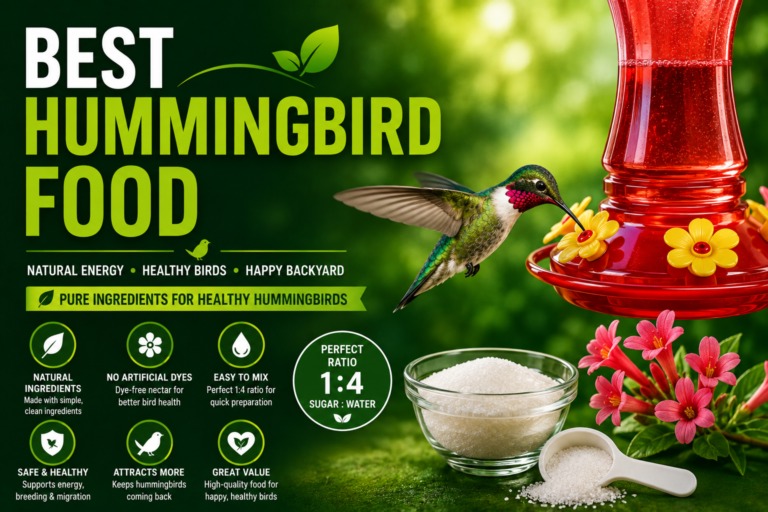
| Nectarivores | Floral sugar secretions, tree sap | 4:1 water-to-sugar solution, clean fresh water | Ruby-throated, Anna’s, Rufous, and Allen’s Hummingbirds |
2. Powerhouse Foods to Include at Your Station
If you want to maximize the nutritional value of the food you purchase, focus your budget on these five high-energy items:
Black Oil Sunflower Seeds (The Universal Fuel)
If you can only offer one food item, choose black oil sunflower seeds. Unlike striped sunflower seeds, black oil seeds possess exceptionally thin shells that small birds like chickadees can easily pop open. They contain a massive concentration of high-quality crude protein (roughly 15%) and healthy crude fats (nearly 30%), making them the ultimate year-round baseline food for granivores.
High-Calorie Suet Blocks (Winter Lifesavers)
Suet is rendered beef kidney fat. It acts as an immediate, easily digestible caloric injection.
- The Seasonal Advantage: While vital in summer for busy parents feeding young, suet is a non-negotiable winter staple. When freezing soil cuts off access to natural insects, insectivorous birds like Downy Woodpeckers, Nuthatches, and Titmice rely on suet blocks to replace animal fats.
White Proso Millet (The Ground-Feeder Delicacy)
Millet is a small, round grain packed with essential carbohydrates.
- The Feeding Blueprint: Do not place millet in elevated hanging tube feeders. Instead, scatter it directly on low platform trays or clean ground zones. This specifically targets native ground-foraging species like Towhees, Fox Sparrows, and Indigo Buntings.
Shelled Peanuts (High-Protein Meat)
Whole or crushed peanuts (without salt or flavorings) are highly prized by large-bodied songbirds like Blue Jays and Tufted Titmice. Peanuts provide essential amino acids that accelerate feather growth during the autumn molt.
3. The Dangerous “Avoid” List: Highly Toxic Foods
A bird’s liver and kidneys are incredibly fragile and process chemical compounds at a highly accelerated rate. Never allow wild or pet birds to ingest these highly toxic items from your kitchen:
- Avocado (The Avian Poison): Every single part of the avocado tree and fruit contains persin, a fat-soluble fungicidal toxin. Ingesting even a microscopic trace of avocado flesh or skin causes acute myocardial necrosis (heart muscle cell death) in birds. This triggers rapid respiratory failure, fluid accumulation around the heart, and death within 12 to 24 hours.
- Apple and Fruit Seeds: While the flesh of apples, pears, peaches, and cherries is a fantastic treat for frugivores, the dark internal seeds and pits are strictly lethal. These seeds contain amygdalin, a cyanogenic glycoside. When digested, it releases highly toxic hydrogen cyanide into the bloodstream, shutting down cellular oxygen processing instantly. Always core and seed fruits completely before serving.
- Onions and Garlic: Members of the Allium family contain sulfur compounds. Ingestion causes rapid oxidative damage to a bird’s red blood cells, resulting in hemolytic anemia, severe weakness, and internal organs failure.
- Salty and Processed Human Snacks: Prepared human foods like potato chips, pretzels, and salted crackers contain massive sodium concentrations. Because birds lack the specialized renal infrastructure to process heavy salt, a single salty snack can instantly overwhelm their kidneys, driving acute dehydration and fatal renal failure.
4. Addressing Common Feeding Myths
To maintain an ecologically responsible backyard habitat, you must separate internet folklore from verified ornithological data.
The Bread Deformity Threat
The most prevalent and damaging backyard feeding practice is throwing stale white bread, crackers, or popcorn out for ducks, geese, and songbirds. Bread contains zero nutritional value for birds. It acts as empty filler that rapidly swells inside their stomachs, tricking them into feeling full while they actively starve of essential vitamins.
- The “Angel Wing” Consequence: In waterfowl like Canada Geese and Mallards, a steady diet of human bread causes a permanent, incurable bone deformity known as “Angel Wing.” The weight of the empty carbohydrates forces the primary wing joints to twist completely outward, rendering the bird permanently flightless and highly vulnerable to predators.
The Red Dye Hummingbird Hazard
When mixing homemade hummingbird nectar, never add red food coloring or dye to the solution. The chemical colorant compounds (specifically Red Dye #40) accumulate in the hummingbirds’ tiny kidneys over time, causing severe internal tumors and bill deformities.
- The Safe Standard: Hummingbirds are drawn to the physical structure of the feeder housing, not the color of the fluid inside. Use a feeder that features a bright red plastic lid or base, and fill it exclusively with a clear, clean mixture of 4 parts water to 1 part plain white granulated table sugar. Never use honey or brown sugar, which cause rapid, fatal fungal infections in their crops.
How much seed do you actually need? Work out your monthly pounds, refill rate and the right bag size.
Open the seed calculator →