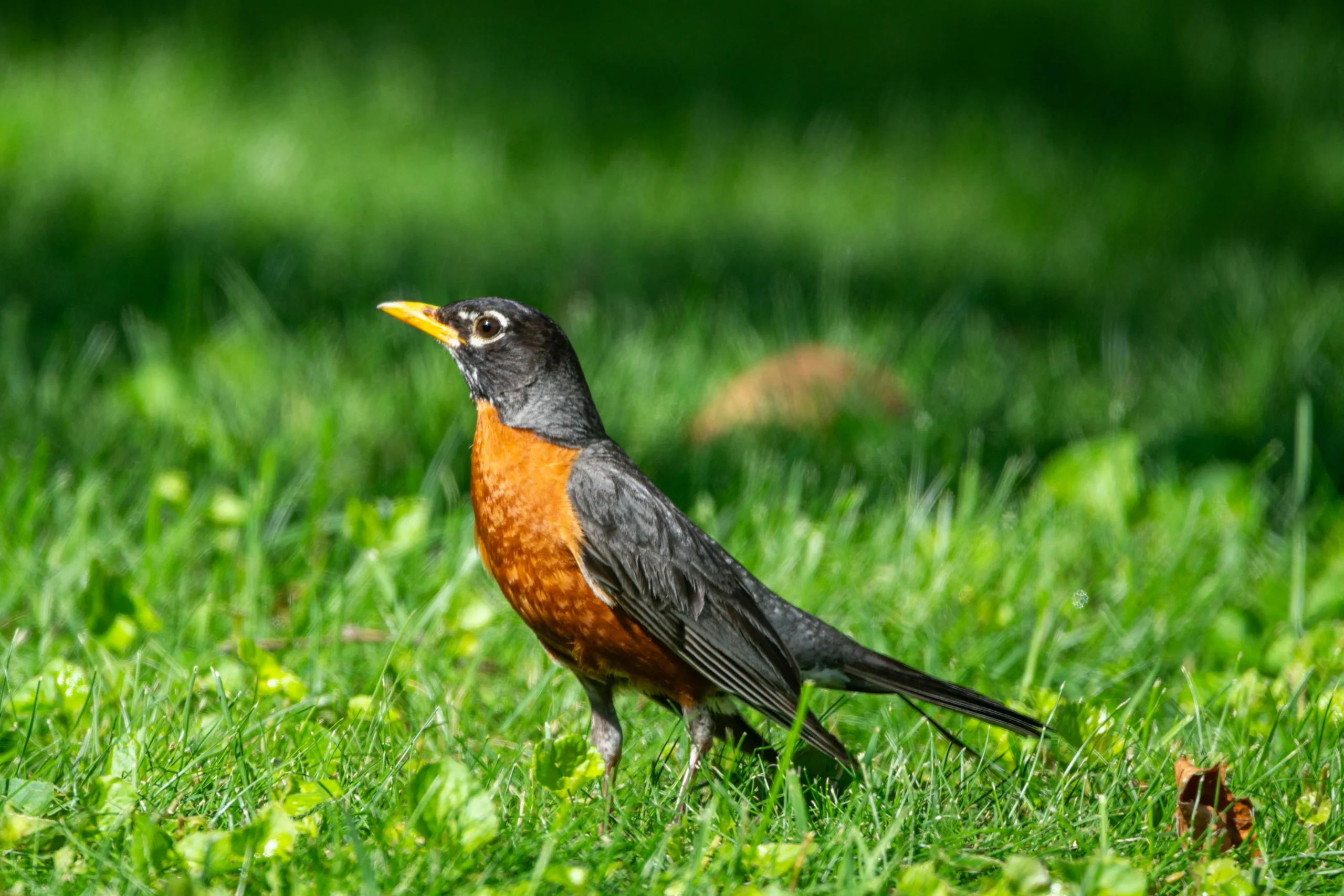
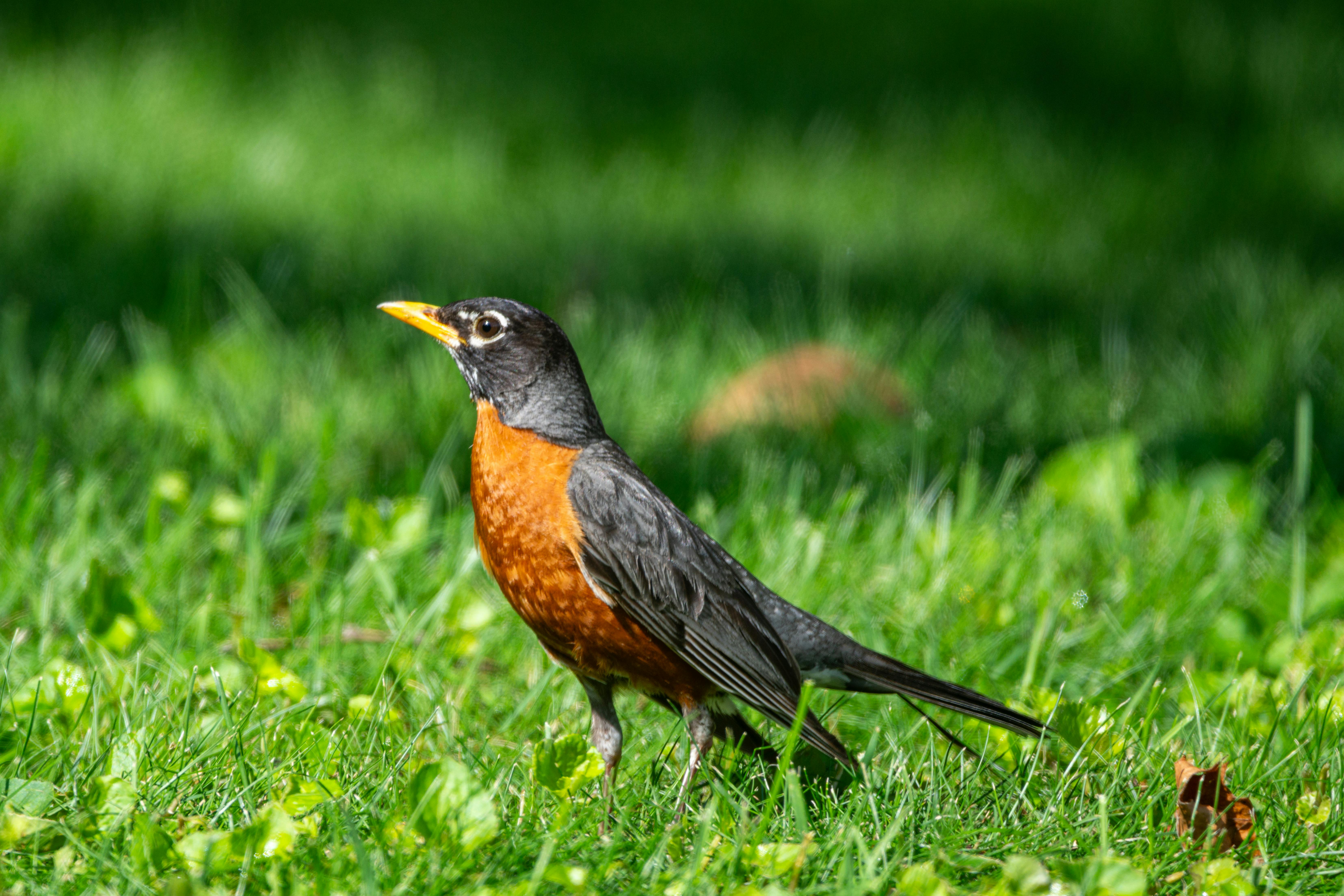
American Robin (Turdus migratorius)
- Color: Orange-red breast, gray-brown back
- Size: 9–11 in (23–28 cm)
- Wingspan: 12–16 in (31–40 cm)
- Weight: 2.7–3.0 oz (77–85 g)
- Call: Cheerful whistling “cheerily-cheer-up”
- Lifespan: 2–6 years wild
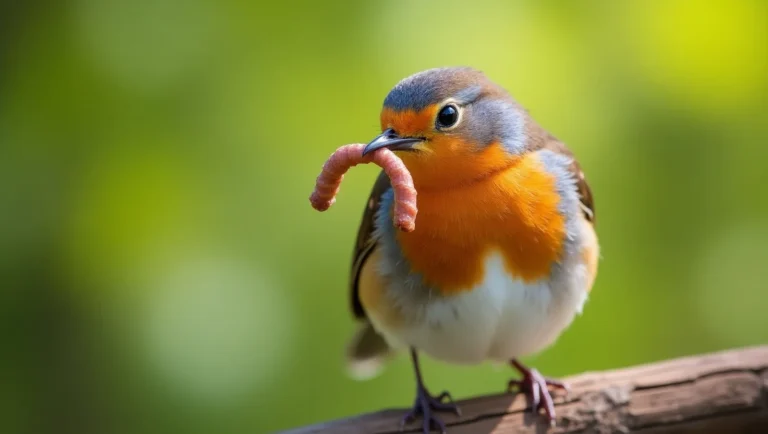
The American Robin is one of the most familiar and beloved birds in North America. Known for its bright orange breast and cheerful spring songs, it is a common sight hopping across lawns in search of earthworms.
Identification
Robins have a warm orange chest, gray-brown back, white throat with streaks, and a broken white eye ring. Juveniles are spotted as they develop adult colors.
Range & Habitat
Common across most of North America in:
- Suburban yards & gardens
- Woodland edges
- Parks & open fields
- Farmlands
Many robins migrate north in spring and south in winter, though many remain year-round where food is available.
Diet
Robins primarily eat:
- Earthworms
- Insects & beetles
- Berries & fruits (winter diet)
Nesting
Robins build cup-shaped nests made of mud and grass on ledges, trees, or building structures.
- Clutch: 3–4 blue eggs
- Incubation: ~12–14 days
- Fledge: ~14 days
- 2–3 broods per year
Behavior
Robins are active foragers, often seen tugging earthworms from lawns. They are one of the first birds heard singing at dawn.
Conservation Status
Least Concern — widespread & abundant.
FAQ
Do American Robins migrate?
Many migrate seasonally, though some stay year-round depending on food availability.
What do robins eat most?
Earthworms and insects in warm months; berries in winter.
Are robins a sign of spring?
Yes — their return and singing are traditional signs of spring.
Why do robins tilt their head?
They listen for earthworms moving underground.