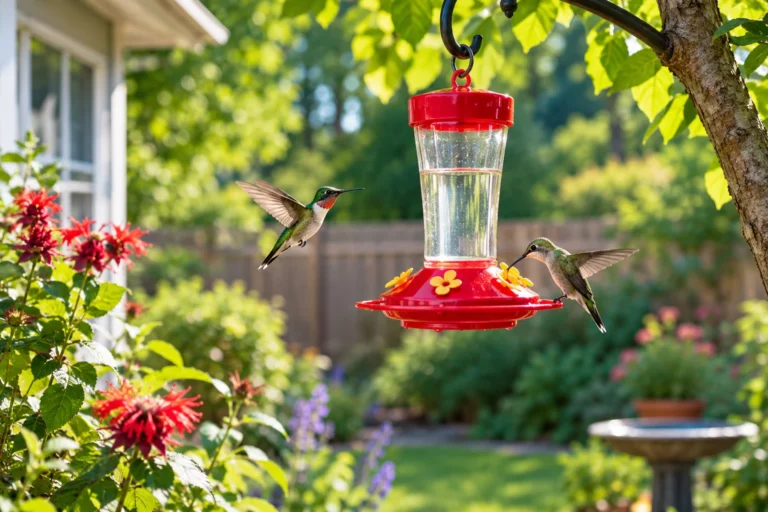
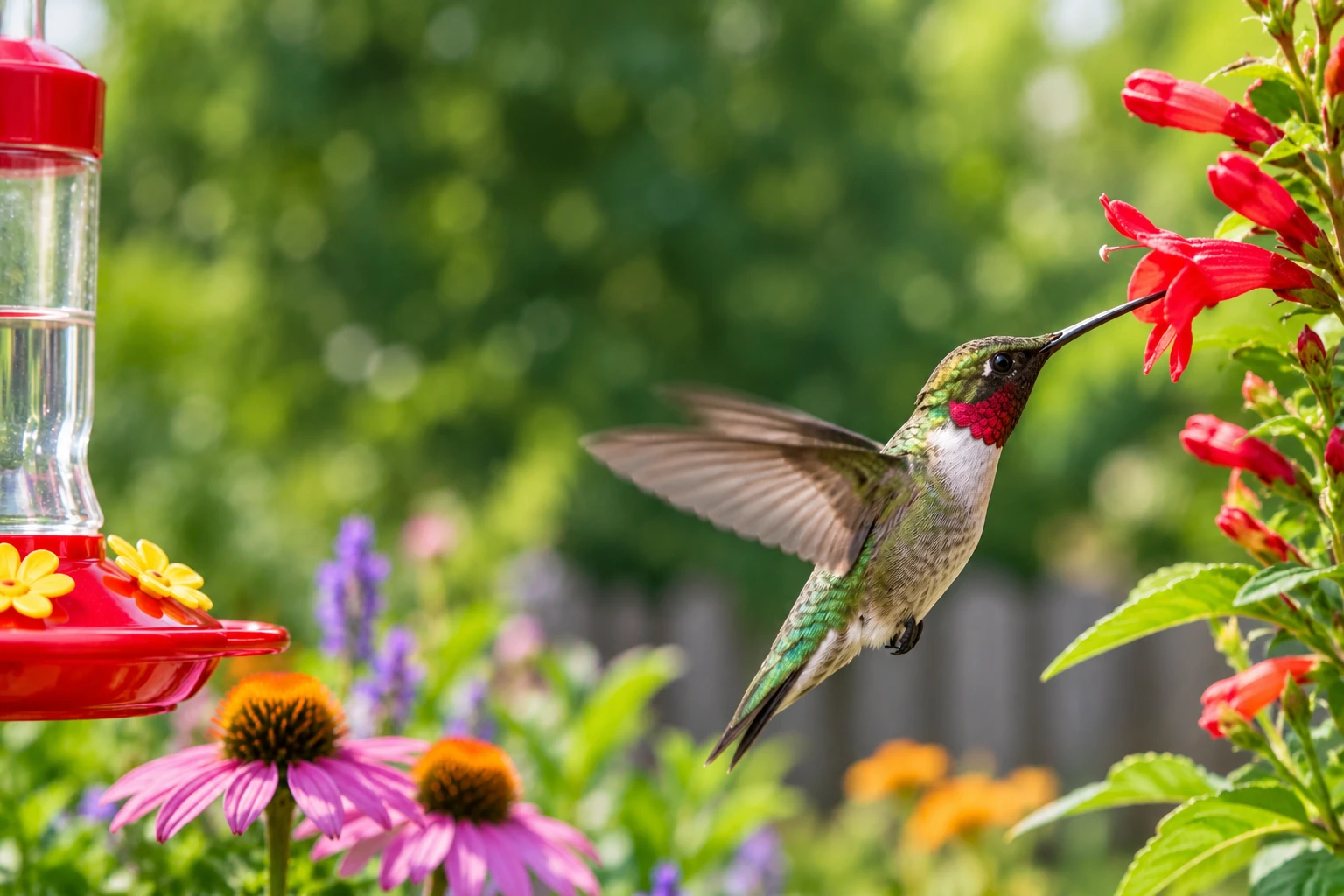
Learning how to attract hummingbirds to your yard doesn’t require a large garden or expensive equipment. With the right combination of flowers, fresh nectar, shelter, water, and a safe environment, you can make your backyard more appealing to hummingbirds.
Hummingbirds are attracted to yards that provide reliable food and suitable places to rest. A garden filled with nectar-producing flowers can offer natural food, while a properly maintained hummingbird feeder can provide an additional nectar source.
In this guide, you’ll learn simple and practical ways to attract more hummingbirds to your yard and encourage them to return throughout the season.
1. Plant the Best Flowers for Hummingbirds
One of the best ways to attract hummingbirds is to grow flowers that naturally produce nectar.
Good choices include:
- Bee balm
- Cardinal flower
- Salvia
- Trumpet vine
- Columbine
- Penstemon
- Fuchsia
- Zinnia
- Coral bells
- Native honeysuckle
Tubular flowers can be especially suitable because their shape allows hummingbirds to reach the nectar.
Don’t focus only on red flowers. Hummingbirds can visit flowers in many colors, including pink, orange, purple, and other bright shades.
For more plant ideas, see our complete guide to Best Flowers for Hummingbirds.
2. Add a Hummingbird Feeder
A hummingbird feeder can provide an additional source of sugar-water nectar.
Place your feeder somewhere that is:
- Easy for hummingbirds to see
- Partially shaded when possible
- Protected from strong wind
- Away from heavy foot traffic
- Easy for you to clean and refill
Avoid hiding the feeder completely inside dense vegetation. Hummingbirds need enough open space to approach and leave safely.
For detailed placement advice, read [Where to Hang a Hummingbird Feeder].
3. Use Fresh Hummingbird Nectar
Fresh nectar is essential when using a feeder.
The traditional homemade mixture is:
1 part white granulated sugar to 4 parts water
For example:
1 cup sugar + 4 cups water
Mix the sugar and water until the sugar dissolves, then allow the mixture to cool before filling the feeder.
Avoid adding honey, artificial sweeteners, or unnecessary ingredients.
For the complete recipe and preparation instructions, see [Homemade Hummingbird Nectar].
4. Change Nectar Regularly
Don’t leave nectar in your feeder until it becomes cloudy, moldy, or contaminated.
Check the feeder regularly, especially during hot weather.
Temperature, sunlight, feeder cleanliness, and nectar consumption all affect how quickly nectar deteriorates.
If the nectar looks cloudy, develops mold, smells unusual, or contains debris, discard it and clean the feeder before adding fresh nectar.
Read [How Often Should You Change Hummingbird Nectar?] for more information about nectar replacement.
5. Keep Your Hummingbird Feeder Clean
A clean feeder is an important part of responsible hummingbird feeding.
Old nectar and sugar residue can build up around feeding ports and inside the reservoir.
When cleaning your feeder:
- Empty the old nectar.
- Disassemble the feeder when possible.
- Wash the parts thoroughly.
- Rinse away any cleaning residue.
- Allow the feeder to dry.
- Add fresh nectar.
Pay special attention to feeding ports and other small areas where residue can accumulate.
For a detailed cleaning routine, read [How to Clean a Hummingbird Feeder].
6. Provide Flowers Throughout the Growing Season
Planting flowers that bloom at different times can help provide hummingbirds with natural food for a longer period.
Instead of choosing plants that all bloom at the same time, combine:
- Early-season flowers
- Summer-blooming plants
- Late-season flowers
This approach can help create a more consistent nectar supply.
Your local climate will determine which plants and bloom periods work best.
7. Choose Native Plants
Native flowering plants can be excellent choices for a hummingbird-friendly yard.
They’re adapted to local conditions and can contribute to a healthy backyard ecosystem.
When choosing plants, consider species recommended by local gardening experts, native plant organizations, or extension services.
Native plants can also provide habitat and support insects that hummingbirds naturally consume.
8. Avoid Unnecessary Pesticides
Hummingbirds don’t live on nectar alone.
They also eat small insects and other tiny invertebrates.
Using unnecessary pesticides can reduce the insects available in your yard and may expose birds and other wildlife to chemicals.
If you notice a pest problem, identify the pest first and consider the least harmful appropriate control method.
A diverse garden with native plants can support a wider range of beneficial insects and wildlife.
9. Provide Safe Places to Rest
Hummingbirds spend a lot of time flying, but they also need places to perch and rest.
Trees, shrubs, branches, and other natural structures can provide useful perches.
You don’t need to build complicated structures.
A garden with:
- Trees
- Shrubs
- Flowering plants
- Small branches
- Dense vegetation
can provide hummingbirds with places to rest between feeding flights.
10. Provide a Safe Water Source
Hummingbirds don’t typically use deep bird baths like larger backyard birds.
They may be attracted to shallow water, mist, drippers, or gentle moving water.
If you provide water, keep it clean and make sure birds can safely access it.
A small mister or gentle fountain can be an option for suitable yards.
Avoid stagnant or dirty water.
11. Protect Hummingbirds From Predators
Cats can pose a significant danger to small birds.
If you have outdoor cats, take steps to prevent them from accessing areas where hummingbirds feed and rest.
Also consider the location of your feeder.
Don’t place it where predators can easily hide and ambush birds.
Keeping feeders in visible, open areas can give hummingbirds a better view of their surroundings.
12. Make Your Yard Safe Around Windows
Windows can be dangerous for birds because reflections can make glass appear to be open space.
If your feeder is near a window, consider appropriate bird-safe window treatments or other collision-prevention measures.
Avoid creating a direct flight path where a hummingbird could leave a feeder and immediately fly toward reflective glass.
A safe yard should provide both food and protection.
How Long Does It Take to Attract Hummingbirds?
There is no guaranteed amount of time.
Some hummingbirds may discover a new feeder quickly, while others may take longer.
Several factors can affect how quickly hummingbirds find your yard, including:
- Location
- Local hummingbird populations
- Available flowers
- Feeder visibility
- Season
- Weather
- Nearby habitat
If hummingbirds don’t appear immediately, don’t assume the feeder isn’t working.
Keep the nectar fresh, maintain the feeder, and provide suitable plants.
How to Attract Hummingbirds Without a Feeder
You can attract hummingbirds without using a feeder.
Create a natural food source by planting nectar-producing flowers.
A flower-focused garden can include:
- Bee balm
- Salvia
- Cardinal flower
- Columbine
- Penstemon
- Native flowering shrubs
Providing flowers that bloom at different times can help extend the availability of natural nectar.
How to Attract More Hummingbirds
If hummingbirds already visit your yard but you want to make the habitat more appealing, consider adding more resources rather than simply adding more sugar water.
Try:
- Planting additional nectar-producing flowers
- Adding plants with different bloom times
- Providing more than one feeder when appropriate
- Keeping feeders clean
- Providing safe perches
- Creating sheltered areas
- Reducing unnecessary pesticide use
- Improving window safety
If multiple hummingbirds are competing over one feeder, placing additional feeders in separate locations can provide more feeding opportunities.
Where Should You Put a Hummingbird Feeder?
A good feeder location is visible, easy to access, and protected from extreme conditions when possible.
Partial shade can help prevent nectar from becoming unnecessarily warm.
Avoid locations that are:
- Extremely windy
- Difficult to reach
- Completely hidden by foliage
- Exposed to heavy foot traffic
- Immediately adjacent to unsafe reflective windows
For more detailed placement tips, read [Where to Hang a Hummingbird Feeder].
What Should You Feed Hummingbirds?
The primary food sources for hummingbirds are flower nectar and small insects.
If you’re using a feeder, a simple sugar-water mixture can provide nectar.
The standard homemade recipe uses:
1 part white granulated sugar + 4 parts water
Commercial hummingbird nectar is another option for people who prefer convenience.
For a comparison of available options, see [Best Hummingbird Nectar].
Avoid feeding hummingbirds:
- Honey
- Artificial sweeteners
- Sugary drinks
- Fruit juice
- Unnecessary additives
Keep the nectar simple.
Do Hummingbirds Remember Feeding Locations?
Hummingbirds can learn and revisit reliable food sources.
If your yard consistently provides fresh nectar and flowering plants, hummingbirds may return when those resources are available.
However, their movements are also influenced by migration, weather, flowering conditions, and the availability of food in surrounding areas.
That’s why maintaining your yard consistently is more useful than trying to attract birds with a single temporary food source.
Common Mistakes When Trying to Attract Hummingbirds
Changing Too Many Things at Once
Give hummingbirds time to discover a new feeder or garden.
Using Old Nectar
Always provide fresh nectar and inspect it regularly.
Ignoring Feeder Cleaning
A feeder can collect sugar residue, mold, and other contamination.
Planting Only One Flower
A single plant may have a limited bloom period. A variety of plants can provide nectar for longer.
Using Too Many Pesticides
Reducing insect populations can remove an important natural food source.
Putting the Feeder in Full, Hot Sun
Strong heat can cause nectar to deteriorate more quickly.
Placing Feeders Too Close Together
If territorial behavior becomes a problem, separate feeders around the yard.
Forgetting About Windows
Bird-safe window measures are important when feeders are placed near glass.
A Simple Hummingbird-Friendly Yard Plan
You don’t need to redesign your entire yard.
Start with this simple setup:
Step 1: Plant several nectar-producing flowers.
Step 2: Choose plants with different bloom periods.
Step 3: Add one hummingbird feeder in a visible, partially shaded location.
Step 4: Fill the feeder with fresh nectar.
Step 5: Clean the feeder regularly.
Step 6: Provide shrubs, trees, or other safe places for hummingbirds to rest.
Step 7: Avoid unnecessary pesticides.
Step 8: Add a safe water source if practical.
This combination creates a more complete habitat than relying on a feeder alone.
Frequently Asked Questions
What is the fastest way to attract hummingbirds?
Provide a visible feeder with fresh nectar and plant nectar-producing flowers suitable for your region. Keep the feeder clean and place it somewhere safe and easy for hummingbirds to find.
What attracts hummingbirds the most?
Hummingbirds are attracted to reliable food sources, especially nectar-producing flowers and suitable sugar-water feeders. They also need places to rest and safe habitat.
What color attracts hummingbirds?
Hummingbirds are often attracted to bright colors, especially red, but they visit flowers of many colors. Flower shape and nectar availability are also important.
How do I get hummingbirds to come to my feeder?
Place the feeder in a visible location, use fresh nectar, keep it clean, and give hummingbirds time to discover it. Adding nearby flowers can also make your yard more attractive.
Why aren’t hummingbirds coming to my feeder?
The feeder may be difficult to see, the location may not be suitable, or there may simply be few hummingbirds nearby at the moment. Check that the nectar is fresh and the feeder is clean and visible.
Can I attract hummingbirds without a feeder?
Yes. Planting nectar-rich flowers is one of the best natural ways to make your yard attractive to hummingbirds.
Do hummingbirds need a bird bath?
They don’t require a traditional deep bird bath. Shallow water, mist, drippers, or gently moving water may be more suitable for hummingbirds.
Should I put a hummingbird feeder in the sun or shade?
Partial shade is generally a good option because strong sunlight can heat the nectar. Choose a location that still allows hummingbirds to see and access the feeder.
How many hummingbird feeders should I have?
There is no fixed number. One feeder may be enough for a small yard. If hummingbirds are aggressively defending a single feeder, placing additional feeders in separate locations may provide more feeding opportunities.
What should I avoid feeding hummingbirds?
Avoid honey, artificial sweeteners, soft drinks, fruit juice, and unnecessary additives. For feeder nectar, use a simple sugar-and-water mixture or a suitable commercial nectar.
Final Thoughts
The best way to attract hummingbirds to your yard is to create a reliable and safe environment rather than relying on one feeder.
Plant nectar-rich flowers, provide fresh nectar when using feeders, clean feeders regularly, offer safe places to rest, and avoid unnecessary pesticides.
A combination of flowers, fresh nectar, shelter, water, and safe habitat can make your backyard much more appealing to hummingbirds.
For more helpful hummingbird guides, explore