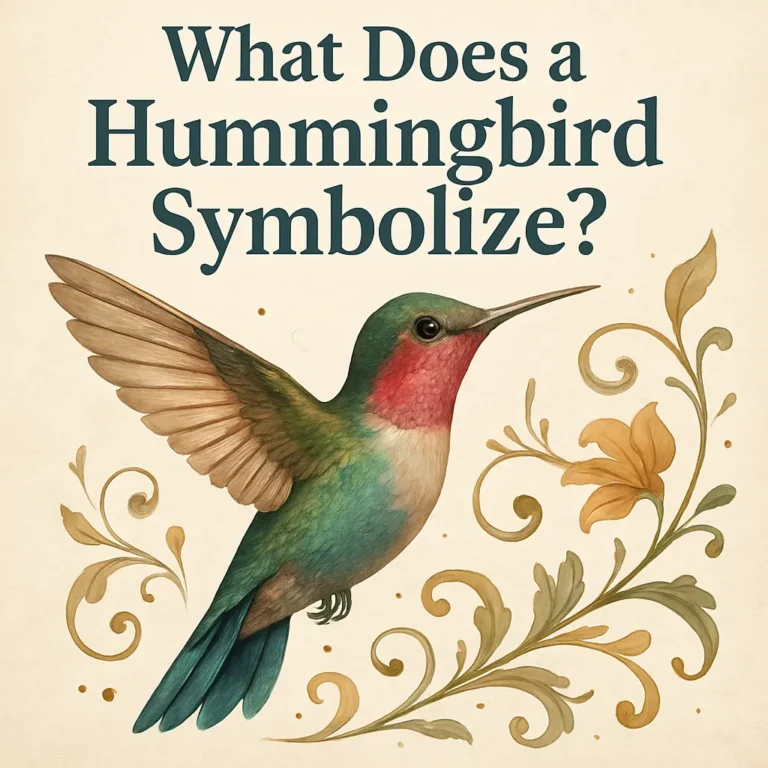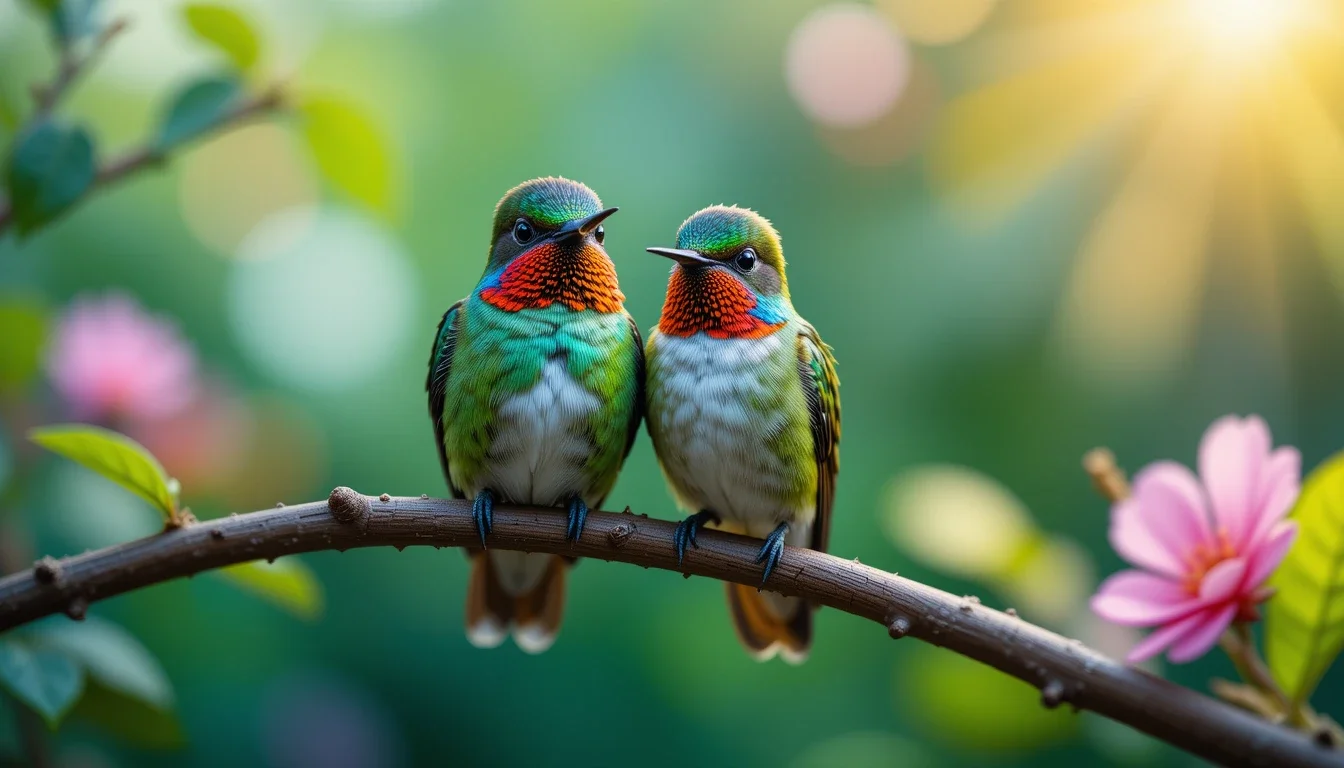
Hummingbirds captivate bird lovers with their dazzling colors, rapid wingbeats, and unmatched hovering flight. Beyond their beauty, these tiny birds follow a remarkable breeding cycle that sparks curiosity among nature enthusiasts. When do hummingbirds breed, lay eggs, and raise their young? The answer depends on food, climate, and region, but their nesting habits remain both fascinating and consistent. By understanding their breeding season, you can better support these birds and even encourage them to thrive in your garden.
Hummingbird Breeding Season
Hummingbirds breed once spring brings warmth and abundant flowers. Most species in North America start their breeding season from March through July. Timing depends on location and climate. In southern states like Arizona, Alabama, and South Carolina, breeding can begin earlier. In northern states like Maine and Michigan, mating starts later, often in late spring.
Ruby-throated hummingbirds, the most common in the U.S., breed mainly between April and July. Courtship displays include aerial dives, wing sounds, and rapid movements to attract females.
Hummingbird Courtship and Mating
During courtship, males perform displays called courtship dives. They spread tail feathers, create buzzing wing sounds, and showcase bright throat feathers. These displays are part of the hummingbird mating season, which peaks when flowers are abundant.
Unlike some birds, hummingbirds do not mate for life. After breeding, the male leaves, and the female handles nesting and raising chicks alone.
Nesting Habits and Egg Laying
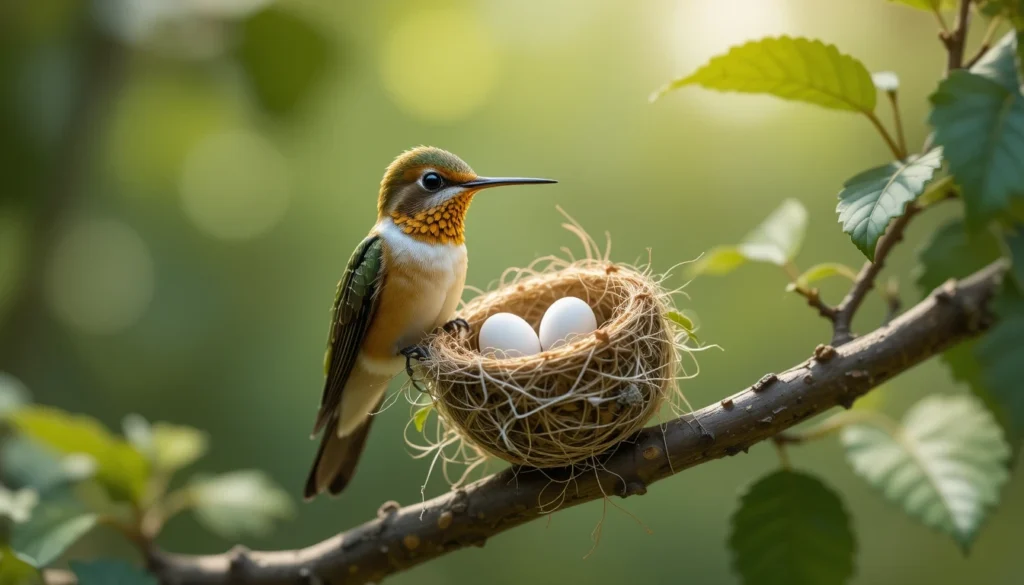
Hummingbirds build tiny nests using plant fibers, spider silk, and lichen. Nests are about the size of a walnut and often placed on tree branches, shrubs, or sheltered spots.
Females lay two tiny eggs per clutch. Hummingbird eggs are pea-sized and white. On average, hummingbirds lay eggs 1–3 times per year, depending on the species and climate. In California, they may nest as early as February, while in colder states nesting begins later in spring.
Incubation and Hatching
The female incubates the eggs for about 14 to 18 days. She keeps them warm, leaving briefly to feed. Hummingbird egg hatching time varies slightly by species.
Once hatched, chicks are blind and featherless. Many wonder why you never see baby hummingbirds—it is because they stay hidden in nests until strong enough to leave.
Baby Hummingbird Growth and Care
Mother hummingbirds feed chicks a mix of insects and nectar. Feeding happens every 20–30 minutes throughout the day.
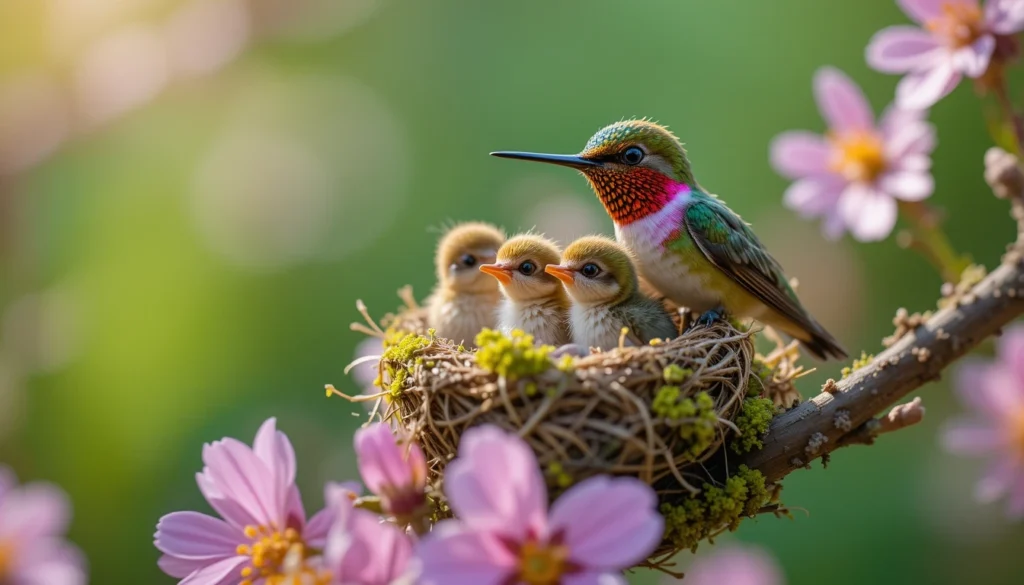
Chicks grow fast. Within 3 weeks, feathers develop, and they begin exercising their wings. By 18 to 28 days, most baby hummingbirds leave the nest.Hummingbird chicks grow remarkably fast, giving them an edge in survival. Learn more about their full lifespan and how long hummingbirds live after leaving the nest.
Regional Breeding Times
Breeding timelines vary by state:
- California: February to July
- Arizona: March to August
- South Carolina & Alabama: March to July
- Ohio & Indiana: April to July
- Maine & Michigan: May to July
- North Carolina: April to July
Ruby-throated hummingbirds breed mainly in eastern states from April to July.
Key Takeaways on Hummingbird Breeding
- Breeding season runs spring through summer.
- Females lay two eggs per clutch, up to three times yearly.
- Incubation lasts about 2 weeks.
- Baby hummingbirds leave the nest within 3–4 weeks.
- Timing differs by state and climate.
FAQs
Males perform dive displays, wing sounds, and flashes of bright feathers during mating season.
Most breed 1–3 times per year, depending on food supply and climate.
Babies hatch between April and July, though in warmer states they may appear earlier.
Birds do not get “pregnant.” Instead, females carry developing eggs and lay them one at a time.
Usually two per clutch, though rarely only one.
Males perform aerial displays, and the actual mating lasts only seconds.
Conclusion
Hummingbirds follow a delicate but efficient breeding cycle. They mate in spring, build tiny nests, and raise young with remarkable care. From the moment eggs are laid to the day chicks leave the nest, the process lasts just a few weeks. By knowing when hummingbirds breed and how they care for their young, you can better support them in your garden with food sources, safe spaces, and natural habitats.