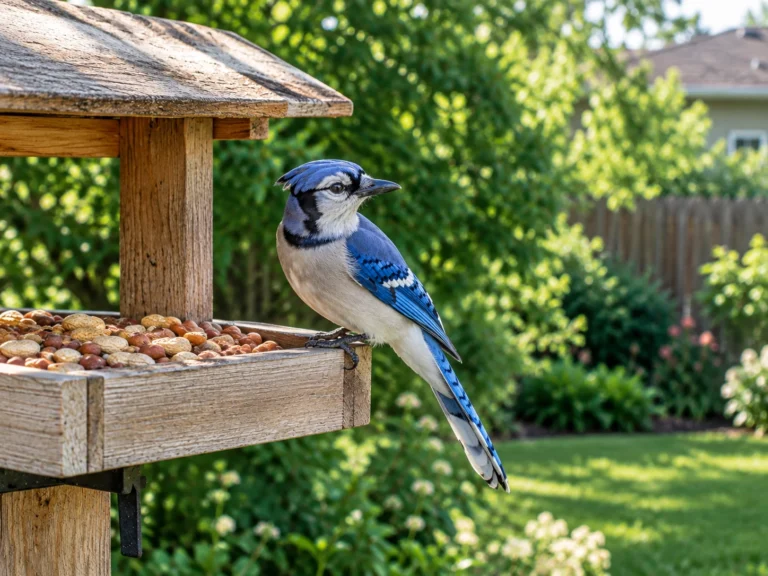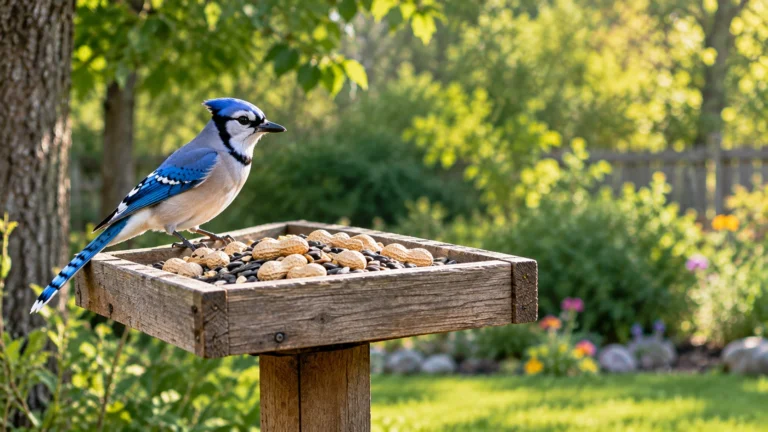
Blue Jays are bold, intelligent birds with a remarkably flexible diet. They eat different foods depending on the season and what is available in their habitat, from acorns and other nuts to seeds, insects, fruits, and berries.
If you’re wondering what do Blue Jays eat, understanding their natural diet can help you choose better foods for your backyard feeder.
If your goal is to bring more Blue Jays to your yard, start with our guide on how to attract Blue Jays, which covers feeders, water, and backyard habitat.
What Do Blue Jays Eat in the Wild?
Blue Jays are omnivorous and opportunistic feeders. Their diet changes throughout the year based on seasonal food availability.
Common foods include:
- Acorns and other nuts
- Seeds
- Insects
- Fruits and berries
- Corn and grains
- Occasionally eggs or young birds
This varied diet helps Blue Jays survive in forests, woodlands, suburban neighborhoods, parks, and backyard habitats.
1. Acorns and Nuts
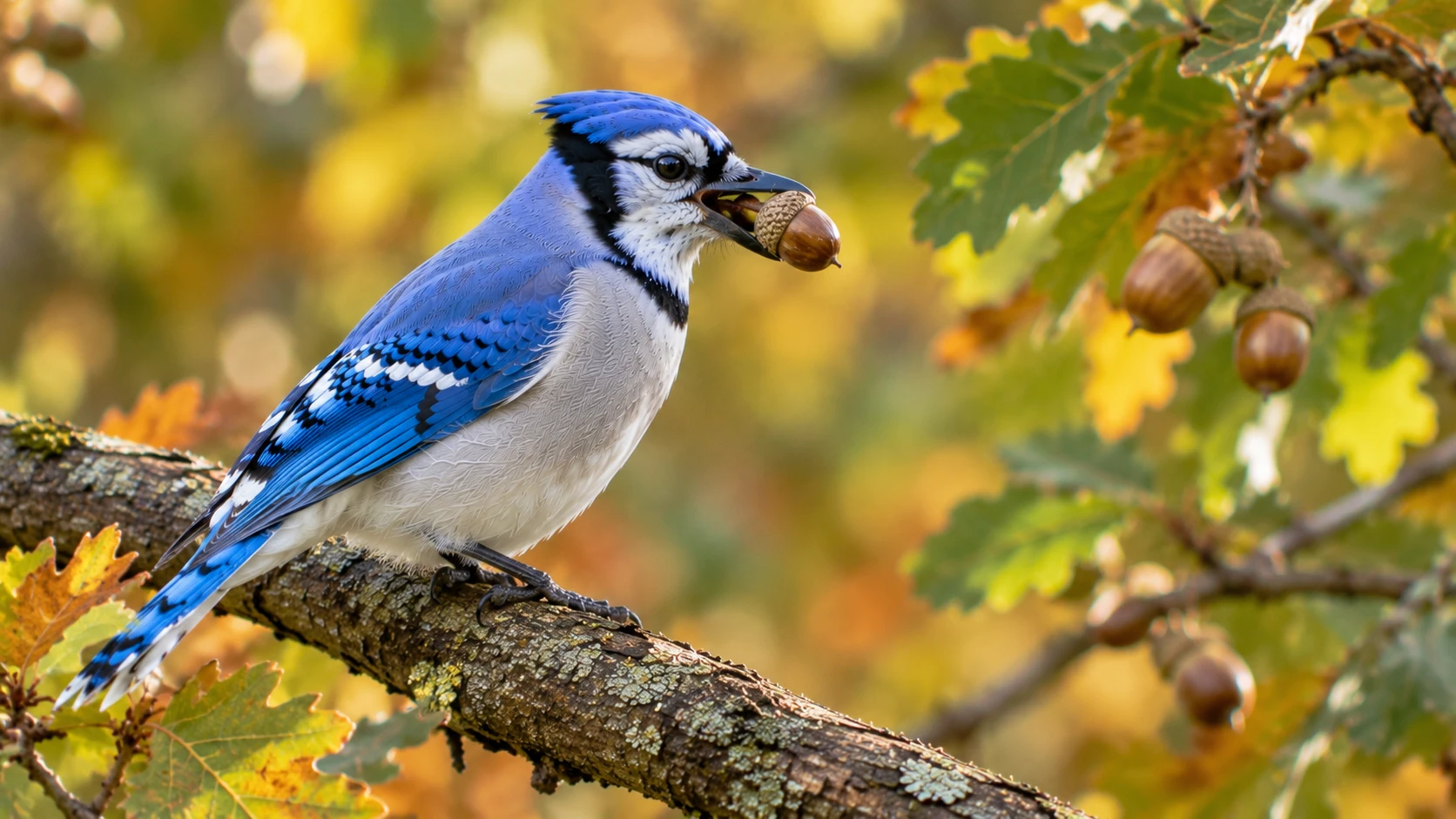
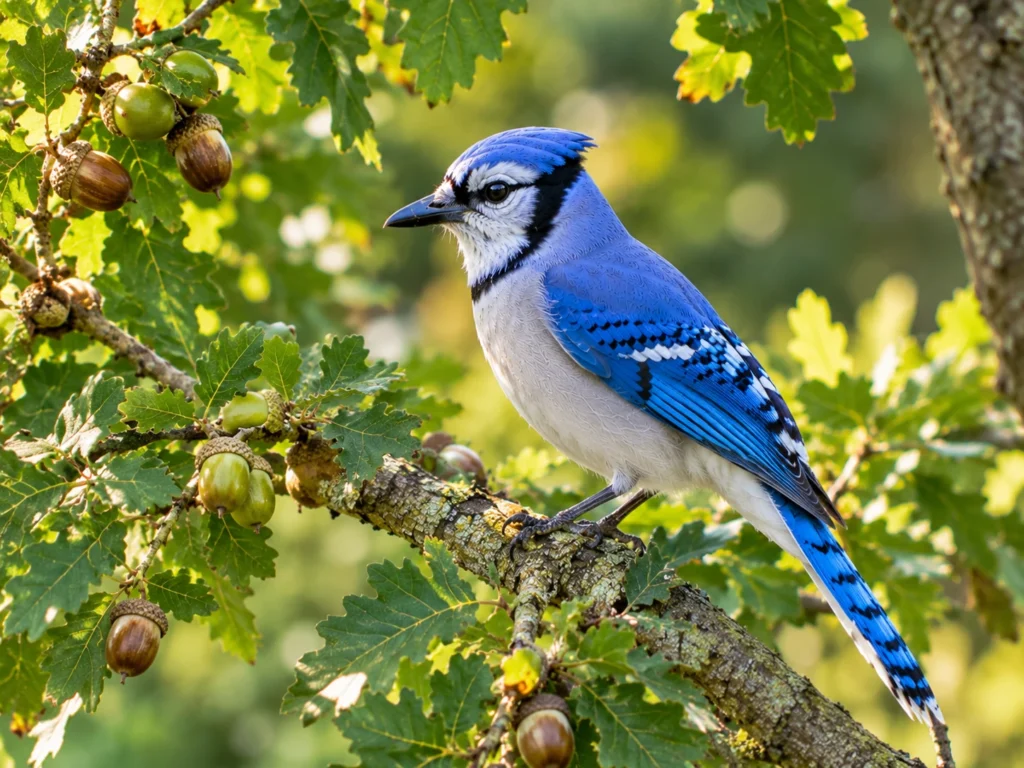
Acorns are one of the most important natural foods for Blue Jays, particularly during fall.
Blue Jays can carry acorns in their bills and store them in the ground or other locations for later. Some cached acorns are never recovered, which can help spread oak trees.
Other nuts may also become part of their diet when available.
The connection between Blue Jays and oak trees is especially interesting because these birds can influence where new oak trees grow. See our guide to the Blue Jay and oak tree relationship to learn more.
2. Seeds
Blue Jays readily eat many types of seeds.
In natural habitats, they may find seeds from trees, grasses, and other plants. At backyard feeders, sunflower seeds are a popular option.
Black oil sunflower seeds are particularly convenient for backyard bird feeding because they are widely available and attract several bird species.
If you’re trying to attract Blue Jays specifically, however, seeds don’t have to be your only option. Peanuts can also be an excellent choice.
3. Insects
Insects provide an important source of protein for Blue Jays.
Their natural diet can include:
- Caterpillars
- Beetles
- Grasshoppers
- Spiders
- Other insects and small invertebrates
Insects can be especially important during the breeding season when adult birds are raising young.
Blue Jays don’t depend entirely on insects, though. Their ability to switch between animal and plant foods is one reason they can adapt to different environments.
4. Fruits and Berries
Blue Jays also eat fruits and berries when these foods are available.
Depending on the habitat and season, they may feed on a variety of naturally occurring fruits.
Planting native trees and shrubs that produce berries can therefore provide natural food while also improving your backyard habitat for other birds.
5. Do Blue Jays Eat Other Birds?
Blue Jays can occasionally eat eggs or young birds, but this is not the main part of their diet.
Most of what they eat consists of plant foods, insects, and other readily available food sources.
Their reputation as predators can therefore be misleading if it suggests that they regularly hunt other birds.
If you want to understand this behavior in more detail, read our guide to whether Blue Jays eat other birds.
What Do Blue Jays Eat at Backyard Feeders?
If you’re feeding Blue Jays in your yard, several foods can work well.
Peanuts
Peanuts are a popular backyard food for Blue Jays.
You can offer unsalted peanuts, either shelled or in the shell. Whole peanuts are particularly suitable for larger birds such as Blue Jays.
Avoid salted, seasoned, flavored, or coated peanuts.
Sunflower Seeds
Sunflower seeds are another good choice.
Blue Jays can eat both black oil and striped sunflower seeds. They may also visit a feeder shared with cardinals, chickadees, and other backyard birds.
Suet
Suet can provide an energy-rich food option, especially during colder weather.
Choose a suitable bird suet product and keep it fresh. A sturdy suet feeder can make the food accessible to larger birds.
Corn
Blue Jays may also eat cracked corn or whole-kernel corn.
Corn can be offered as part of a varied feeding setup rather than as the only food available.
What Is the Best Food for Blue Jays?
There isn’t one food that Blue Jays must have in every situation.
For backyard feeding, unsalted peanuts are one of the best foods to try, particularly if your goal is to attract Blue Jays.
You can also offer sunflower seeds, suet, and appropriate corn.
A varied feeding station gives birds more choices and can make your yard attractive to multiple species.
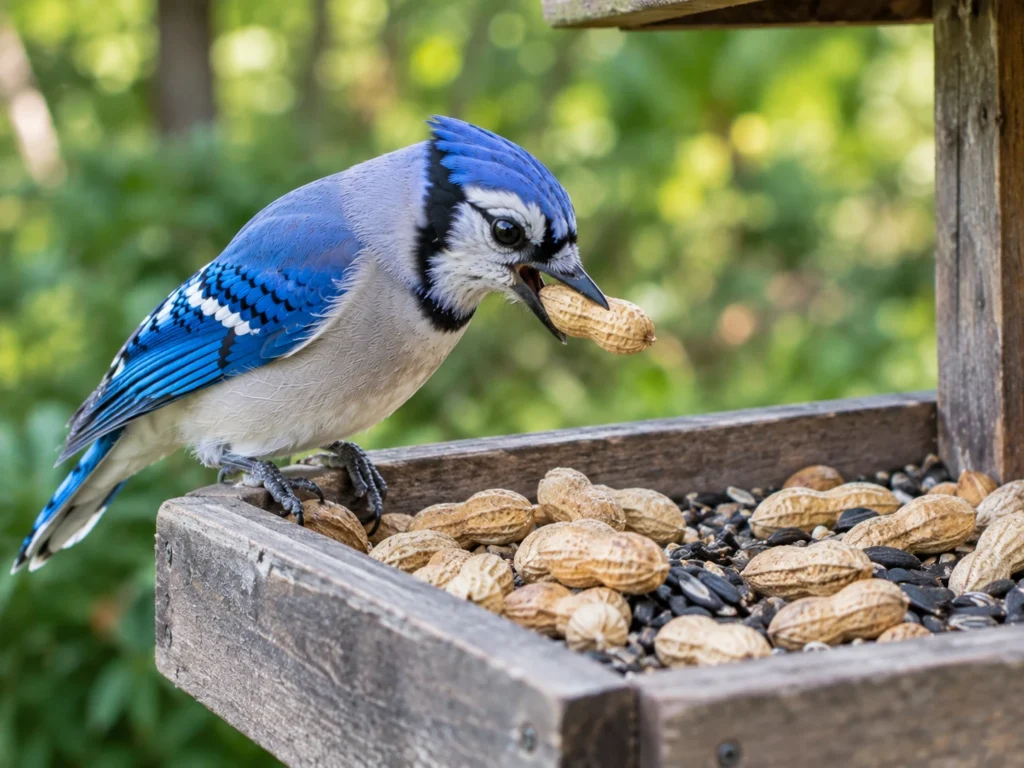
How Should You Feed Blue Jays?
Blue Jays are relatively large birds, so the feeder you choose matters.
A platform or tray feeder provides plenty of space for them to land and feed.
You can also use a sturdy hopper feeder or a feeder designed for peanuts.
For more help choosing the right setup, see our guide to the best bird feeder for Blue Jays.
Keep feeders clean and avoid allowing old or moldy food to accumulate.
What Foods Should You Avoid Giving Blue Jays?
Not everything that people eat is appropriate for wild birds.
Avoid offering Blue Jays:
- Salted or heavily seasoned foods
- Chocolate
- Caffeinated foods or drinks
- Moldy or spoiled food
- Foods with artificial flavorings or coatings
Instead, stick with simple bird-friendly options such as unsalted peanuts, sunflower seeds, suitable suet, and natural fruits.
Do Blue Jays Store Food for Later?
Yes. Blue Jays are well known for caching food.
They may carry acorns, peanuts, and other food items away from a feeding location and hide them for later use.
This behavior is particularly useful when food becomes harder to find. A Blue Jay may remember the locations of some of its food caches and return to them later.
Food caching also contributes to the ecological relationship between Blue Jays and oak trees because some buried acorns are left behind.
How Much Do Blue Jays Eat?
There isn’t one fixed amount that every Blue Jay eats each day.
Food consumption can vary depending on:
- Season
- Food availability
- Age
- Breeding activity
- Local habitat
- Whether the bird is storing food
A Blue Jay may also collect food without immediately eating everything it takes from your feeder.
That’s because some food may be carried away and cached for later.
What Do Baby Blue Jays Eat?
Young Blue Jays depend on their parents for food.
Adults collect suitable foods and bring them back to the nest. Insects and other protein-rich foods can be particularly important while young birds are developing.
If you find a young Blue Jay on the ground, don’t automatically assume it has been abandoned. Fledglings often spend time outside the nest while their parents continue caring for them.
Do Blue Jays Eat Bread?
Bread isn’t a good primary food for Blue Jays.
Although small amounts of plain bread are not generally considered a preferred food, bread provides much less nutritional value than natural foods or appropriate bird foods.
If you’re feeding Blue Jays, choose unsalted peanuts, sunflower seeds, suitable suet, or other bird-appropriate foods instead.
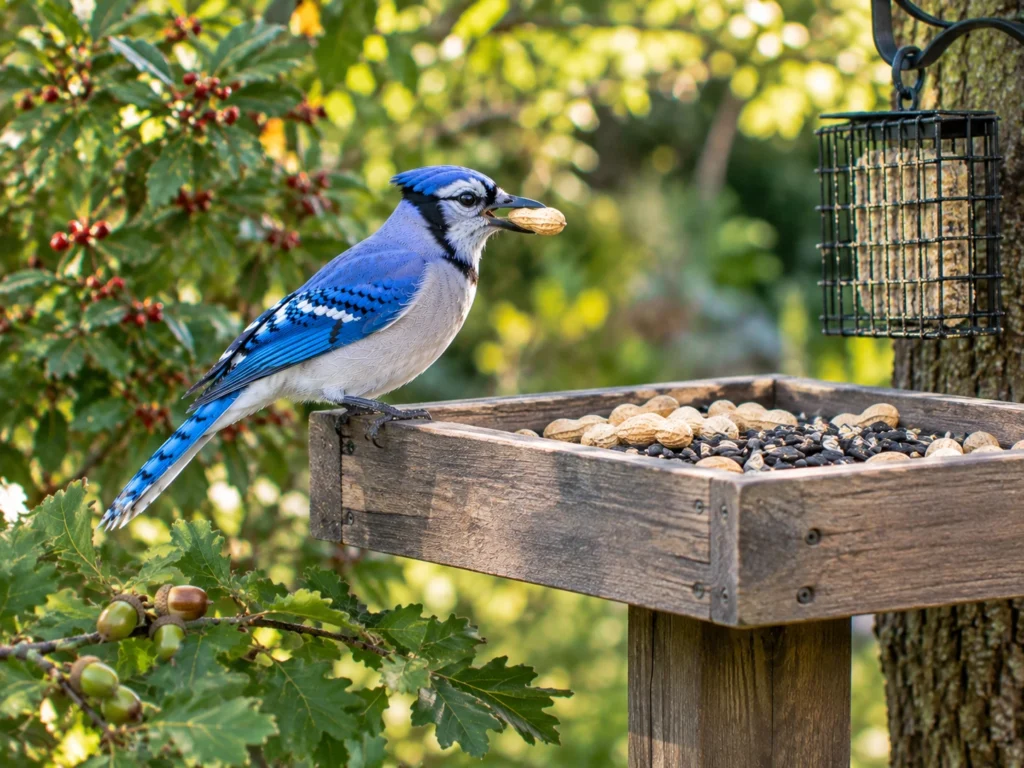
Do Blue Jays Eat Peanuts?
Yes. Blue Jays readily eat peanuts, making them one of the most popular foods to offer when trying to attract these birds.
Both shelled and unshelled peanuts can work.
For backyard feeding, always choose plain, unsalted peanuts and avoid flavored or seasoned varieties.
Best Foods to Offer Blue Jays
Here’s a simple reference for backyard birders:
| Food | Good Choice? | Notes |
|---|---|---|
| Unsalted peanuts | ✅ Yes | Excellent backyard option |
| Sunflower seeds | ✅ Yes | Popular and widely available |
| Suitable suet | ✅ Yes | Useful during colder weather |
| Corn | ✅ Yes | Can be offered as part of a varied diet |
| Natural berries | ✅ Yes | Seasonal natural food |
| Acorns | ✅ Natural | Important wild food |
| Salted peanuts | ❌ No | Avoid |
| Chocolate | ❌ No | Avoid |
| Caffeinated foods/drinks | ❌ No | Avoid |
| Moldy food | ❌ No | Avoid |
Final Thoughts
So, what do Blue Jays eat?
Their diet is much more varied than many backyard birders realize. In the wild, Blue Jays eat acorns, nuts, seeds, insects, fruits, berries, and other available foods. They can occasionally consume eggs or young birds, but these foods represent only a small part of their overall diet.
For backyard feeding, start with plain, unsalted peanuts and sunflower seeds. You can also offer suitable suet and corn while keeping feeders clean and food fresh.
If your goal is to bring Blue Jays to your yard, combine the right food with a suitable feeder, fresh water, and safe habitat. Our guide to how to attract Blue Jays covers the complete backyard setup.
Frequently Asked Questions
What is a Blue Jay’s favorite food?
Peanuts are a popular food for Blue Jays at backyard feeders. Sunflower seeds and suitable suet are also commonly accepted.
Do Blue Jays eat other birds’ eggs?
Blue Jays can occasionally eat eggs or young birds, but these foods make up a relatively small part of their overall diet.
Do Blue Jays eat peanuts?
Yes. Blue Jays readily eat peanuts. Plain, unsalted peanuts can be offered shelled or in the shell.
Do Blue Jays eat acorns?
Yes. Acorns are an important natural food for Blue Jays, particularly during fall and winter.
Can Blue Jays eat bread?
Bread is not an ideal food for Blue Jays because it provides limited nutritional value. Better choices include unsalted peanuts, sunflower seeds, and suitable bird suet.
Do Blue Jays store food?
Yes. Blue Jays cache food such as acorns and peanuts for later use.
What should I feed Blue Jays in winter?
Unsalted peanuts, sunflower seeds, and suitable suet can provide useful food options during winter when some natural foods are less available.