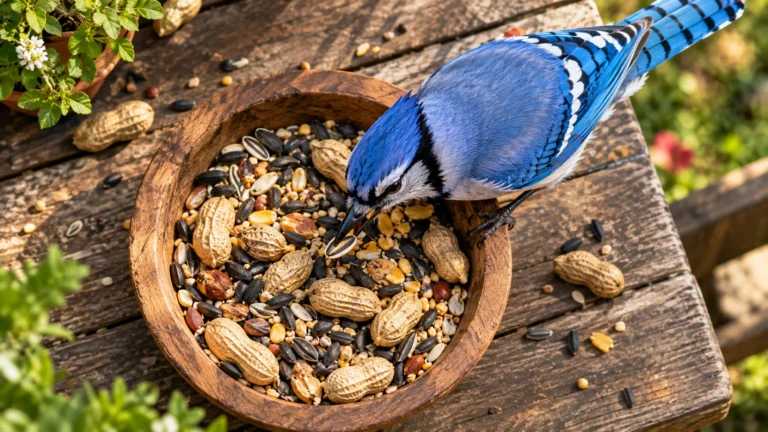
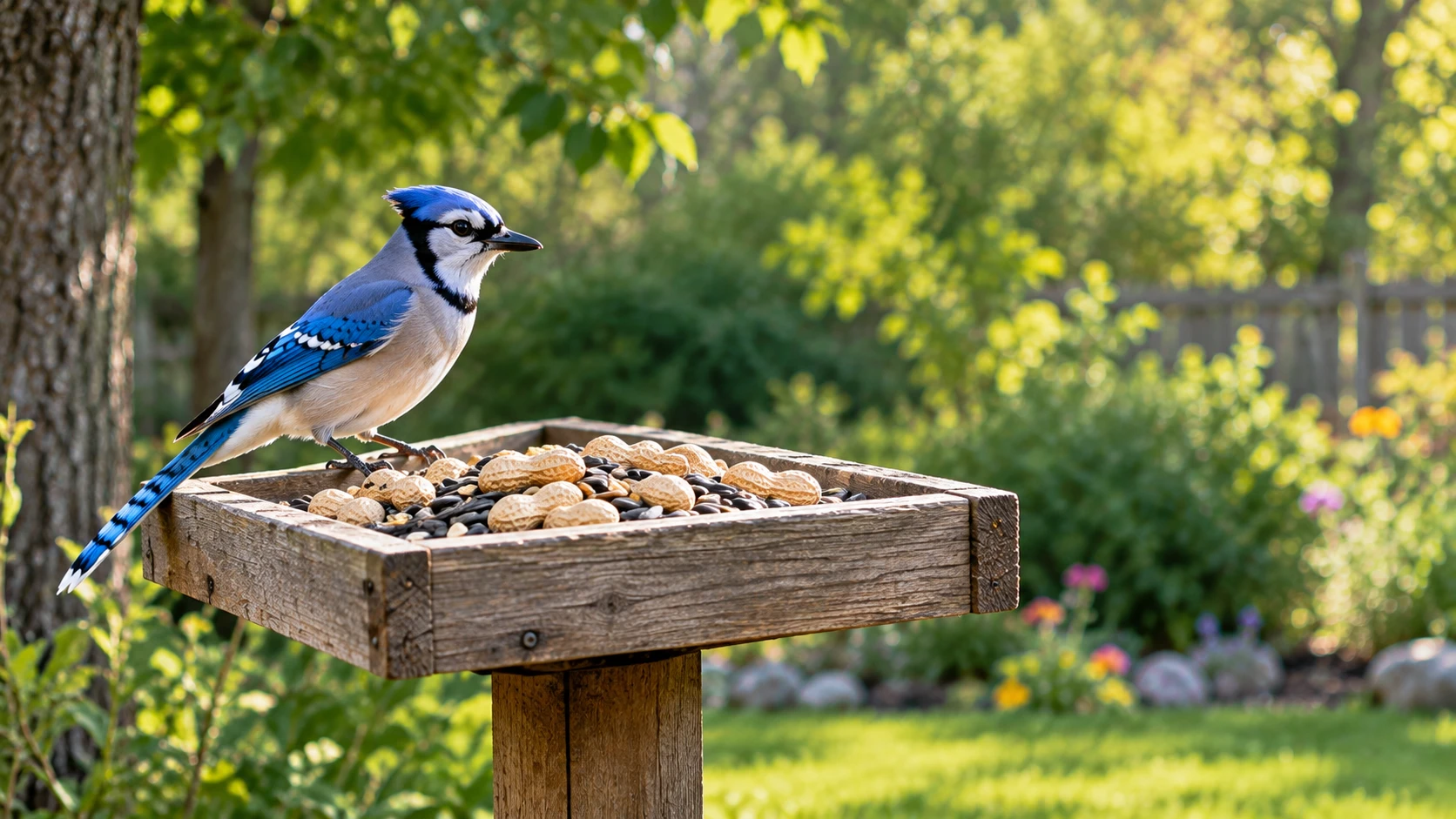
Blue Jays are large, active backyard birds that need more space than finches, chickadees, and other small songbirds. If your goal is to attract Blue Jays consistently, choosing the right feeder matters just as much as choosing the right food. If you’re still working on getting Blue Jays to notice your yard in the first place, our guide on how to attract Blue Jays covers the full setup, including feeders, water, and habitat.
The best bird feeder for Blue Jays is usually a sturdy platform feeder, large hopper feeder, or dedicated peanut feeder. These designs give Blue Jays enough room to land and make it easy to offer foods such as whole peanuts and sunflower seeds.
This article may contain affiliate links. If you purchase a product through a qualifying Amazon link, Birdiy may earn a commission at no additional cost to you. Full disclosure is at the bottom of this article.
Quick Comparison: Best Bird Feeders for Blue Jays
| Feeder | Best For | Main Advantage |
|---|---|---|
| Nature’s Way Bamboo Hanging Platform | Overall | Large open feeding area |
| Gray Bunny Whole Peanut Wreath | Peanuts | Designed for whole peanuts |
| Nature’s Way Cedar Fly-Through | Weather protection | Open design with roof |
| Woodlink 3-in-1 Platform | Versatility | Hang, pole-mount, or ground use |
| Nature’s Way Cedar Vertical Wave Hopper | High capacity | Large seed capacity |
Why Blue Jays Need a Different Bird Feeder
Blue Jays are considerably larger than many common feeder birds. Their size makes narrow tube feeders with small perches less practical.
A Blue Jay-friendly feeder should provide:
- Wide landing space
- Strong construction
- Easy access to large seeds and peanuts
- Stable perches
- Good drainage
- Weather protection
- Easy cleaning and refilling
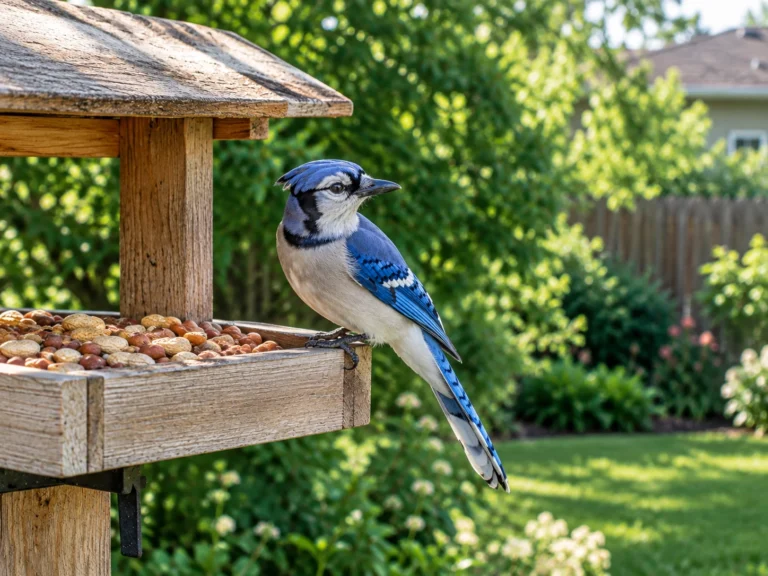
Platform feeders are particularly useful because Blue Jays can land directly on the feeding surface rather than balancing on a small tube-feeder perch. For a full breakdown of what to put in it, see our guide to what do Blue Jays eat.
1. Nature’s Way Bamboo Hanging Platform Feeder
A spacious platform feeder is a practical choice when you want to attract Blue Jays while also accommodating cardinals, doves, woodpeckers, and other larger backyard birds.
The Nature’s Way Bamboo Hanging Platform Feeder uses an open tray design that gives larger birds plenty of room to land. Its screened feeding surface also helps drainage after rain.
Key Features
- Large open feeding platform
- Screened bottom for drainage
- Bamboo construction
- Suitable for peanuts and sunflower seeds
- Accommodates multiple backyard birds
- Hanging design
Best For: Bird lovers who want a large platform bird feeder for Blue Jays and other larger songbirds.

- 【Durable & Weather-Resistant Design】Built from thick durable plastic with rust-proof screws, this hanging bird feeder wo…
- 【Large Capacity & Spacious Platform】The 10″x10″ feeding tray holds up to 3.5 lbs of bird seed—plenty of room for multipl…
- 【Metal Mesh Bottom for Drainage & Cleanliness】The powder-coated mesh base allows water to drain quickly while keeping se…
2. Gray Bunny Whole Peanut Wreath
If your main goal is attracting Blue Jays, a feeder designed specifically for whole peanuts is worth considering. Blue Jays are strongly attracted to peanuts, particularly whole peanuts in the shell. A peanut wreath gives them a place to land, grab food, and carry it away.
Key Features
- Holds whole peanuts
- Simple wire design
- Easy to refill
- Suitable for Blue Jays and woodpeckers
- Compact compared with large platform feeders
Best For: Backyards where peanuts are the primary food used to attract Blue Jays.

- Bird Friendly Design: Birds Choice bird feeder has a unique design with large holes in thick acrylic panels, making it e…
- Easy Fill: The convenient hinged roof design makes this hanging feeder easy to fill with whole peanuts in the shell. Hol…
- Recycled Materials: Birds Choice bird feeder is made from an ultra-durable 1/2″ poly-lumber that is made from recycled p…
3. Nature’s Way Cedar Fly-Through Platform
A covered platform feeder combines the space Blue Jays need with additional protection from rain and snow. The open-sided fly-through design allows large birds to enter easily while the roof helps protect bird seed from direct exposure to the weather.
Key Features
- Open fly-through design
- Protective roof
- Cedar construction
- Screened feeding area
- Drainage
- Suitable for larger backyard birds
Best For: Bird watchers who want a weather-resistant bird feeder for Blue Jays without using a narrow tube design.
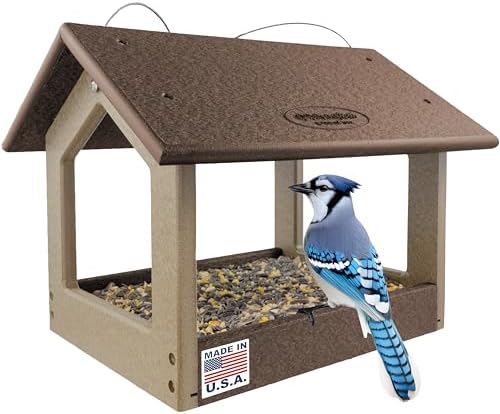
- Covered Tray Bird Feeder – Our platform bird feeders for outside feature an angled roof and large open sides allowing bi…
- Wild Bird Feeder – Fill this multi bird feeder platform to attract species like cardinals, chickadees, finches, sparrows…
- Large Bird Feeder Trays for Outside – 12″ L x 10″ W x 9 1/4″ H overall, 10″ L x 7 3/4″ W seed tray. Our covered bird fee…
4. Woodlink 3-in-1 Platform Feeder
The Woodlink 3-in-1 Platform Feeder is useful if you want flexibility in how you set up your bird feeding station. Its platform design works well for larger birds, and the feeder can be used in different positions depending on your backyard setup.
Key Features
- Platform-style feeding surface
- Multiple installation options
- Cedar construction
- Screened bottom
- Suitable for peanuts and sunflower seeds
- Works for multiple bird species
Best For: Bird lovers who want a versatile Blue Jay feeder that can be adapted to different feeding locations.

5. Nature’s Way Cedar Vertical Wave Hopper
A hopper bird feeder is another option for Blue Jays, especially if you want to store more bird seed between refills. A large hopper should have wide, sturdy perching areas rather than the small perches found on many tube feeders.
Key Features
- Large seed capacity
- Cedar construction
- Covered seed reservoir
- Wide feeding areas
- Easy seed-level visibility
- Suitable for sunflower seeds and mixed bird seed
Best For: Large backyards and bird feeding stations where you want high-capacity bird feeding.
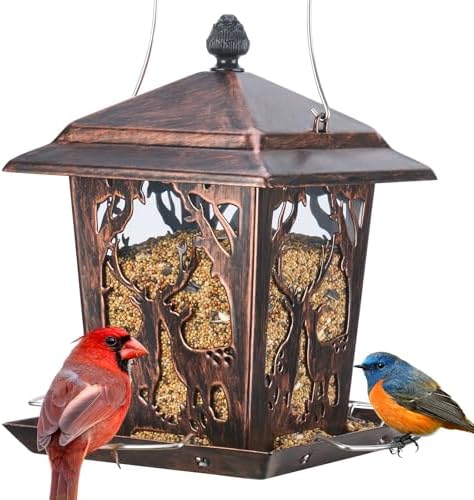
- Unique Pattern: Adorned with an enchanting pair of deer, this elegant design not only attracts a variety of birds but al…
- Durable & Weather-Resistant: Crafted from robust, rust-free metal, this feeder is built to withstand harsh weather condi…
- All-Round Feeding: Featuring perches on all four sides, this feeder accommodates multiple birds at once, enhancing your …
What Food Attracts Blue Jays?
The feeder is only part of the equation. The food you offer can make a major difference.
Whole Peanuts. Whole peanuts in the shell are one of the most effective foods for attracting Blue Jays. They can grab peanuts and carry them away, which fits their natural food-caching behavior.
Sunflower Seeds. Blue Jays readily use sunflower seeds. Striped sunflower seeds are particularly useful in a feeder intended for larger birds.
Cracked Corn. Cracked corn can also be included in a backyard bird feeding mix and may attract Blue Jays along with other seed-eating birds.
Suet. Suet can provide another food option, particularly during colder weather, and may attract Blue Jays as well as woodpeckers and nuthatches.
For a complete breakdown of their diet, including what to avoid feeding them, see our guide to what do Blue Jays eat .
How to Attract More Blue Jays to Your Feeder
If Blue Jays are not visiting yet, start with the food they are most likely to recognize.
Step 1: Start with whole peanuts in a suitable platform or peanut feeder.
Step 2: Add sunflower seeds alongside the peanuts.
Step 3: Use a large feeder that gives Blue Jays enough space to land comfortably.
Step 4: Keep the food fresh, and remove wet or spoiled seed.
Step 5: Be consistent — keep the feeder in the same location and maintain a dependable supply. How to Attract Blue Jays to Your Yard
Final Buying Advice
For most backyards, an open platform feeder is a practical starting point because Blue Jays have plenty of room to land and you can offer different foods. If your main goal is specifically to attract Blue Jays, a whole-peanut feeder is another strong option. If you need more seed capacity and weather protection, a large hopper can make feeding easier.
The key is matching the feeder to the bird: large feeding area, sturdy construction, easy access, suitable food, and simple maintenance.
Frequently Asked Questions
What is the best bird feeder for Blue Jays?
A large platform feeder is one of the most suitable choices because it provides a wide, stable feeding surface. Peanut feeders and large hopper feeders are also useful options.
What food attracts Blue Jays to a feeder?
Whole peanuts in the shell are a particularly strong attractant. Blue Jays also commonly eat sunflower seeds and cracked corn.
Do Blue Jays use tube feeders?
They can, but standard tube feeders are generally designed around smaller birds and may not provide enough space for a large Blue Jay. Platform, hopper, and peanut feeders usually provide easier access.
Do Blue Jays like platform feeders?
Yes. Platform feeders provide the wide, open feeding surface that suits larger birds such as Blue Jays, and make it easy to offer peanuts and sunflower seeds.
What is the best feeder for Blue Jays and Cardinals?
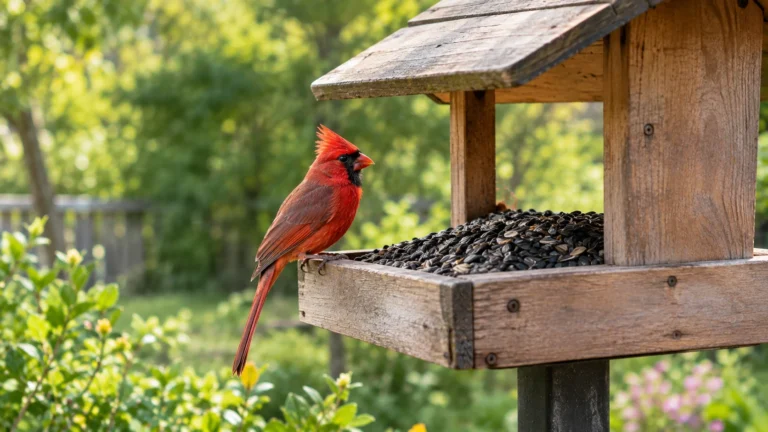
A large platform feeder can work well for both species. Blue Jays appreciate the open space, while Northern Cardinals can also use the feeding surface comfortably.
How do I keep squirrels away from a Blue Jay feeder?
A properly positioned squirrel baffle can help protect a pole-mounted feeder. Be careful with weight-activated squirrel-proof feeders, since a mechanism that excludes squirrels by weight may also restrict access for larger birds.
How big should a Blue Jay feeder be?
There is no single required dimension, but a feeder should provide enough room for a Blue Jay to land, turn, and feed without being cramped. Large platform feeders are generally easier for them to use than narrow tube feeders.
Where is the best place to put a Blue Jay feeder?
Place it in a relatively open area near trees or shrubs that provide cover, while leaving enough clear space for birds to approach and depart safely.