Western Meadowlark (Sturnella neglecta)
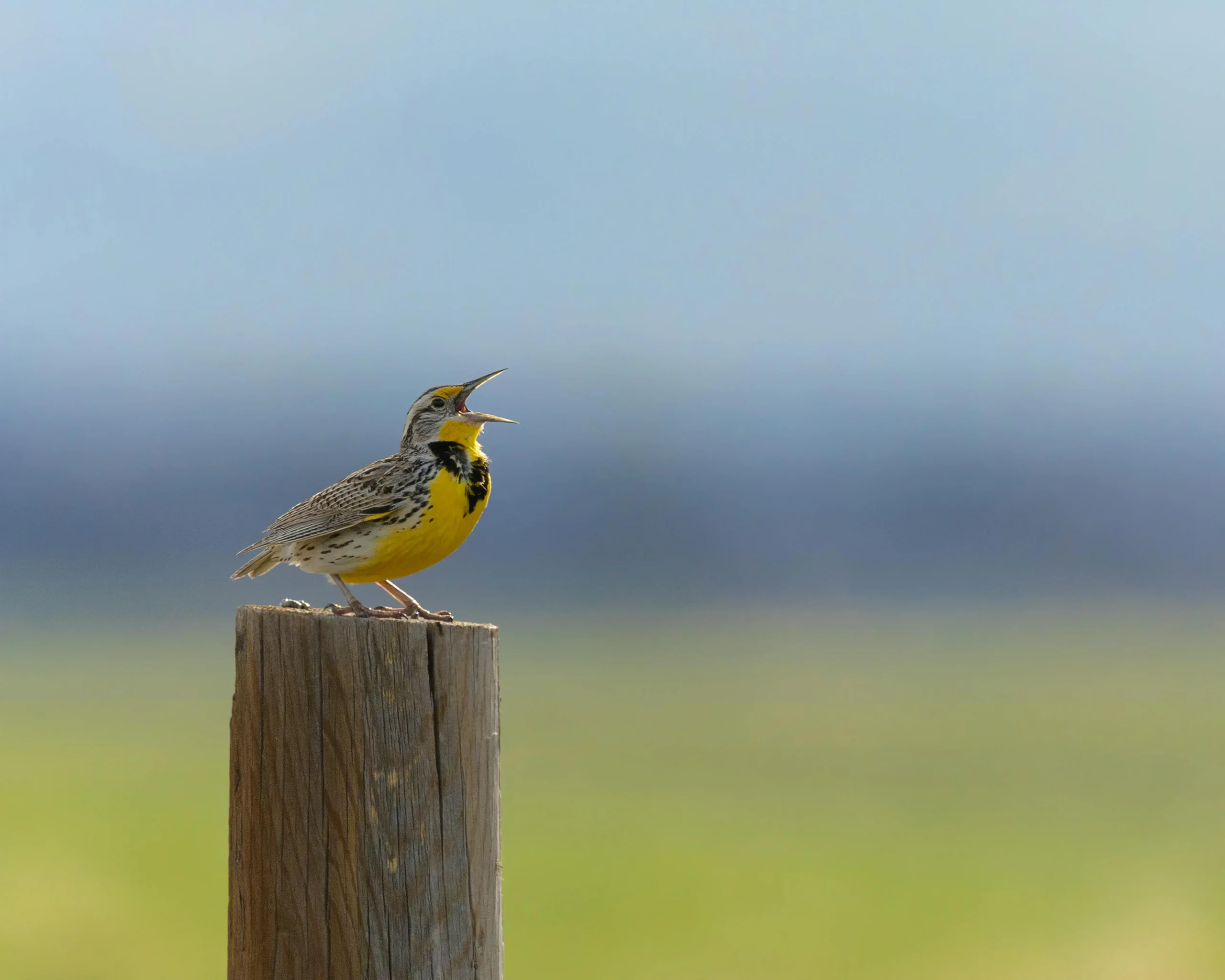
- Color: Bright yellow chest with bold black “V”
- Size: 6.3–10.2 in (16–26 cm)
- Wingspan: 16 in (41 cm)
- Weight: 3–4 oz (85–135 g)
- Call: Clear, flute-like whistles
- Lifespan: 5–8 years
The Western Meadowlark is one of the most iconic songbirds of the American West. Known for its clear, flute-like melody and bright yellow chest, this prairie bird thrives in grasslands, farms, and meadows across the western United States.
Identification
Western Meadowlarks have streaked brown upperparts, a bright yellow breast with a bold black “V,” and a long pointed bill. They often perch on fence posts or shrubs, singing to defend their territory.
Range & Habitat
Common across western and central North America, especially in:
- Prairies & meadows
- Open grasslands
- Ranches & farmlands
- Roadside fields
Diet
They are omnivores with a seasonally shifting diet:
- Insects (grasshoppers, beetles, crickets)
- Spiders & caterpillars
- Seeds & grains
- Berries in winter
Nesting
Nests are built on the ground, hidden among tall grasses.
- Clutch: 3–7 eggs
- Incubation: 13–15 days
- Fledge: ~12 days
Their dome-shaped nests provide excellent camouflage.
Behavior
Famous for their melodious flute-like song, Western Meadowlarks forage on the ground, using their bill to probe soil for insects. They run quickly and often stay low in grasslands to avoid predators.
Conservation Status
Least Concern, but habitat loss has led to gradual declines in some areas.
FAQ
What’s the difference between Western and Eastern Meadowlarks?
Their songs differ — Western Meadowlarks have a clear, flute-like tune while Eastern Meadowlarks have a shorter, buzzy whistle.
Do Western Meadowlarks migrate?
Northern populations migrate south, but many remain year-round where winters are mild.
Where do Western Meadowlarks nest?
They nest on the ground, hidden in tall grass or prairie vegetation.
Are they state birds?
Yes — they are the state bird of 6 U.S. states due to their iconic prairie song.