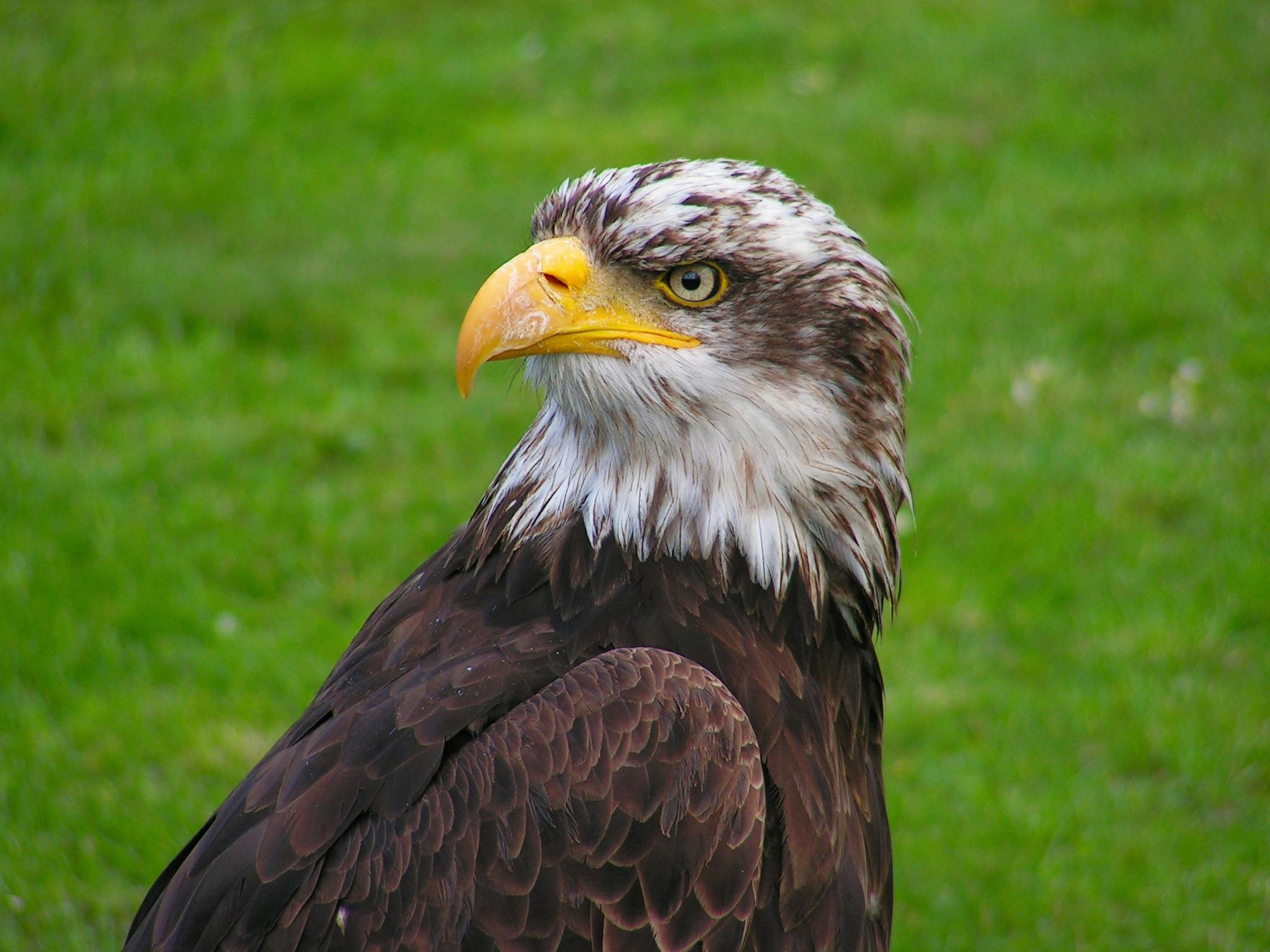
Bald Eagle (Haliaeetus leucocephalus)
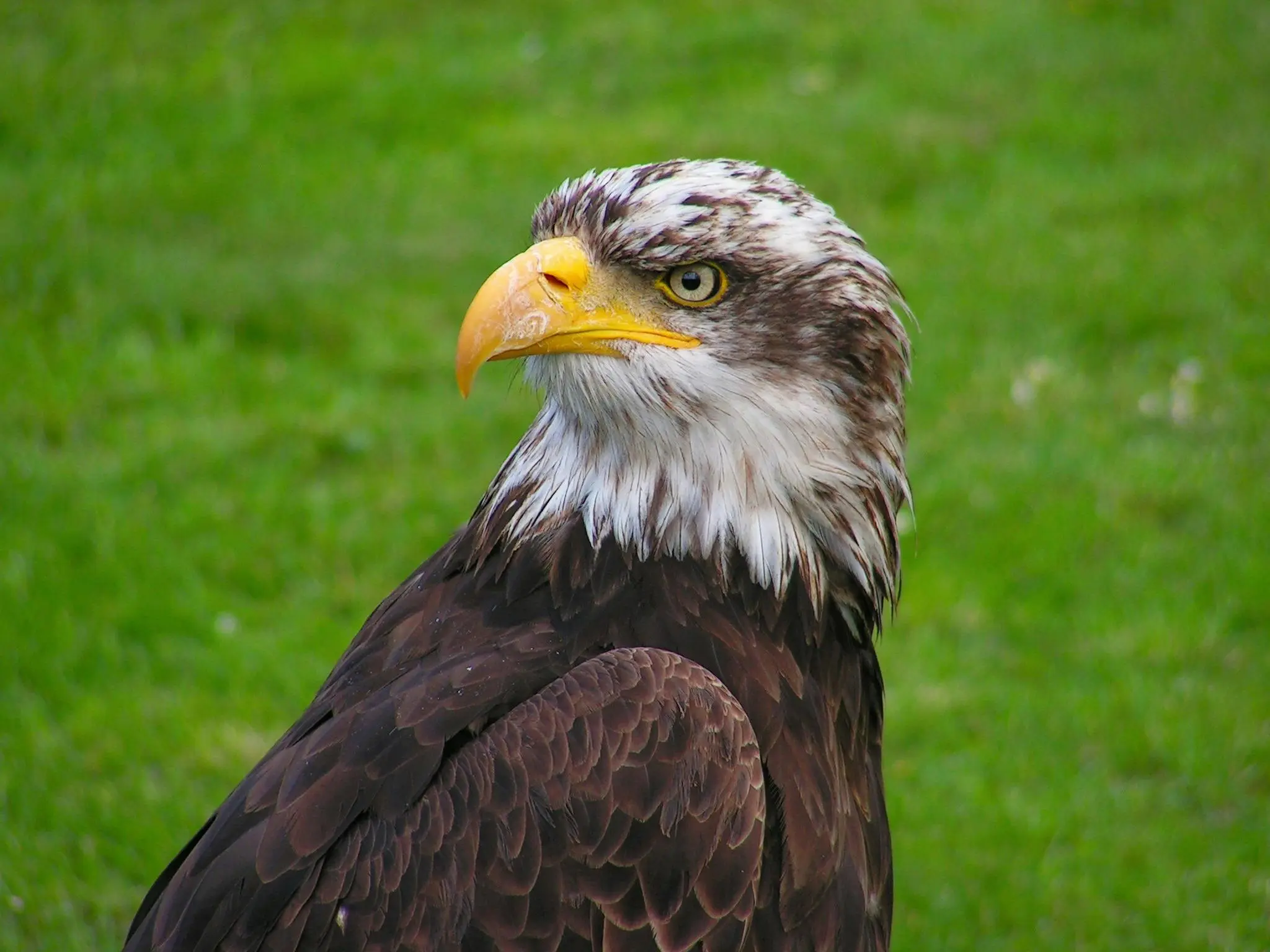
- Adult Color: White head & tail, dark brown body
- Beak: Large, hooked, yellow
- Size: 28–40 in (70–102 cm)
- Wingspan: 6–7.5 ft (1.8–2.3 m)
- Weight: 6.5–14 lbs (3–6.3 kg)
- Call: High-pitched whistles & chirps
- Lifespan: 20–30+ years wild
The Bald Eagle is one of the most powerful and iconic birds in North America, known for its majestic appearance, soaring flight, and symbolic importance as the national bird and symbol of the United States.
Identification
Adults are unmistakable with a white head and tail and dark brown body. Immature birds are mottled brown and take about five years to develop full adult plumage.
Range & Habitat
Bald Eagles are found across North America, especially near water:
- Lakes & reservoirs
- Rivers & wetlands
- Coastal areas
- Forested regions
They prefer tall trees or cliffs for nesting and roosting.
Diet
Primarily feeds on fish but also consumes:
- Waterfowl & small mammals
- Carrion (dead animals)
- Occasional scavenging
Nesting
Bald Eagles build some of the largest nests in the world—massive structures in tall trees.
- Clutch: 1–3 eggs
- Incubation: ~35 days
- Fledging: 10–12 weeks
Behavior
Powerful flyers, often seen soaring with wings held flat. Known for dramatic aerial displays and sometimes stealing prey from other birds like Ospreys.
Conservation Status
Recovered — Least Concern. Once endangered due to pesticides and hunting, Bald Eagles rebounded thanks to conservation efforts.
FAQ
Do Bald Eagles migrate?
Many northern populations migrate south in winter; others remain year-round where food is available.
What do Bald Eagles eat most?
Mainly fish, but also birds, mammals, and carrion.
How large is an eagle’s nest?
Up to 8 feet wide and thousands of pounds — reused and expanded yearly.
How long until they get a white head?
About 5 years to develop full adult plumage.