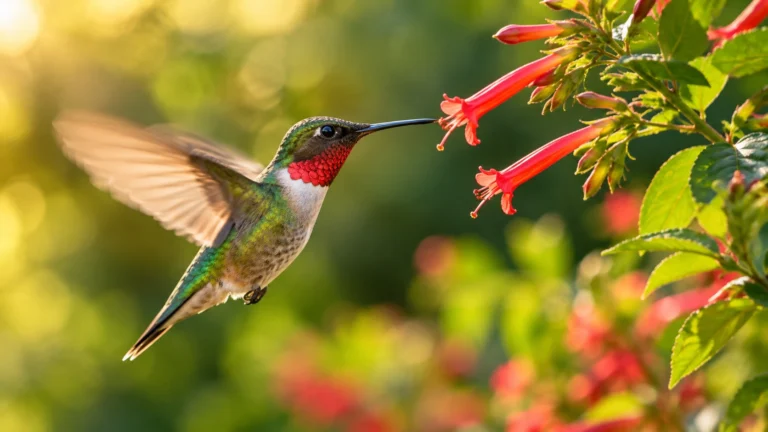
If you have spotted an unfamiliar bird in your backyard, you are not alone. The Midwest is home to a wide variety of songbirds, woodpeckers, finches, sparrows, doves, and other species. Identifying them becomes much easier when you know what features to look for.
This backyard birds of the Midwest identification guide helps you identify common birds using their appearance, size, color, habitat, behavior, and location.
Not sure what bird you saw? Use our Bird Species Finder to narrow down possible species based on the characteristics you observed.
Backyard Birds of the Midwest Identification
The Midwest offers diverse habitats, from suburban yards and gardens to forests, farms, wetlands, and open fields. Because of this, many different birds can appear around a backyard feeder.
Some of the most common Midwest backyard birds include:
- Northern Cardinal
- Blue Jay
- American Robin
- Mourning Dove
- Black-capped Chickadee
- American Goldfinch
- House Finch
- House Sparrow
- Downy Woodpecker
- Red-bellied Woodpecker
- Tufted Titmouse
- White-breasted Nuthatch
- Dark-eyed Junco
The easiest way to identify an unfamiliar bird is to combine several characteristics instead of relying on color alone.
How to Identify a Backyard Bird
When you see a bird, try to remember these seven things:
1. Size
Compare the bird with a familiar species.
Is it:
- Smaller than a sparrow?
- About the size of a sparrow?
- Similar to a robin?
- About the size of a crow?
- Larger than a robin?
Size immediately eliminates many possible species.
2. Color
Look carefully at the bird’s:
- Head
- Chest
- Back
- Wings
- Belly
- Tail
For example, a male Northern Cardinal is easy to recognize because of its bright red body and black facial mask.
3. Beak
The shape of the bill can provide an important identification clue.
Short, thick bills are common among seed-eating birds, while long or thin bills are associated with different feeding behaviors.
4. Tail
Look at whether the tail is:
- Long
- Short
- Rounded
- Forked
- Pointed
Tail shape becomes especially useful when you cannot clearly see the bird’s face.
5. Behavior
Watch what the bird is doing.
Does it:
- Feed on the ground?
- Visit a feeder?
- Climb a tree?
- Peck at wood?
- Search through leaves?
- Hover near flowers?
Behavior can separate species that look similar.
6. Habitat
Where did you see the bird?
A bird in a mature forest may be different from one regularly visiting an open lawn or backyard feeder.
7. Location and Season
Your state and the time of year matter.
Some birds remain in the Midwest throughout the year, while others appear during migration or only during certain seasons.
Backyard Birds of the Midwest Identification Pictures
Pictures are one of the most useful resources for bird identification.
When comparing backyard birds of the Midwest identification pictures, don’t just compare the overall color. Look closely at specific markings.
Check:
- Head pattern
- Eye stripe
- Beak
- Wing bars
- Chest markings
- Tail pattern
- Leg color
- Body shape
It’s also important to compare both males and females. Some species have significant differences between the sexes.
If you have a photograph of an unfamiliar bird, use our Bird Species Finder to narrow down the possible species.
[🔎 Try the Bird Species Finder →]
Birds of the Midwest With Pictures
Here are some common birds you may encounter around Midwest homes.
Northern Cardinal
The Northern Cardinal is one of the most recognizable backyard birds in the Midwest.
The male has bright red plumage, a prominent crest, and a black mask around the face. Females are mainly brown with reddish highlights.
Cardinals commonly visit bird feeders for sunflower seeds.
Blue Jay
Blue Jays are medium-to-large songbirds with blue, white, and black plumage.
Their large crest, strong bill, and loud calls make them relatively easy to recognize.
They often visit feeders for peanuts and sunflower seeds.
American Robin
American Robins have orange-red breasts, gray-brown backs, and relatively long legs.
You will often see them walking across lawns searching for worms and insects rather than sitting at a seed feeder.
Black-capped Chickadee
This small bird has a distinctive black cap and bib with white cheeks.
Black-capped Chickadees are active around backyard feeders and commonly occur in wooded and suburban environments.
American Goldfinch
Male American Goldfinches can become bright yellow during the breeding season, with contrasting black wings.
They are particularly attracted to small seeds such as nyjer.
Mourning Dove
Mourning Doves have soft gray-brown plumage, a slender body, and a long pointed tail.
They frequently feed on the ground underneath bird feeders.
Midwest Backyard Birds Identification Chart
Use this simple birds of the Midwest identification chart as a quick reference:
| Bird | Size | Main Identification Feature | Common Habitat |
| Northern Cardinal | Medium | Red male and crest | Backyards |
| Blue Jay | Medium-Large | Blue wings and crest | Woodlands |
| American Robin | Medium | Orange breast | Lawns |
| Black-capped Chickadee | Small | Black cap and white cheeks | Trees |
| American Goldfinch | Small | Yellow body and black wings | Gardens |
| Mourning Dove | Medium | Long pointed tail | Open yards |
| Downy Woodpecker | Small | Black-and-white pattern | Trees |
| Red-bellied Woodpecker | Medium | Red crown | Mature trees |
| House Finch | Small | Red head and streaked body | Urban areas |
| Tufted Titmouse | Small-Medium | Gray body and pointed crest | Woodlands |
Most Common Backyard Birds in the Midwest
The exact birds you see depend on your state, habitat, season, and food sources. However, these are among the birds commonly encountered around Midwest backyards:
- Northern Cardinal
- Blue Jay
- American Robin
- Mourning Dove
- Black-capped Chickadee
- American Goldfinch
- House Finch
- House Sparrow
- Downy Woodpecker
- Red-bellied Woodpecker
If you’re just beginning birdwatching, learning these common species is a good starting point.
Common Small Birds in the Midwest
Small birds can be difficult to identify because several species have similar colors and body shapes.
Some common small Midwest birds include:
- Black-capped Chickadee
- American Goldfinch
- House Finch
- House Sparrow
- Dark-eyed Junco
- Tufted Titmouse
- White-breasted Nuthatch
The best approach is to combine size with color, markings, behavior, and habitat.
For example, a small bird with a black cap and white cheeks is more likely to be a chickadee than a finch.
Birds of the Midwest Identification System
A simple identification system can make birdwatching much easier.
Start with this sequence:
Step 1: Estimate the bird’s size.
Step 2: Identify its main colors.
Step 3: Look at the head and facial markings.
Step 4: Check the beak shape.
Step 5: Examine the wings and tail.
Step 6: Observe its behavior.
Step 7: Consider your location and season.
Step 8: Compare the results with a bird identification guide or use our interactive Bird Species Finder.
This approach is more reliable than trying to identify a bird from one characteristic.
Backyard Birds of the Midwest Identification PDF
Many birdwatchers search for a backyard birds of the Midwest identification PDF because they want a quick reference while watching birds.
A static PDF can be useful, but an interactive identification tool has an advantage: you can filter birds according to what you actually observed.
Instead of searching through dozens of bird photographs manually, enter characteristics such as:
- Color
- Size
- Habitat
- Beak
- Tail
- Behavior
- Season
Our Bird Species Finder can then help narrow down the possible matches.
[🔎 Identify a Bird Interactively →]
Backyard Birds of North America vs. Midwest Birds
The Midwest is part of the larger North American birding region, so some Midwest species are also found in other parts of the continent.
However, the species you encounter can change significantly depending on geography, climate, habitat, and migration.
For the most accurate identification, start with birds known to occur in your specific Midwest location.
If you’re unsure where to start, our Bird Species Finder can help you narrow down the possibilities.
Can Google Identify a Bird From a Picture?
Yes, image-recognition tools such as Google Lens may sometimes identify a bird from a photograph.
However, image recognition should be treated as a starting point rather than a guaranteed identification.
For better results, combine the photograph with:
- Geographic location
- Bird size
- Plumage
- Beak shape
- Habitat
- Behavior
- Season
A regional identification tool can help you compare these characteristics.
How to Attract More Midwest Backyard Birds
Once you know which birds are visiting your yard, you may want to attract more of them.
Add Bird Feeders
Different birds prefer different foods. Sunflower seeds are popular with many backyard species, while nyjer is especially useful for attracting goldfinches.
Provide Fresh Water
A clean birdbath can give birds a reliable source of drinking and bathing water.
Plant Native Plants
Native plants can provide natural food, cover, and nesting opportunities.
Add Shelter
Trees, shrubs, and dense vegetation can give birds places to hide from predators and rest.
Keep Feeders Clean
Regularly cleaning feeders helps maintain a healthier feeding environment.
Frequently Asked Questions
What are the most common birds in the Midwest?
Common Midwest backyard birds include Northern Cardinals, Blue Jays, American Robins, Mourning Doves, Black-capped Chickadees, American Goldfinches, House Finches, House Sparrows, and Downy Woodpeckers. The exact species depend on your location and habitat.
Can Google identify a bird from a picture?
Google Lens can sometimes identify a bird from a photograph, but the result may not always be accurate. For better identification, compare the photograph with regional bird information and consider the bird’s appearance, location, habitat, and behavior.
How do I identify my bird?
Start by examining its size, color, markings, beak, tail, habitat, behavior, and location. A clear photograph can also help. You can enter these characteristics into our Bird Species Finder to narrow down possible species.
What are some common small birds in the Midwest?
Common small birds include Black-capped Chickadees, American Goldfinches, House Finches, House Sparrows, Dark-eyed Juncos, Tufted Titmice, and White-breasted Nuthatches.