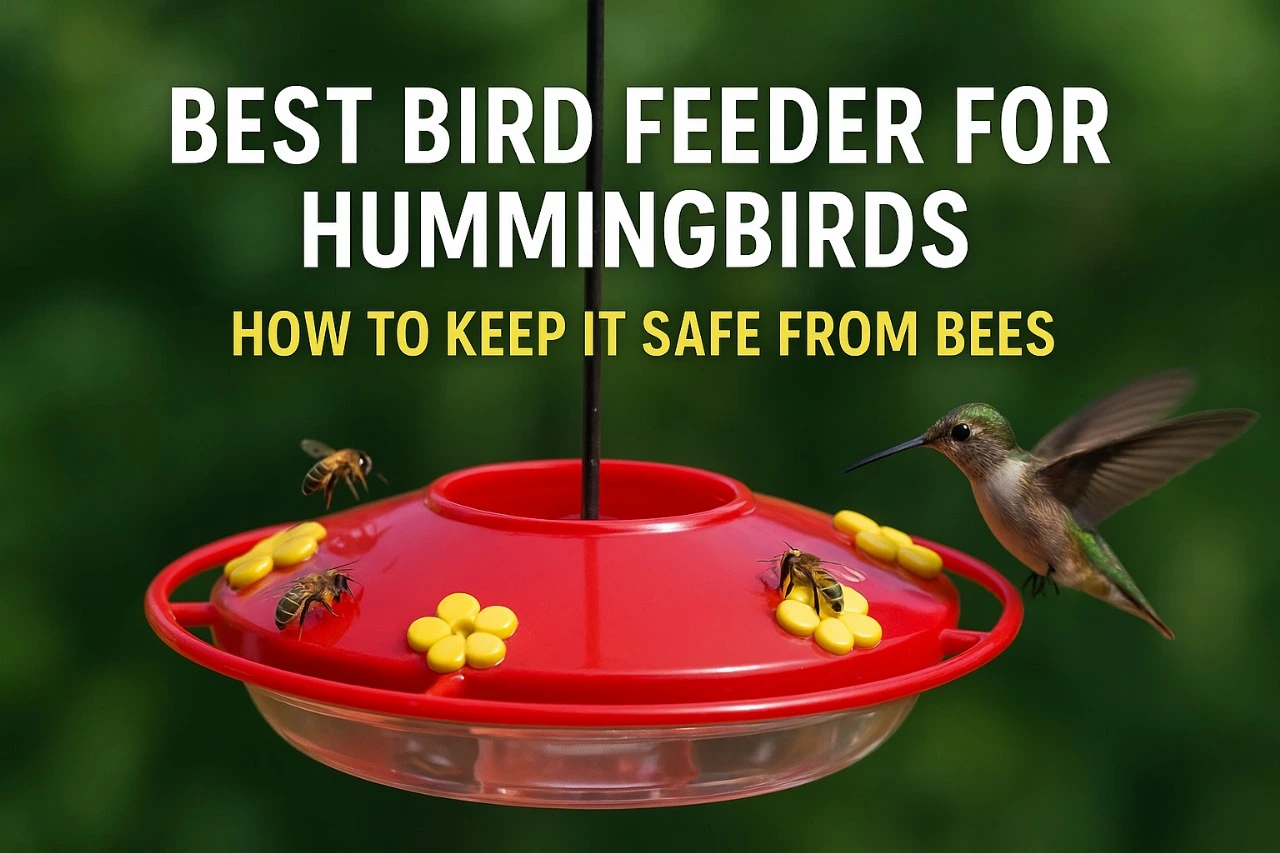
Welcoming hummingbirds to your garden is a rewarding experience. These vibrant, fast-flying birds bring a sense of magic to any outdoor space.However, a common frustration for many bird lovers is the presence of bees on hummingbird feeder ports. Moreover, a swarm of persistent bees can not only deter hummingbirds but also contaminate the nectar, turning a delightful feeding station into a sticky, frustrating mess. Therefore, finding the best bird feeder for hummingbirds means choosing one that not only attracts these tiny birds but also provides a safe, bee-free environment. In addition, proper placement and design can further ensure hummingbirds enjoy their nectar without interference. This guide will focus on effective strategies and the best feeder designs to solve the problem of hummingbird feeder bees once and for all.
Why Bees Are Attracted to Hummingbird Feeders
The sweet, sugary solution that hummingbirds love also attracts bees.Their superior sense of smell and sight quickly leads them to any food source. Once they find it, they can quickly take over, making it difficult for hummingbirds to access the food they need. To learn a hummingbird feeder safe from pests, you must understand what makes your feeder so appealing to them.
The three primary attractants for bees are:
- Leaky Nectar: Drips and spills on the outside of the feeder are an open invitation.
- Accessible Ports: Feeders with wide-open feeding holes allow bees to easily land and drink.
- Yellow Accents: Bees instinctively seek out the color yellow, which many feeder designs use.
The Best Solutions to Keep Bees Away
Solving the problem of how to keep bees out of your hummingbird feeder involves a combination of smart design choices and simple maintenance.
1. Choose a Bee-Resistant Feeder Design
This is the most effective strategy. The best hummingbird feeder for deterring bees is a saucer-style model. These feeders have a shallow, open reservoir with feeding ports on top. A hummingbird can reach the recessed nectar with its long tongue, but a bee cannot because its tongue is short. Look for feeders that specifically mention “bee guards” or “bee-proof” features.
- Example: Saucer feeders from brands like Aspects and First Nature are renowned for this bee-resistant design.
2. Avoid Feeders with Yellow Accents
Bees are highly attracted to the color yellow. Many feeders have yellow plastic flowers around the feeding ports. While hummingbirds are attracted to red, they show no preference for yellow. To reduce bee activity, opt for feeders that are exclusively red or have no yellow on them at all.
3. Keep Your Feeder Clean and Leak-Proof
A messy feeder is a magnet for pests. Regularly inspect your feeder for leaks or cracks. Clean the outside of the feeder frequently to remove any sticky residue from spills. A clean, well-maintained feeder is much less likely to attract pests.
4. Strategic Placement
If you have a persistent problem, moving the feeder to a new location can help. Bees follow established flight paths, and a simple relocation can confuse them without affecting the hummingbirds. Place the feeder in a shady spot, as this can slow down fermentation and make the nectar less appealing to bees.
Best Bird Feeder Designs Against Bees
When searching for the best bird feeder for hummingbirds, prioritize designs that naturally discourage bees.
| Feeder Type | Benefits | Bee Resistance |
| Saucer Feeders | Easy to clean, durable, nectar sits below ports | Excellent |
| Bottle Feeders (with bee guards) | High capacity, visually attractive | Good |
| Window Feeders | Great for close-up viewing, smaller capacity | Moderate |
Extra Tips for a Bee-Free Hummingbird Feeder
- Regular cleaning: Prevents residue that attracts bees.
- Smaller feeders: Easier to maintain freshness.
- Multiple feeders: Spread them around the garden to reduce competition.
- Bee-friendly flowers: Grow sunflowers or lavender away from feeders to distract bees.
Frequently Asked Questions (FAQs)
Use bee guards, saucer-style feeders, and keep ports small to block bees naturally.
Honeybees, wasps, and yellow jackets are the main insects drawn to nectar.
Leaky feeders, yellow parts, or wide ports attract swarming bees.
Foil’s shine confuses bees and ants, reducing insect activity.
Never use chemicals—use vinegar-water for cleaning and bee-proof feeders.
Pick bee-resistant feeders, avoid yellow, keep feeders clean, and add bee guards.
Conclusion
Hummingbirds need a safe, bee-free space to enjoy nectar, and the right feeder design makes all the difference. By choosing bee-resistant feeders and keeping them clean, you can greatly improve nectar safety. In addition to avoiding yellow parts, you can also enhance protection by adding simple tools like bee guards. Consequently, this will help attract more hummingbirds, and at the same time, keep bees and wasps away. In the end, a little prevention goes a long way in creating a peaceful feeding spot for your feathered visitors.