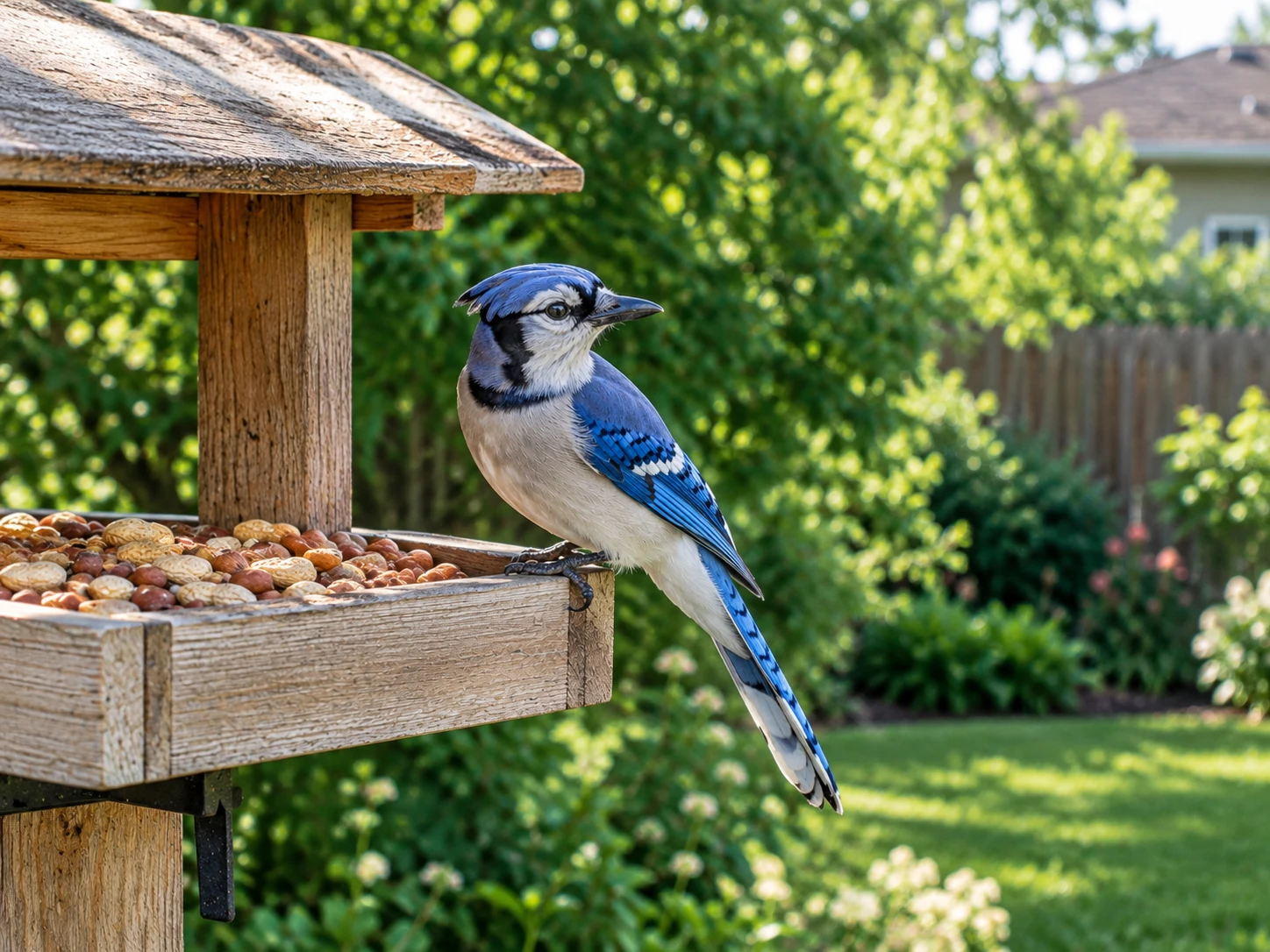
Blue Jays are some of the most recognizable birds you can attract to your backyard. Their bright blue feathers, bold behavior, and loud calls make them exciting visitors for bird lovers.
If you’re wondering how to attract Blue Jays, you don’t need an expensive or complicated setup. The right food, a sturdy feeder, fresh water, and a safe backyard habitat can make your yard more appealing to these beautiful birds.
For a complete overview of this bird, see our Blue Jay: Complete Species Guide.
Here are 7 simple tips to help attract Blue Jays to your yard and encourage them to become regular visitors.
1. Offer Peanuts and Other Favorite Foods
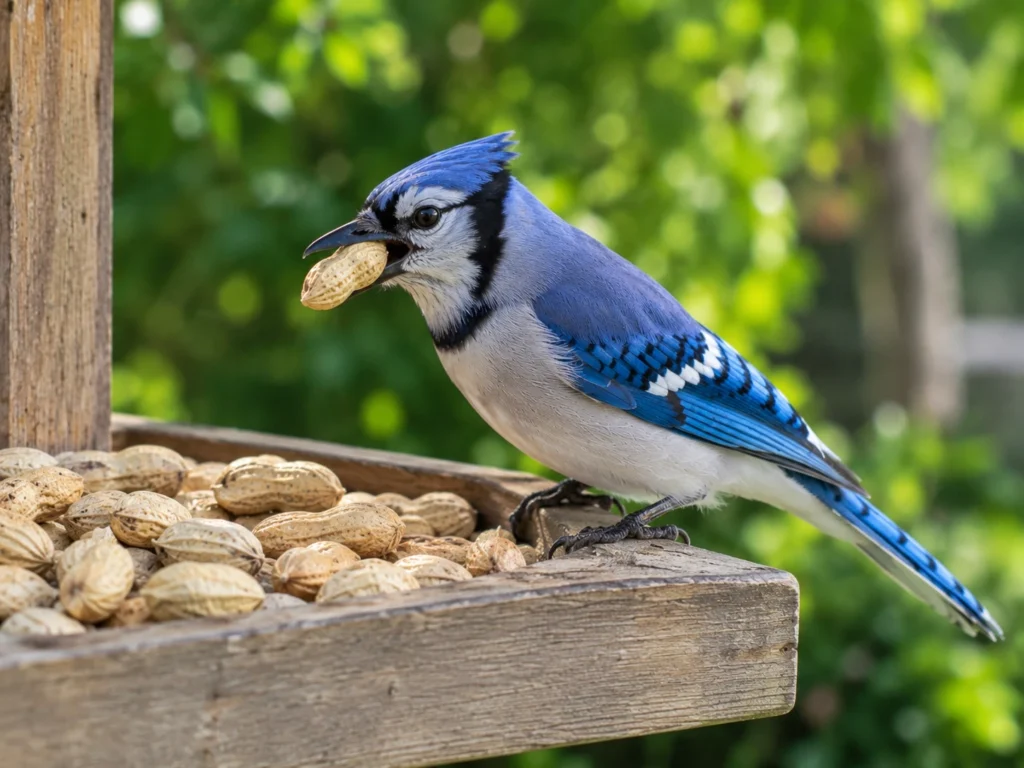
One of the easiest ways to attract Blue Jays is to offer foods they naturally enjoy.
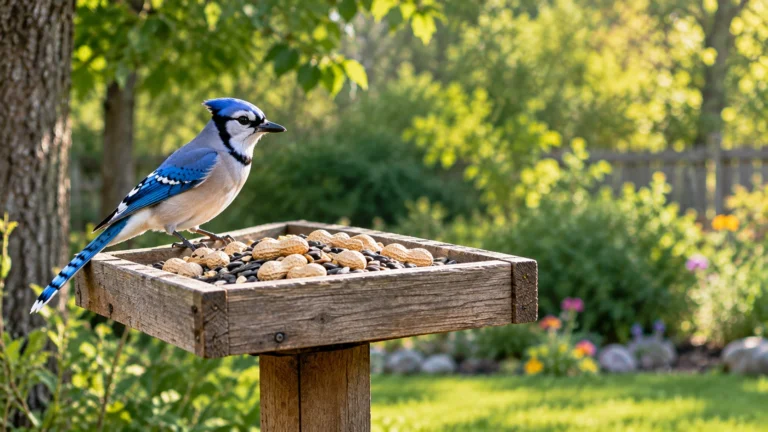
Blue Jays commonly eat nuts, seeds, fruits, and insects. Peanuts are a popular food for Blue Jays and can be offered shelled or in the shell.
You can also provide suitable foods such as sunflower seeds and suet to give visiting birds more options.
Want to learn more about their diet? Check out our complete guide to what do Blue Jays eat.
2. Choose a Large, Sturdy Bird Feeder
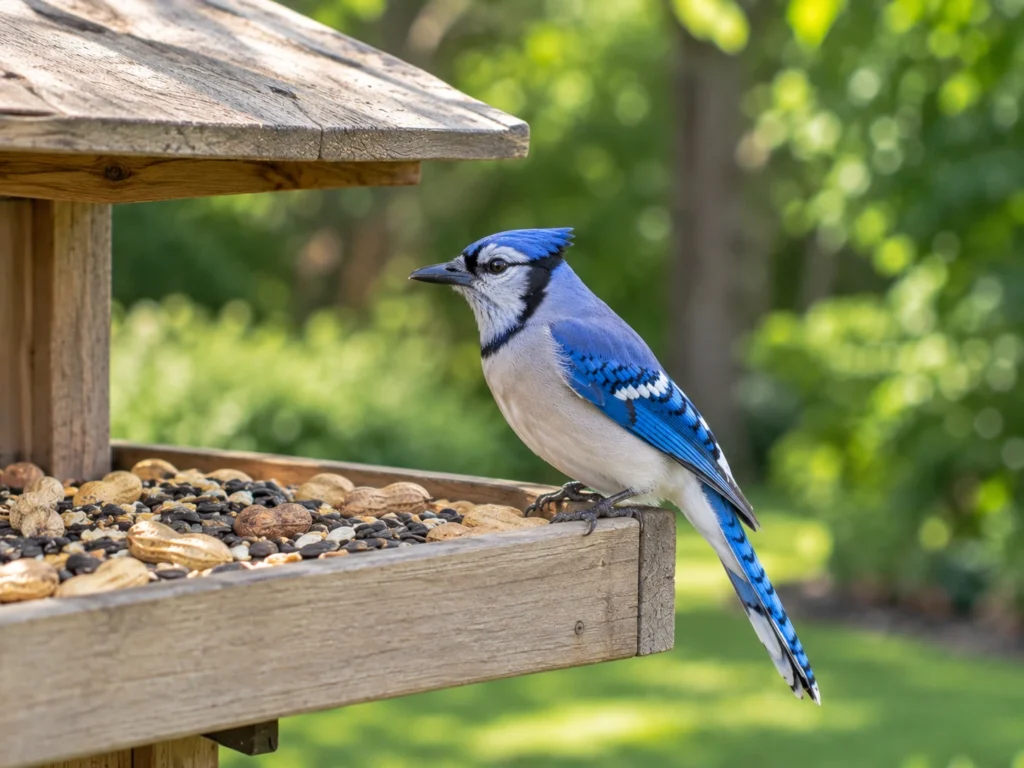
Blue Jays are larger than many common backyard songbirds, so a small feeder may not provide enough space.
A large platform, tray, or sturdy hopper-style feeder gives Blue Jays enough room to land and feed comfortably.
Choose a feeder that can handle larger birds and regular activity. Place it somewhere you can easily watch from a window while keeping the surrounding area safe.
If you’re choosing a feeder specifically for these birds, see our guide to the best bird feeder for Blue Jays.
3. Add Suet to Your Feeding Station
Suet can be another useful food option for attracting Blue Jays, particularly when natural food is less available.
Place suet in a strong feeder that can support larger birds. Keep the feeding station clean and remove old or spoiled food regularly.
Offering several suitable food choices can make your backyard more attractive to Blue Jays and other backyard birds.
4. Provide Fresh, Clean Water
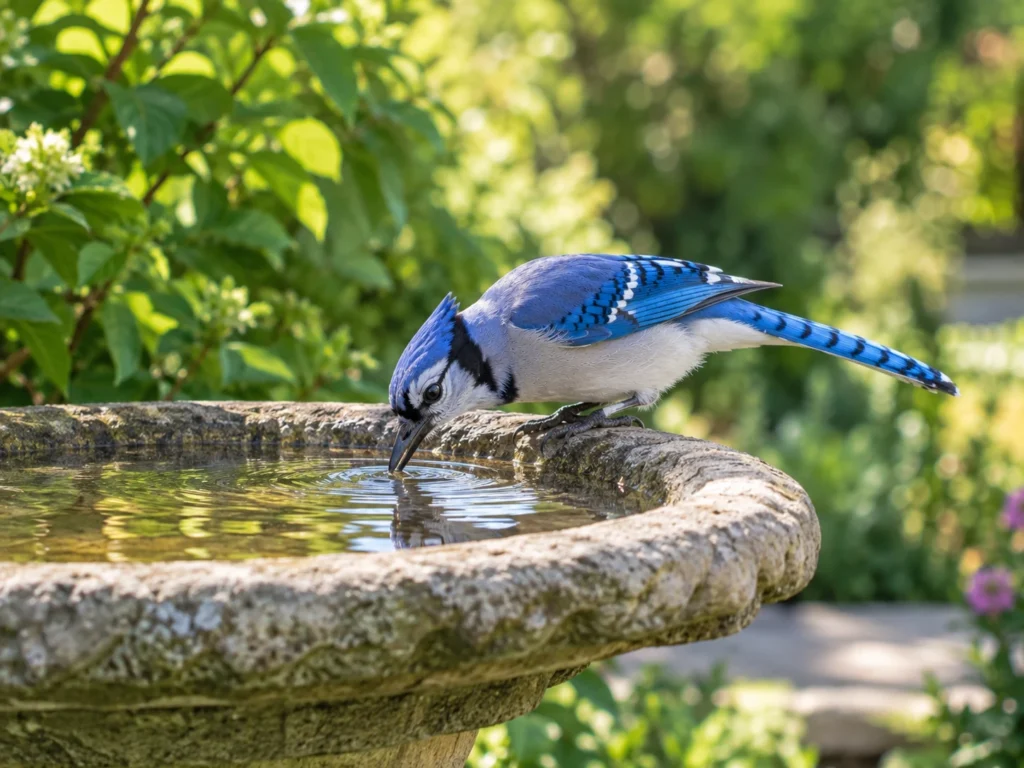
Food isn’t the only thing that attracts birds. A reliable source of fresh water can also make your backyard more inviting.
A shallow bird bath gives Blue Jays a place to drink and bathe.
Place the bird bath where birds have a clear view of the surrounding area. Change the water regularly and clean the basin when needed, especially during hot weather.
A gently moving water source, such as a small dripper or fountain, can also help birds notice the water.
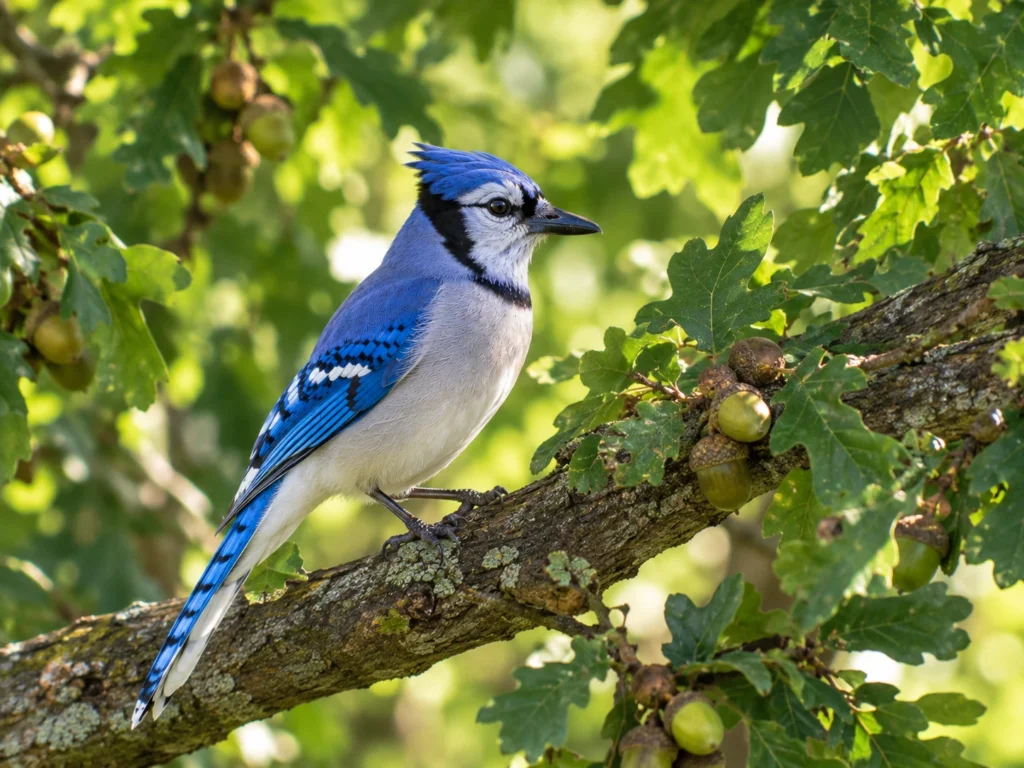
5. Plant Oak and Other Nut-Bearing Trees
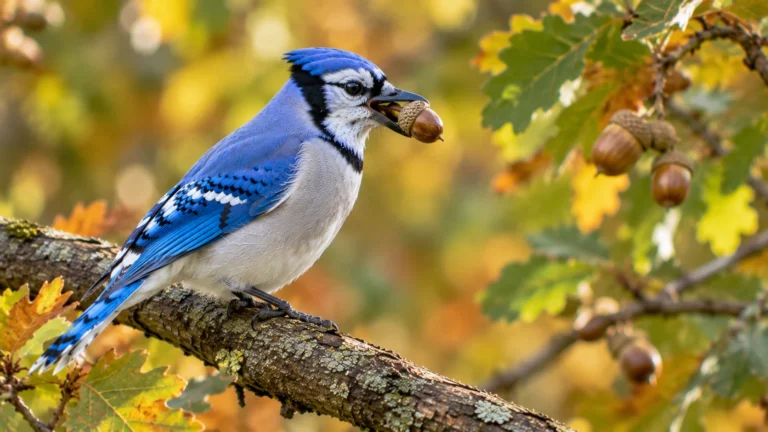
Oak trees are especially valuable to Blue Jays because acorns are an important natural food source.
Blue Jays may carry and cache acorns for later use. Some forgotten acorns can contribute to the natural regeneration of oak trees.
If you have enough space, consider planting suitable native trees and shrubs that provide nuts, berries, or other natural foods.
You can learn more about this fascinating connection in our guide to the Blue Jay and oak tree relationship.
6. Offer Food on a Ground-Feeding Area
Blue Jays often forage on the ground, so you don’t have to rely entirely on hanging feeders.
Try placing a small amount of suitable food on a clean ground-feeding area or platform. This can make it easier for Blue Jays to discover the food while also matching some of their natural feeding behavior.
Avoid leaving large amounts of food on the ground for long periods. Excess food can attract unwanted pests and create sanitation problems.
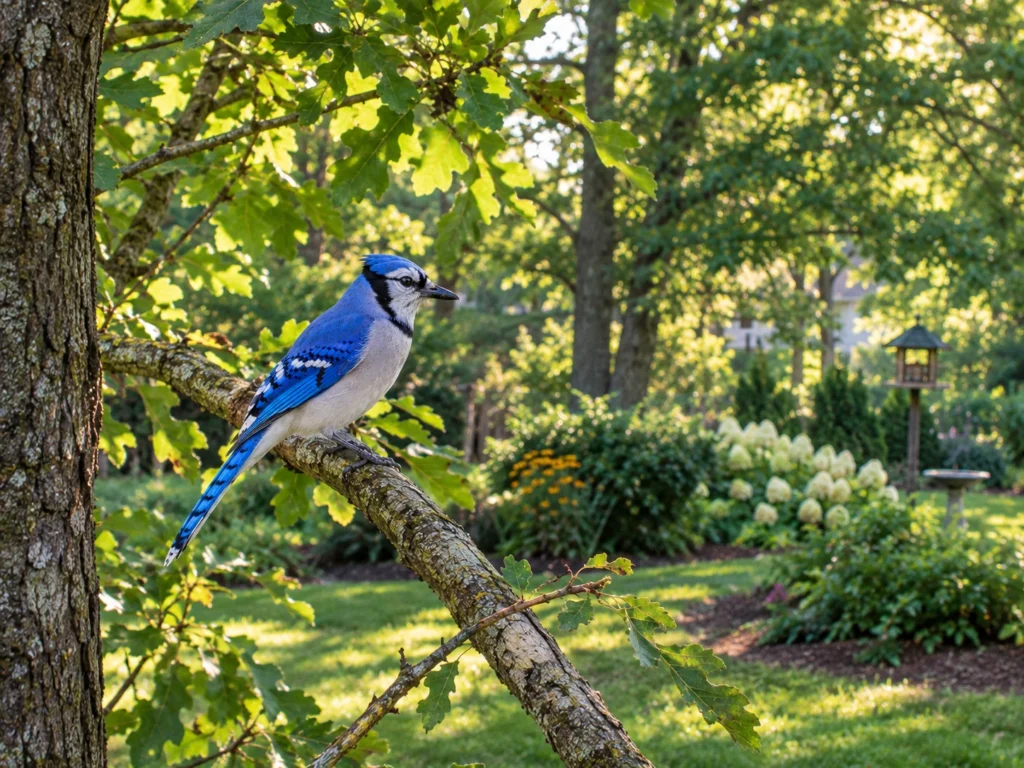
7. Create a Safe and Comfortable Backyard Habitat
Blue Jays can be bold and active birds, but they still need places where they feel safe.
Keep a mixture of trees, shrubs, natural cover, and open space around your backyard. These areas give birds places to perch, rest, and retreat when they feel threatened.
Avoid placing feeders directly beside dense hiding spots where predators could approach unnoticed.
A combination of food, water, shelter, and open space can create a more welcoming environment for Blue Jays.
How Long Does It Take to Attract Blue Jays?
Some Blue Jays may discover a new food source within days, while others may take several weeks or longer. The timing can vary depending on your location, backyard habitat, natural food availability, and nearby Blue Jay populations.
The key is consistency. Keep your feeder clean, provide suitable food and fresh water, and give Blue Jays time to discover your backyard.
Are Blue Jays Good for Your Backyard?
Yes, Blue Jays can be fascinating backyard visitors.
They eat a wide variety of foods and can help disperse acorns and other seeds. Their presence can also make backyard birdwatching more interesting.
However, Blue Jays can be assertive around feeders and may sometimes push smaller birds away from a food source.
Learn more about their feeding behavior in our guide to Do Blue Jays Eat Other Birds? Myth vs Fact.
Final Thoughts
Learning how to attract Blue Jays doesn’t require an expensive backyard setup.
Start with a sturdy feeder and suitable foods such as peanuts and sunflower seeds. Add fresh water, provide natural cover, and consider planting native trees and shrubs that offer natural food.
Most importantly, be consistent. Once Blue Jays discover a reliable food source in your yard, they may become regular visitors.
Frequently Asked Questions
What food attracts Blue Jays?
Peanuts are one of the most reliable foods for attracting Blue Jays. Sunflower seeds and suet can also make a backyard feeding station more appealing.
Do Blue Jays need a special feeder?
A large, sturdy platform, tray, or hopper-style feeder is generally a good choice because Blue Jays are larger than many backyard songbirds.
Will Blue Jays scare away other birds?
They can. Blue Jays are relatively large and assertive birds and may dominate a feeder at times, which can cause smaller birds to move away.
How can I attract Blue Jays without a feeder?
You can offer suitable food on a clean platform or ground-feeding area and provide fresh water, trees, shrubs, and other natural habitat features.
How often should I feed Blue Jays?
If you choose to maintain a feeder, keep suitable food available consistently and clean the feeding area regularly. Avoid allowing spoiled or wet food to remain in the feeder.