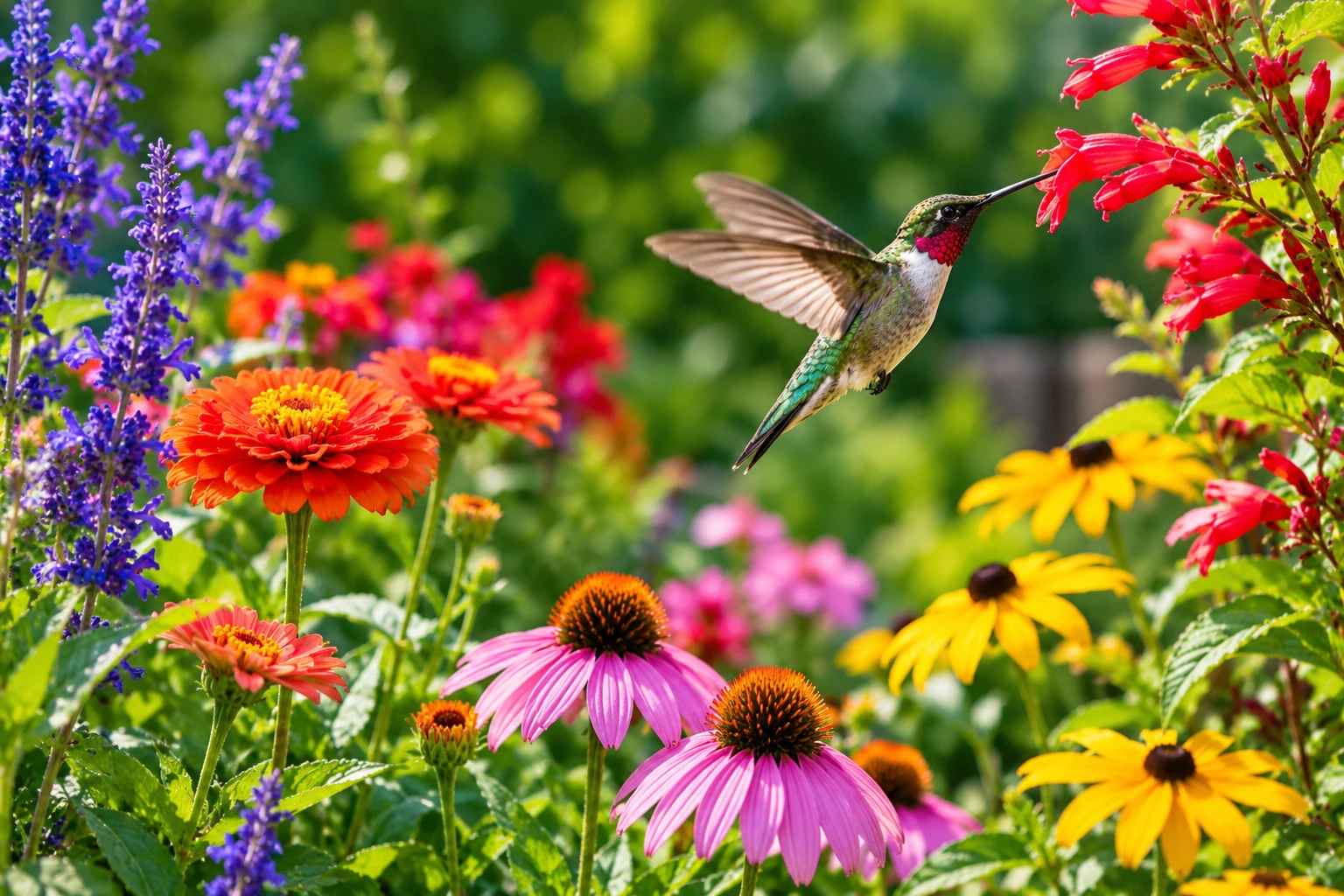
Planting the best flowers for hummingbirds is a simple way to make your yard more attractive to these colorful backyard visitors. Hummingbirds are naturally drawn to nectar-rich flowers, especially blooms with tubular shapes that make nectar easy to reach.
A well-planned hummingbird garden can provide natural food throughout the growing season while adding color and beauty to your landscape. The best plants for your yard will depend on your climate, sunlight, soil, available space, and the time of year you want flowers to bloom.
In this guide, you’ll discover 15 of the best flowers for hummingbirds, including options for sunny gardens, containers, smaller spaces, and different blooming seasons.
What Flowers Attract Hummingbirds?
Hummingbirds visit many different types of flowers, but they are especially attracted to blooms that provide accessible nectar.
Common characteristics of hummingbird-friendly flowers include:
- Tubular or trumpet-shaped blooms
- Plenty of nectar
- Bright or noticeable flowers
- Blooming at different times throughout the season
- Plants suited to your local climate
Red flowers are often associated with hummingbirds, but don’t limit your garden to red. Hummingbirds can visit flowers in many colors, including pink, orange, purple, and even white.
The most important thing is to choose plants that grow well in your area and provide useful nectar sources.
15 Best Flowers for Hummingbirds
1. Bee Balm
Bee balm is one of the most popular choices for a hummingbird garden.
Its colorful flowers produce nectar that hummingbirds can access easily, and its blooms can add a dramatic splash of color to flower beds.
Bee balm is available in several colors, including red, pink, and purple.
Why plant it:
- Attractive tubular flowers
- Good nectar source
- Long-lasting garden interest
- Also attracts other pollinators
Give bee balm enough room to spread and choose a location with suitable sunlight and soil moisture.
2. Cardinal Flower
The cardinal flower is famous for its brilliant red blooms.
Its tall flower spikes can stand out in a garden and provide tubular flowers that hummingbirds can easily visit.
Cardinal flower generally prefers moist conditions, so it can be a good choice for suitable areas near water or in gardens with consistently moist soil.
3. Salvia
Salvia is an excellent choice when you want hummingbird-friendly flowers with a long season of interest.
There are many types of salvia, with flowers ranging from red and pink to purple and blue.
Because varieties have different growing requirements, choose one that matches your local climate and garden conditions.
Salvia can also work well in containers and smaller gardens.
4. Trumpet Vine
Trumpet vine produces large, trumpet-shaped flowers that can be highly attractive to hummingbirds.
It’s a vigorous climbing plant that can cover fences, trellises, and other sturdy structures.
However, trumpet vine can spread aggressively in some conditions. Choose its location carefully and make sure you’re prepared to manage its growth.
5. Columbine
Columbine produces distinctive flowers with spurs that can provide accessible nectar for hummingbirds.
It is especially useful for adding flowers earlier in the growing season, depending on the variety and your location.
Choose a columbine species that is appropriate for your region and growing conditions.
6. Penstemon
Penstemon, also known as beardtongue, includes many species with tubular flowers that hummingbirds can visit.
The plants vary considerably in size, color, and growing requirements.
Some varieties are particularly well suited to dry or rocky gardens, while others prefer different moisture conditions.
Choose a species rather than simply buying any penstemon without checking its requirements.
7. Fuchsia
Fuchsia is an excellent option for containers and hanging baskets, especially in locations where you want flowers at eye level.
Its hanging, tubular blooms can be attractive to hummingbirds.
Fuchsia generally prefers cooler conditions and may be grown as an annual in areas where it cannot survive winter outdoors.
8. Zinnia
Zinnias are colorful, easy-to-grow annuals that can add variety to a hummingbird-friendly garden.
They come in many colors and sizes, making them useful for flower beds, borders, and containers.
Although zinnias attract several types of pollinators, they can be a useful addition to a diverse backyard garden.
9. Coral Bells
Coral bells can be useful in gardens with partial shade.
Some varieties produce small tubular flowers that hummingbirds may visit.
The plants are also valued for their attractive foliage, which can provide garden interest even when they aren’t blooming.
10. Honeysuckle
Some honeysuckle species produce tubular flowers that hummingbirds enjoy.
However, choosing the right species is important because certain honeysuckles can become invasive depending on where you live.
Whenever possible, consider native species or varieties recommended for your region.
11. Petunias
Petunias are popular container and garden plants that can provide colorful blooms for hummingbirds.
They’re particularly useful if you have limited space because they can grow well in:
- Containers
- Hanging baskets
- Window boxes
- Garden borders
Choose a sunny location and provide the care recommended for your variety.
12. Red Buckeye
Red buckeye is a North American native shrub or small tree that produces clusters of red tubular flowers.
The flowers can provide an excellent nectar source for hummingbirds during their blooming period.
Because this plant can grow considerably larger than annual flowers, make sure you have enough space before planting.
13. Flowering Currant
Certain flowering currants produce clusters of flowers that can provide an early-season nectar source.
They can be especially valuable in gardens where you want plants that bloom before many summer flowers.
Choose a species appropriate for your region.
14. Jewelweed
Jewelweed produces tubular, nectar-rich flowers that hummingbirds can visit.
Native jewelweed species can be useful additions to suitable naturalized or woodland-edge gardens.
They generally prefer moist conditions, so they may not be appropriate for dry garden beds.
15. Lantana
Lantana produces clusters of colorful flowers and can attract hummingbirds as well as other pollinators.
It can work well in containers and sunny garden areas.
Because lantana behaves differently depending on climate, check whether the variety you choose is suitable for your location.
Best Red Flowers for Hummingbirds
Red flowers are a classic choice for hummingbird gardens.
Some options include:
- Cardinal flower
- Red bee balm
- Red salvia
- Trumpet vine
- Red buckeye
- Red columbine
However, don’t assume that every red flower is automatically a good hummingbird plant. Consider nectar availability, flower shape, bloom time, and whether the plant grows well in your area.
Best Flowers for Hummingbirds in Full Sun
If your garden receives several hours of direct sunlight, consider plants such as:
- Bee balm
- Salvia
- Zinnia
- Penstemon
- Trumpet vine
- Lantana
- Petunia
Always check the specific variety’s sunlight requirements before planting.
A plant that is well suited to your conditions will generally be easier to maintain and more likely to bloom well.
Best Flowers for Hummingbirds in Partial Shade
Not every hummingbird garden needs to be in full sun.
Depending on your region, some options for partial shade include:
- Coral bells
- Columbine
- Fuchsia
- Certain honeysuckle species
The exact amount of shade matters, so check the growing requirements of each plant.
Best Hummingbird Flowers for Containers
You can attract hummingbirds even if you don’t have a traditional garden.
Good container options can include:
- Salvia
- Fuchsia
- Petunias
- Zinnias
- Lantana
Use containers with good drainage and place them where the plants receive appropriate sunlight.
Containers can also be moved if you discover that a particular location isn’t working well.
How to Choose Flowers for a Hummingbird Garden
Choosing plants isn’t just about finding the brightest flowers.
Consider these factors before buying plants.
Bloom Time
Choose plants that bloom at different times.
This can help provide nectar sources throughout more of the growing season rather than having all your flowers bloom at once.
Local Climate
A plant that grows beautifully in Florida may not perform the same way in Minnesota or Colorado.
Check your USDA hardiness zone and local growing conditions before planting.
Sunlight
Determine how much sunlight your garden receives.
Some plants prefer full sun, while others perform better with partial shade.
Soil and Water
Check whether your plants prefer dry, average, or consistently moist soil.
Matching plants to your existing conditions can make garden maintenance much easier.
Plant Size
Some hummingbird plants remain compact, while others become large shrubs or vigorous vines.
Check the mature size before planting.
Native Plants
Native plants can be valuable additions to a wildlife-friendly garden because they’re adapted to local conditions and can support local ecosystems.
When possible, look for native hummingbird-friendly plants recommended for your region.
How to Create a Hummingbird-Friendly Flower Garden
You don’t need dozens of different plants to create a useful hummingbird garden.
Start with a few suitable species and gradually add more.
Plant Groups of Flowers
Instead of scattering individual plants throughout your yard, consider planting groups of the same species.
A larger patch of flowers can create a more noticeable nectar source.
Choose Different Flower Shapes
A variety of flowers can provide different feeding opportunities.
Plant for Different Seasons
Choose early-, mid-, and late-season bloomers so your garden doesn’t run out of flowers all at once.
Avoid Unnecessary Pesticides
Hummingbirds eat small insects and other tiny invertebrates in addition to nectar.
Unnecessary pesticide use can reduce the insect life available in your garden.
If you have a pest problem, identify the pest before choosing a control method.
Provide Shelter
Trees, shrubs, and dense plants can provide places for hummingbirds to rest and seek shelter.
For more ideas, read [How to Attract Hummingbirds to Your Yard].
Should You Use Flowers and a Hummingbird Feeder?
You don’t necessarily have to choose one or the other.
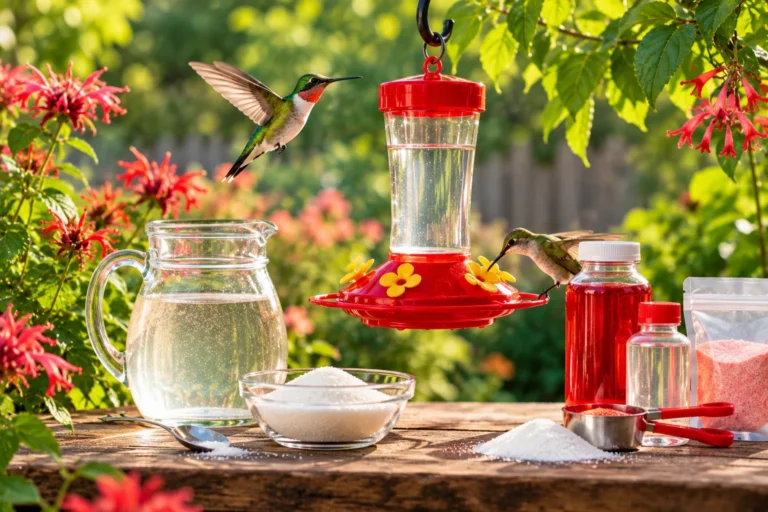
Flowers provide natural nectar sources, while feeders can provide an additional source of sugar-water nectar.
If you use a feeder, keep it clean and replace nectar regularly.
See [How to Clean a Hummingbird Feeder] for proper feeder maintenance.
For homemade nectar, follow the simple recipe in [Homemade Hummingbird Nectar].
You can also compare different nectar options in [Best Hummingbird Nectar].
How Many Flowers Do Hummingbirds Need?
There is no specific number of flowers required to attract hummingbirds.
The size of your garden, plant types, bloom periods, and number of hummingbirds in your area all make a difference.
Instead of focusing on a specific number, try to create a garden with:
- Multiple nectar-producing plants
- Different bloom periods
- Safe shelter
- Suitable perches
- Clean water sources where appropriate
Common Mistakes When Planting for Hummingbirds
Choosing Plants Without Checking Your Climate
Always check whether a plant is appropriate for your region.
Planting Only One Species
One plant may have a short flowering period. A variety of plants can provide a more consistent nectar supply.
Choosing Plants Only Because They’re Red
Flower color matters, but nectar availability and flower shape are also important.
Planting Invasive Species
Some plants can spread aggressively outside their intended growing area.
Research plants before introducing them to your landscape.
Using Too Many Chemicals
Avoid unnecessary pesticides and herbicides in areas where you want to support hummingbirds and other wildlife.
Forgetting About Maintenance
Even a beautiful hummingbird garden needs watering, pruning, deadheading, and other care depending on the plants you choose.
Frequently Asked Questions
What are the best flowers for hummingbirds?
Some excellent choices include bee balm, cardinal flower, salvia, trumpet vine, columbine, penstemon, fuchsia, and other nectar-producing plants suited to your region.
What color flowers do hummingbirds prefer?
Hummingbirds are often attracted to bright colors such as red, orange, pink, and purple. However, they can visit flowers in many different colors.
What is the best red flower for hummingbirds?
Cardinal flower, red bee balm, red salvia, trumpet vine, and red buckeye are all potential choices. The best option depends on your local climate and growing conditions.
Can I attract hummingbirds with potted flowers?
Yes. Plants such as salvia, fuchsia, petunias, zinnias, and lantana can work well in containers when grown under suitable conditions.
Do hummingbirds prefer native flowers?
Native plants can be excellent choices because they’re adapted to local conditions and can support local wildlife. Look for species recommended for your specific region.
What flowers attract hummingbirds in spring?
Spring choices vary by region, but columbine, flowering currant, penstemon, and certain native shrubs can provide early-season blooms.
What flowers attract hummingbirds in summer?
Bee balm, salvia, zinnias, trumpet vine, cardinal flower, and many other summer-blooming plants can provide nectar during the warmer months.
How can I keep flowers blooming for hummingbirds?
Plant species with different bloom periods, provide the appropriate sunlight and water, and follow the care requirements for each plant. Deadheading some plants can also encourage additional blooms.
Can hummingbirds live on flower nectar alone?
No. Hummingbirds naturally consume nectar as well as small insects and other tiny invertebrates. A diverse garden can provide more than just flowers.
Do I still need a hummingbird feeder if I have flowers?
Not necessarily. Flowers can provide natural nectar, while feeders can offer an additional food source. If you use a feeder, maintain it properly and provide fresh nectar.
Final Thoughts
The best flowers for hummingbirds are nectar-producing plants that thrive in your local growing conditions.
Bee balm, cardinal flower, salvia, trumpet vine, columbine, penstemon, fuchsia, and other hummingbird-friendly plants can help turn an ordinary yard into a more inviting habitat.
Instead of planting only one type of flower, choose several species with different bloom periods. Consider native plants, match each plant to your sunlight and soil conditions, and avoid unnecessary pesticides.
With the right combination of flowers, clean feeding stations, and suitable habitat, you can create a backyard that gives hummingbirds plenty of reasons to visit.