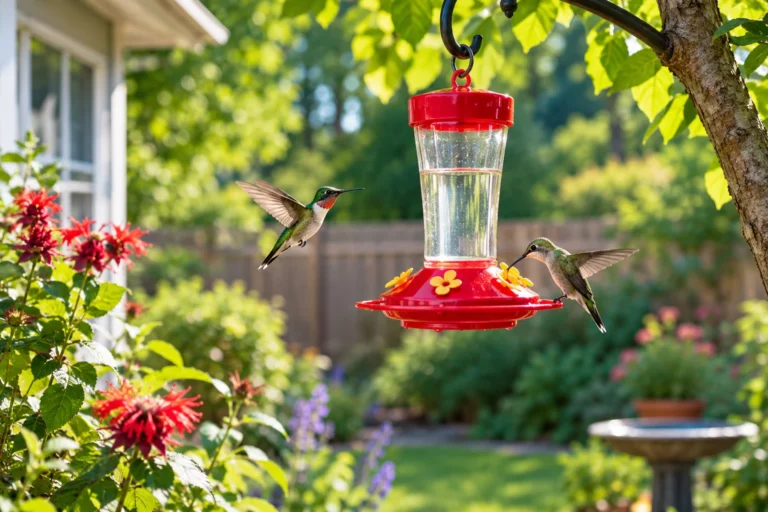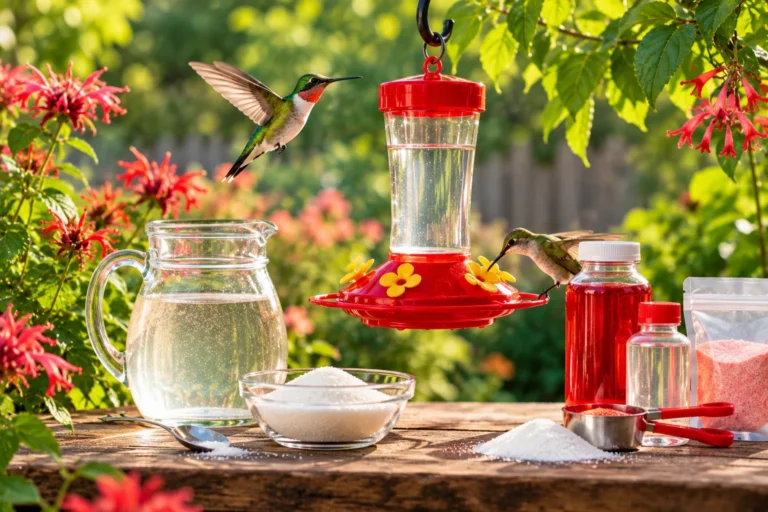
Making homemade hummingbird nectar is one of the easiest ways to provide hummingbirds with a reliable source of energy in your backyard. You don’t need expensive ingredients or a complicated recipe. With just white granulated sugar and water, you can make a simple nectar solution for your hummingbird feeder.
The standard homemade hummingbird nectar recipe uses 1 part white granulated sugar to 4 parts water. When prepared and stored properly, this simple mixture can be a convenient option for backyard bird watchers.
In this guide, you’ll learn how to make hummingbird nectar, how much sugar and water to use, how to store it, when to replace it, and which ingredients you should never add.
What Is Homemade Hummingbird Nectar?
Homemade hummingbird nectar is a simple sugar-and-water solution designed to provide hummingbirds with an energy source while they visit a feeder.
The basic recipe is:
1 part white granulated sugar + 4 parts water
For example:
- 1 cup white granulated sugar
- 4 cups water
You can make a smaller or larger batch by keeping the same 1:4 ratio.
Homemade Hummingbird Nectar Recipe
Ingredients
You only need two ingredients:
- 1 cup white granulated sugar
- 4 cups clean water
Use plain white granulated sugar rather than other sweeteners or sugar substitutes.
Instructions
- Add 4 cups of water to a clean saucepan or container.
- Add 1 cup of white granulated sugar.
- Stir until the sugar is completely dissolved.
- Allow the nectar to cool completely.
- Pour the cooled nectar into a clean hummingbird feeder.
- Store any unused nectar in a clean, covered container in the refrigerator.
That’s it. You don’t need to add food coloring, flavoring, or other ingredients.
What Is the Correct Sugar-to-Water Ratio?
The commonly used ratio for homemade hummingbird nectar is 1 part sugar to 4 parts water.
Here are some easy measurements:
| Water | Sugar |
|---|---|
| 1 cup | 1/4 cup |
| 2 cups | 1/2 cup |
| 4 cups | 1 cup |
| 8 cups | 2 cups |
Maintaining the correct ratio is important. Adding significantly more sugar isn’t necessary for routine backyard feeding.
Do You Need to Boil Hummingbird Nectar?
Boiling isn’t necessary simply to make the sugar dissolve, especially when using clean water. However, some people prefer to heat the water because warm water makes dissolving sugar easier.
If you boil the mixture, allow it to cool completely before putting it into a feeder.
The most important part is using clean equipment and keeping the feeder clean.
Should You Add Red Food Coloring?
No.
There is no need to add red food coloring to homemade hummingbird nectar.
Hummingbirds can be attracted to the bright colors of flowers and feeders. Instead of coloring the nectar, choose a feeder with a red or other bright-colored component.
Keeping the nectar free of unnecessary additives also makes the recipe simple.
Can You Use Honey Instead of Sugar?
No. Honey should not be used as a substitute for white granulated sugar in hummingbird nectar.
Honey can support the growth of microorganisms and may spoil more quickly under feeder conditions.
For a homemade nectar recipe, stick with plain white granulated sugar and water.
Can You Use Brown Sugar?
It’s best to avoid brown sugar for homemade hummingbird nectar.
Brown sugar contains additional components that make it different from plain white granulated sugar. For a simple and consistent nectar recipe, use regular white granulated sugar.
What Ingredients Should You Never Add?
Homemade hummingbird nectar should remain simple.
Avoid adding:
- Honey
- Brown sugar
- Artificial sweeteners
- Sugar substitutes
- Fruit juice
- Flavorings
- Red food coloring
Hummingbirds don’t need these ingredients in their feeder nectar.
How Much Homemade Nectar Should You Make?
Make only as much nectar as you expect to use before it needs to be replaced.
For one feeder, a smaller batch may be more practical. If you have several feeders or many hummingbirds visiting your yard, you may need to prepare more.
For example, you can make:
Small batch:
1 cup water + 1/4 cup sugar
Medium batch:
4 cups water + 1 cup sugar
Large batch:
8 cups water + 2 cups sugar
Always maintain the 4:1 water-to-sugar ratio.
How to Store Homemade Hummingbird Nectar
If you have extra nectar, place it in a clean, covered container and refrigerate it.
Before using stored nectar, check its appearance and smell. If it looks cloudy, fermented, or contaminated, discard it rather than putting it in the feeder.
Avoid repeatedly topping off old nectar with a fresh batch. Empty the feeder and clean it before adding fresh nectar.
How Often Should You Change Hummingbird Nectar?
How frequently nectar needs to be replaced depends on the temperature, sunlight, and cleanliness of the feeder.
During hot weather, check nectar frequently because warm conditions can cause it to spoil faster.
During cooler weather, nectar may last longer, but it should still be inspected regularly.
Replace the nectar sooner if you notice:
- Cloudiness
- Mold
- Fermentation
- Debris
- An unusual smell
For more detailed guidance, see our guide to How Often Should You Change Hummingbird Nectar.
How to Clean a Hummingbird Feeder
Fresh nectar isn’t enough. Your feeder also needs regular cleaning.
When changing nectar:
- Empty the old nectar.
- Take the feeder apart.
- Wash the components thoroughly.
- Rinse away all soap residue.
- Check the feeding ports for mold or buildup.
- Let the feeder dry before refilling it.
- Add fresh homemade nectar.
If you notice mold or significant buildup, clean the feeder thoroughly before using it again.
For a step-by-step guide, read How to Clean a Hummingbird Feeder.
Where Should You Put a Hummingbird Feeder?
The location of your feeder can influence how easily hummingbirds find and use it.
Consider a location that is:
- Easy for you to see and maintain
- Protected from heavy traffic
- Partially shaded when possible
- Near natural food sources such as flowering plants
- Easy to access for regular cleaning
For more placement ideas, see Where to Hang a Hummingbird Feeder.
How to Attract More Hummingbirds
Homemade nectar is only one part of creating a hummingbird-friendly yard.
You can make your outdoor space more attractive by providing:
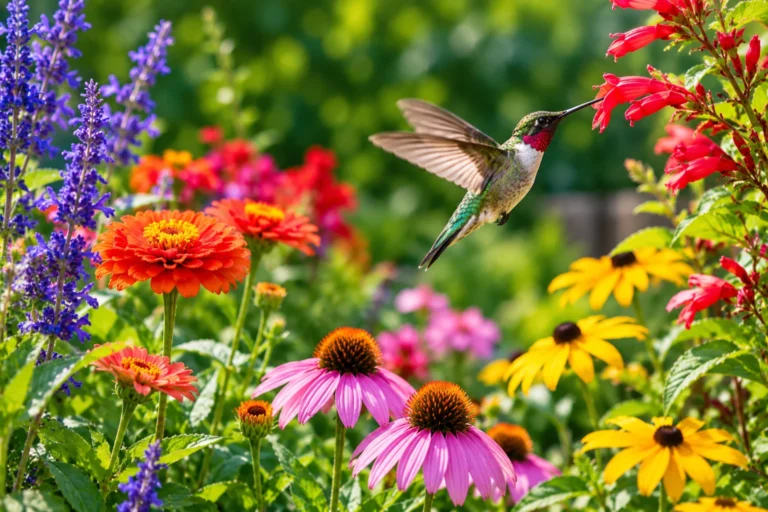
- Nectar-rich flowers
- Clean feeders
- Safe perching areas
- Natural shelter
- Multiple feeding locations when appropriate
Native plants can provide natural food sources and make your yard more useful to hummingbirds.
See our guide to Best Flowers for Hummingbirds for plant ideas.
You can also learn more in How to Attract Hummingbirds to Your Yard.
Homemade Nectar vs. Commercial Hummingbird Nectar
Homemade and commercial nectar each have advantages.
| Feature | Homemade Nectar | Commercial Nectar |
| Cost | Usually inexpensive | Usually more expensive |
| Ingredients | Simple and controlled | Depends on the product |
| Preparation | Requires mixing | Ready-to-use options available |
| Convenience | Moderate | High |
| Customization | High | Limited |
| Best for | Regular backyard feeding | Convenience |
If you enjoy making your own bird food and want a simple, economical option, homemade nectar can be a great choice.
If convenience is more important, ready-to-use or concentrated commercial nectar may be easier.
For a broader comparison, read Best Hummingbird Nectar.
Common Homemade Hummingbird Nectar Mistakes
Avoid these common mistakes when preparing and serving nectar.
Using the Wrong Sugar
Use plain white granulated sugar. Don’t substitute honey, brown sugar, or artificial sweeteners.
Adding Red Dye
Red food coloring isn’t necessary. Use a colorful feeder instead.
Leaving Nectar in the Feeder Too Long
Warm weather can cause nectar to spoil more quickly. Check your feeder frequently and replace nectar when necessary.
Failing to Clean the Feeder
Don’t simply refill a dirty feeder. Empty it, clean it, rinse it thoroughly, and then add fresh nectar.
Making Extremely Concentrated Nectar
More sugar doesn’t automatically make better nectar. Stick with the standard 1:4 sugar-to-water recipe for routine feeding.
Frequently Asked Questions
What is the best homemade hummingbird nectar recipe?
A commonly used recipe is 1 part white granulated sugar to 4 parts water. For example, mix 1 cup of sugar with 4 cups of water.
Can I make hummingbird nectar without boiling it?
Yes. Boiling isn’t required simply to dissolve sugar. If you choose to heat or boil the water, allow the nectar to cool completely before putting it in the feeder.
How long does homemade hummingbird nectar last?
The amount of time nectar remains fresh depends on temperature, sunlight, feeder cleanliness, and storage conditions. Refrigerate unused nectar in a clean, covered container and discard it if it becomes cloudy, fermented, or contaminated.
Is tap water okay for hummingbird nectar?
Clean drinking-quality tap water is generally suitable. If your local tap water isn’t suitable for drinking, use another safe water source.
Can I use honey to make hummingbird nectar?
No. Honey isn’t a suitable substitute for white granulated sugar in hummingbird nectar.
Can I use brown sugar for hummingbirds?
White granulated sugar is the preferred choice for the standard homemade recipe. Avoid substituting brown sugar.
Does hummingbird nectar need red food coloring?
No. Red food coloring isn’t necessary. A brightly colored feeder can help attract hummingbirds without adding coloring to the nectar.
How often should I clean my hummingbird feeder?
Clean the feeder regularly and whenever you replace nectar if the feeder is dirty or contaminated. During warm weather, inspect it frequently for mold or buildup.
What else do hummingbirds eat?
Hummingbirds naturally feed on flower nectar and also consume small insects and other tiny invertebrates. Providing flowering plants can help create a more natural food source.
Learn more in What Do Hummingbirds Eat?.
Final Thoughts
Making homemade hummingbird nectar is simple, inexpensive, and requires only two basic ingredients: white granulated sugar and water.
The standard 1:4 sugar-to-water ratio is easy to remember, and there’s no need to add red food coloring, honey, or other unnecessary ingredients.
The recipe is only part of good hummingbird care. Keeping feeders clean, replacing nectar regularly, and providing flowering plants can help create a healthier and more welcoming backyard environment.
If you’re building a hummingbird-friendly yard, homemade nectar is a great place to start.