House Finch (Haemorhous mexicanus)
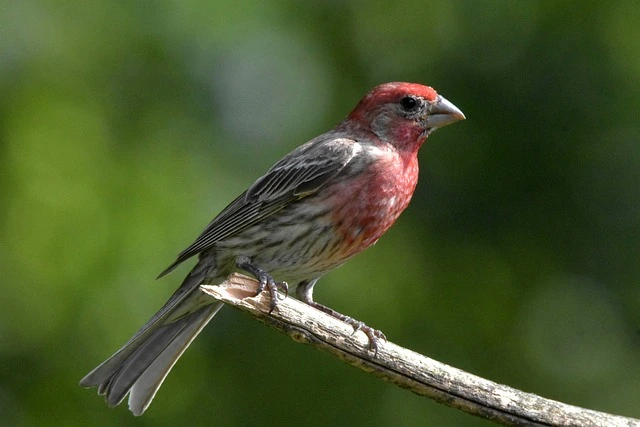
- Color: Males red/orange; females brown-streaked
- Size: 5–6 in (12–15 cm)
- Wingspan: 8–10 in (20–25 cm)
- Weight: 0.6–0.9 oz (16–27 g)
- Call: Bright, musical warbling
- Lifespan: 4–6 years (wild)
The House Finch is one of the most common and charming backyard birds in the United States. Known for the male’s rosy-red coloring and cheerful song, these social finches gather in flocks around feeders and suburban neighborhoods year-round.
Identification
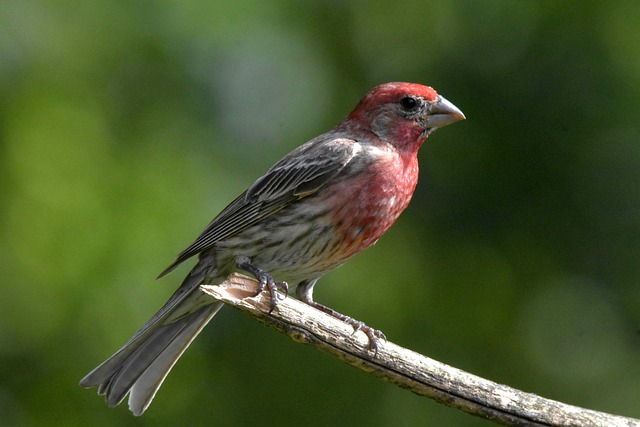
Males show red heads and chests that vary from bright red to orange or even yellowish, depending on diet. Females are brown with streaked underparts. Both have short, conical bills ideal for seed eating.
Range & Habitat
Found across most of the United States and parts of Canada and Mexico. Often seen in:
- Suburban neighborhoods
- Backyard feeders
- Parks and gardens
- Open woodlands
Diet
Primarily seed-eaters with some fruits and plant matter:
- Black oil sunflower seeds
- Nyjer (thistle) seed
- Millet
- Fruit: berries, cherries, and apricots
Nesting
House Finches build cup-shaped nests in sheltered locations:
- Trees and bushes
- Hanging planters
- Building ledges & porch fixtures
Nesting Details:
- Clutch: 2–6 eggs
- Incubation: 12–14 days
- Fledging: 11–19 days
Behavior
House Finches are highly social, often forming flocks. They sing throughout much of the year and are frequent visitors to backyard feeders. Their flight is bouncy and energetic.
Conservation Status
Least Concern — populations widespread and stable, though susceptible to eye infections (conjunctivitis).
FAQ
Do House Finches migrate?
Many are year-round residents, though some northern birds move south slightly in winter.
What food attracts House Finches most?
Black oil sunflower seeds and nyjer seed.
Are House Finches aggressive?
Generally peaceful but may compete mildly for feeders.
Why are some males orange or yellow instead of red?
Color comes from diet — different pigments create orange or yellow males.