Canada Goose (Branta canadensis)
- Size: 30–43 in (76–110 cm)
- Wingspan: 50–71 in (127–180 cm)
- Weight: 6–14 lbs (2.7–6.4 kg)
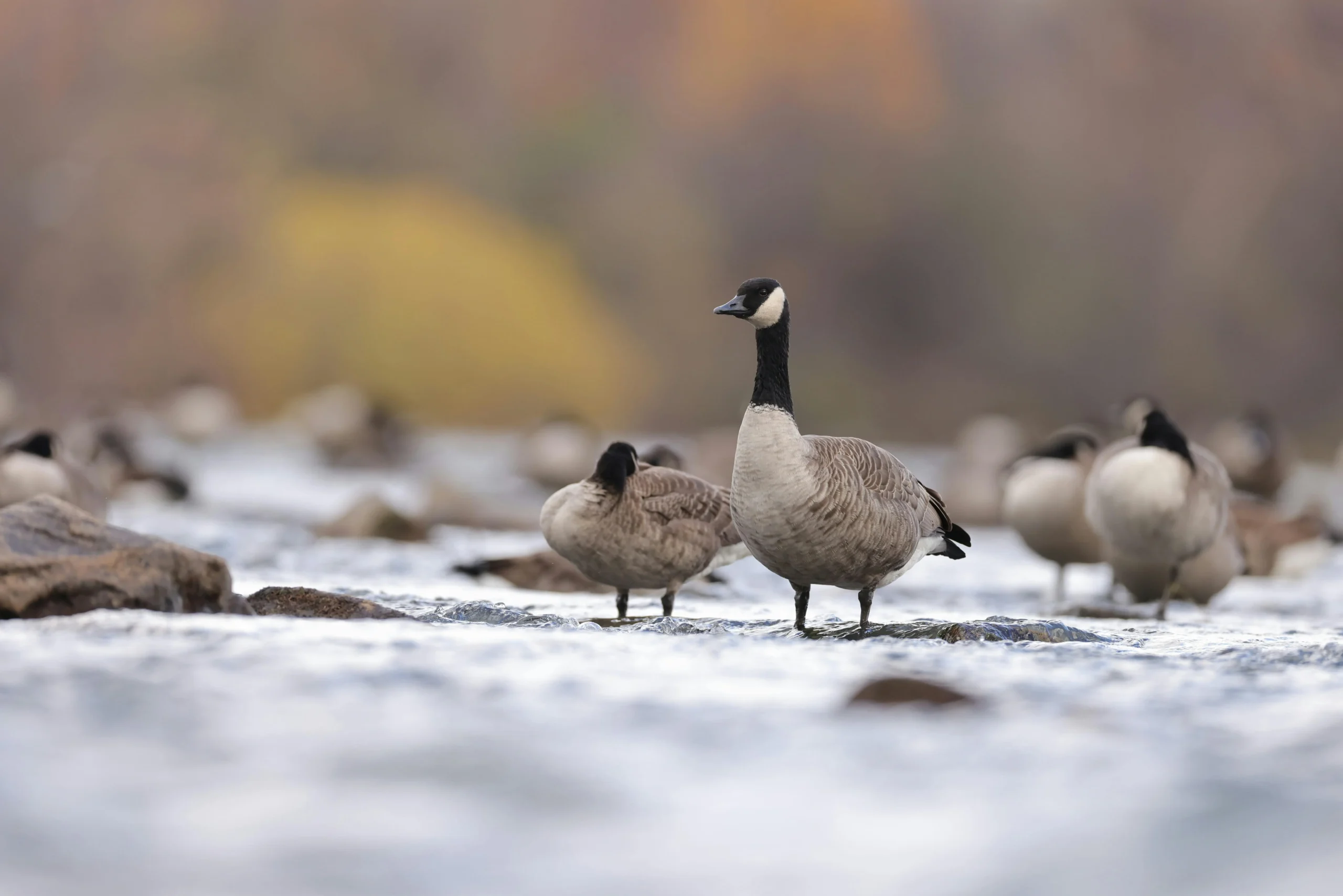
- Color: Black head & neck, white chinstrap, brown body
- Call: Loud honking “ahonk-ahonk”
- Lifespan: 10–24 years
The Canada Goose is one of the most familiar and adaptable birds in North America, known for its bold attitude, loud honks, and impressive migratory formations. Found in wetlands, lakes, parks, and golf courses, these geese are highly social and often live in large flocks.
Identification
Canada Geese have a distinctive appearance with:
- Black neck and head
- White cheek “chinstrap” marking
- Brown body with lighter underparts
- Long, powerful wings built for migration
Juveniles are duller with softer brown tones.
Range & Habitat
Found throughout North America and increasingly worldwide:
- Lakes & ponds
- Coastal wetlands
- Rivers & marshes
- Parks, farms & golf courses
Many populations are migratory, while some remain year-round in warmer areas.
Diet
Canada Geese are herbivores and graze frequently:
- Grasses & shoots
- Aquatic plants
- Seeds & grains
- Occasional insects
Nesting
Nests are shallow depressions lined with plant material and down feathers, typically near water.
- Clutch: 4–7 eggs
- Incubation: About 25–28 days
- Fledge: 6–9 weeks
Pairs are monogamous and mate for life.
Behavior
Canada Geese are highly social, territorial during breeding season, and known for their strong family bonds. Their V-shaped migration helps conserve energy and maintain flock communication.
Conservation Status
Least Concern — populations have rebounded dramatically due to conservation and adaptation to human landscapes.
FAQ
Why do Canada Geese fly in a V-formation?
It reduces wind resistance and allows the flock to communicate and conserve energy.
Are Canada Geese aggressive?
They can be defensive when protecting nests or young goslings.
Do all Canada Geese migrate?
No — many remain year-round where food and mild winters allow.
What do goslings eat?
They eat grasses, grains, small insects, and aquatic vegetation.