California Condor (Gymnogyps californianus)
- Wingspan: Up to 9.8 ft (3 m)
- Length: 43–55 in (109–140 cm)
- Weight: 17–31 lbs (7.7–14 kg)
- Lifespan: 50–60 years (wild & captivity)
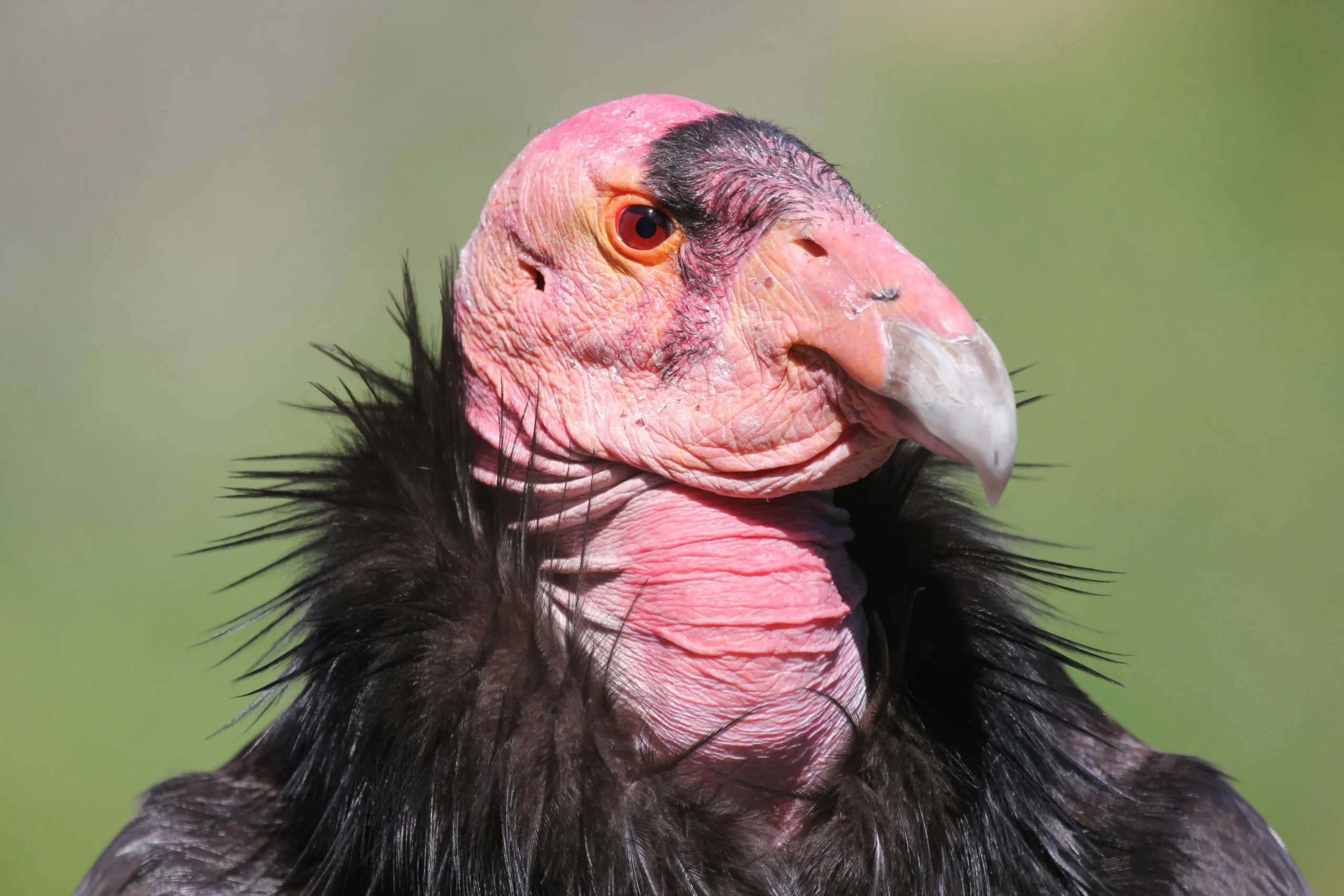
- Color: Black body, white wing patches, bald orange/pink head
- Status: Critically Endangered
The California Condor is the largest wild bird in North America, known for its massive wingspan and soaring flight. Once nearly extinct, this species has made a remarkable comeback thanks to intensive conservation efforts. It now survives in small populations in California, Arizona, Utah, and Baja California.
Identification
This giant vulture has black plumage, long broad wings, white patches beneath the wings, and a bald head that ranges from yellow to orange. Its size and steady soaring make it unmistakable.
Range & Habitat
Modern populations are carefully managed and mostly found in:
- Southern & Central California
- Grand Canyon & Northern Arizona
- Utah canyonlands
- Baja California
They prefer cliffs, mountains, open country, and large wilderness areas.
Diet
The California Condor is a pure scavenger:
- Large mammal carcasses (deer, bighorn sheep, elk)
- Marine mammals (seals, whales—when beached)
- Livestock remains
Nesting
Condors nest in cliffs, caves, and rock crevices. They raise chicks very slowly:
- Clutch: 1 egg
- Incubation: ~55 days
- Fledge: 5–6 months
- One chick every 1–2 years
Behavior
Known for soaring for hours without flapping, using thermal currents. Condors travel large distances searching for food and often roost in high cliffs. They are social at feeding sites and roosts.
Conservation Status
Critically Endangered — but recovering. Lead poisoning, power lines, and habitat loss remain major threats. Captive breeding continues to strengthen populations.
FAQ
Why are California Condors endangered?
Lead poisoning from spent ammunition is the biggest threat. Historical declines also came from habitat loss and hunting.
How big can California Condors get?
They have wingspans nearing 10 feet — the largest of any bird in North America.
Do condors hunt?
No — they are scavengers that feed only on carrion.
Where can I see them in the wild?
Popular spots include Big Sur, Pinnacles National Park, Grand Canyon, and Zion.