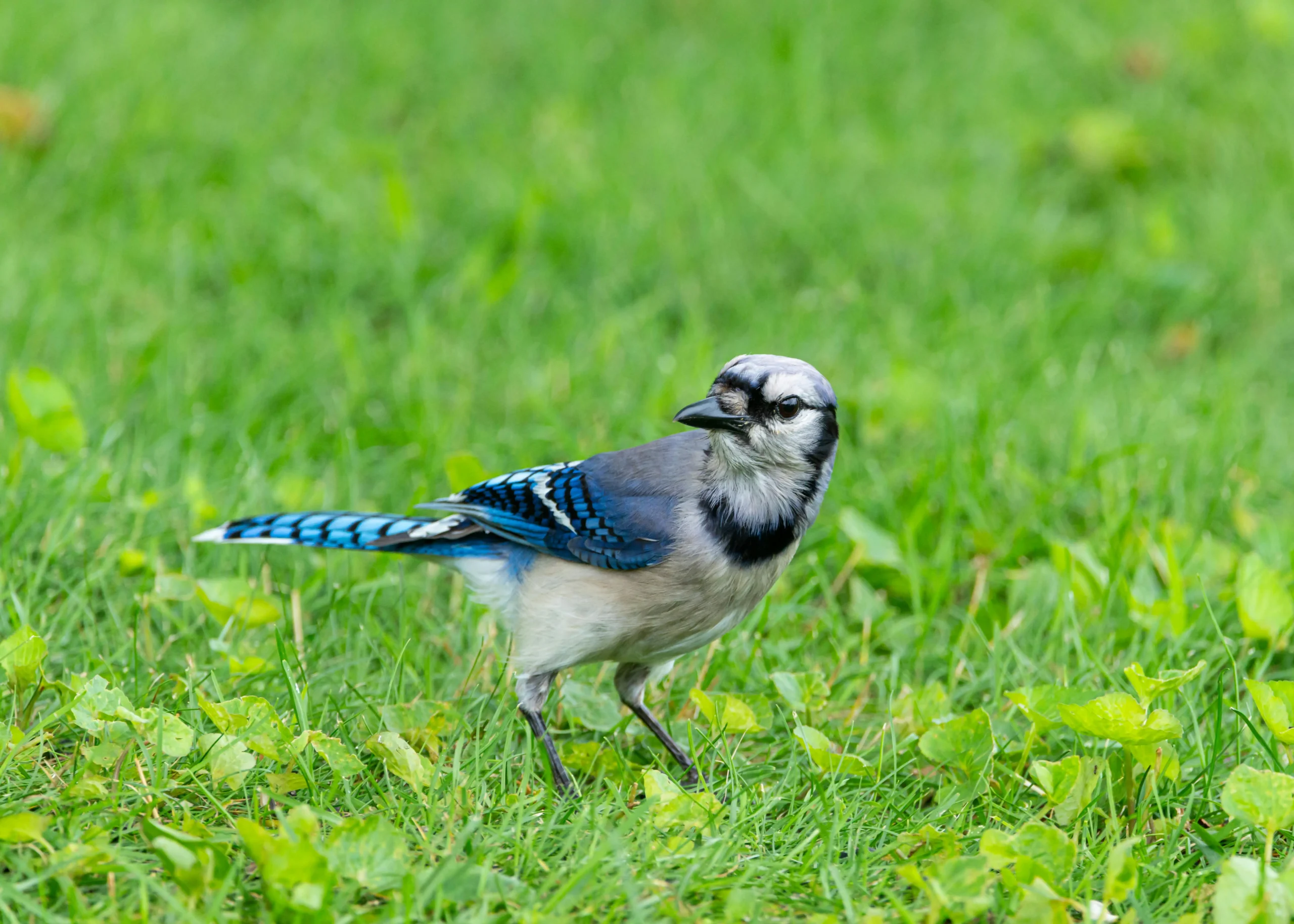
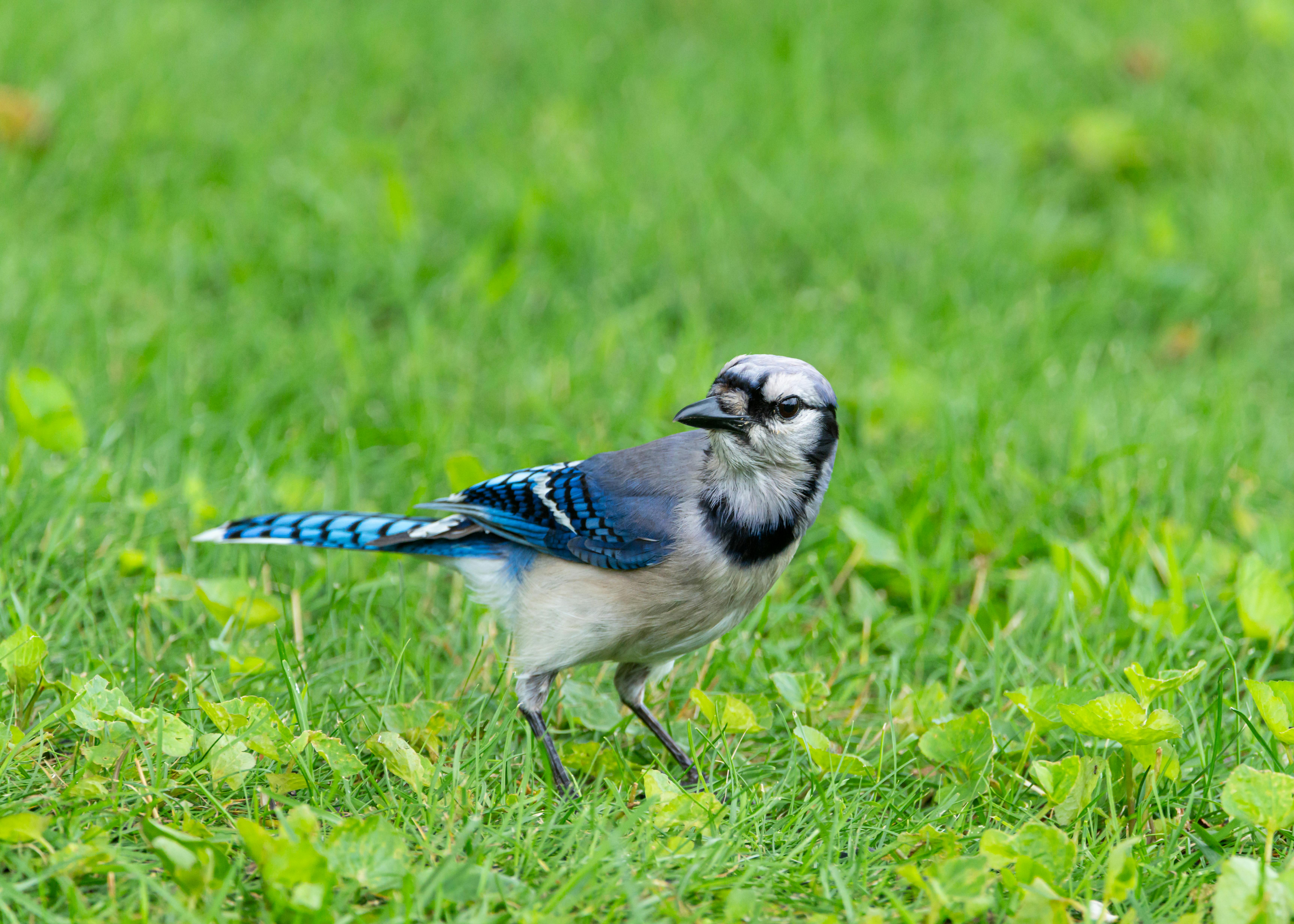
Blue Jay (Cyanocitta cristata)
- Color: Blue, white & black
- Size: 9–12 in (22–30 cm)
- Wingspan: 13–17 in (34–43 cm)
- Weight: 2.5–3.5 oz (70–100 g)
- Call: “Jay! Jay!” + whistles & mimicry
- Lifespan: 7+ years wild (up to 26 recorded)
The Blue Jay is one of the most intelligent and recognizable backyard birds in North America. Known for its bold blue plumage, loud calls, and remarkable mimicry skills, this bird is a fascinating resident of woodlands and suburban yards.
Identification
Blue Jays have striking blue wings, crest, and tail, with black facial markings and white undersides. They often travel in family groups and move with a strong, direct flight pattern.
Range & Habitat
Found throughout eastern & central North America. Increasing westward range expansion.
- Woodlands & oak forests
- Suburban backyards
- Parks & gardens
Non-migratory in many areas; some populations migrate seasonally.
Diet
Omnivores: seeds, nuts, fruits, insects, occasionally eggs.
- Peanuts (shelled or whole)
- Sunflower seeds
- Suet blocks
- Corn & acorns
Nesting
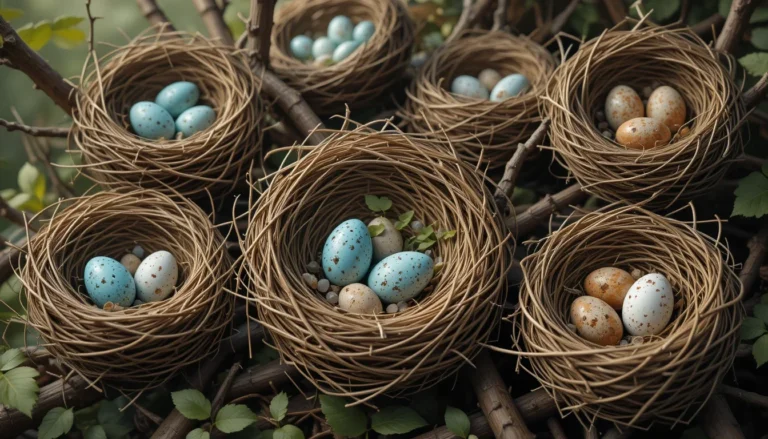
Builds cup-shaped nests in trees or shrubs, 10–25 ft high.
- Clutch: 3–6 eggs
- Incubation: 16–18 days
- Fledge: ~17–21 days
Behavior
Highly intelligent; known for storing food (caching). Can mimic hawks to scare other birds. Loud, social, and curious.
Conservation Status
Least Concern — stable population.
FAQ
Do Blue Jays migrate?
Some do; others stay year-round depending on region & food supply.
Do Blue Jays scare other birds?
They can be dominant at feeders, but also sound alarms to warn other species of predators.
What food attracts Blue Jays most?
Peanuts, sunflower seeds, suet, and whole corn.
Do Blue Jays talk or mimic?
Yes — they mimic hawks, cats, and even humans sometimes.