Have you ever stumbled upon a nest during a quiet morning walk and wondered what kind of bird laid those tiny, speckled eggs? Or maybe your kids found a small white bird egg in the backyard, and you wished you knew where it came from. Welcome to the curious and colorful world of bird egg identification.
From bright blue robin eggs to the tiny, pearl-like treasures of hummingbirds, bird eggs are as diverse as the species that lay them. In this guide, we’ll dive deep into how to identify bird eggs by color, size, markings, and more, helping you uncover nature’s secrets—one egg at a time.
Importance of Bird Egg Identification
Because bird egg identification helps us understand a bird’s full life cycle — from nesting to hatching. By recognizing different eggs, we can learn about the bird’s breeding season, how healthy their population is, and even where they prefer to build their nests. For example, some birds only lay eggs in very safe, hidden spots. Others might return to the same place each year.
Whether you’re a backyard gardener who finds eggs in a tree, a nature lover on a hike, or a child discovering a nest for the first time — learning about bird eggs opens a whole new window into the natural world.
The more we know about bird eggs, the better we can protect the birds. Understanding their nesting needs can help us create safer environments, avoid disturbing fragile nests, and even support conservation efforts for rare or endangered birds.
What to Look for When Identifying Bird Eggs
1. Color and Patterns
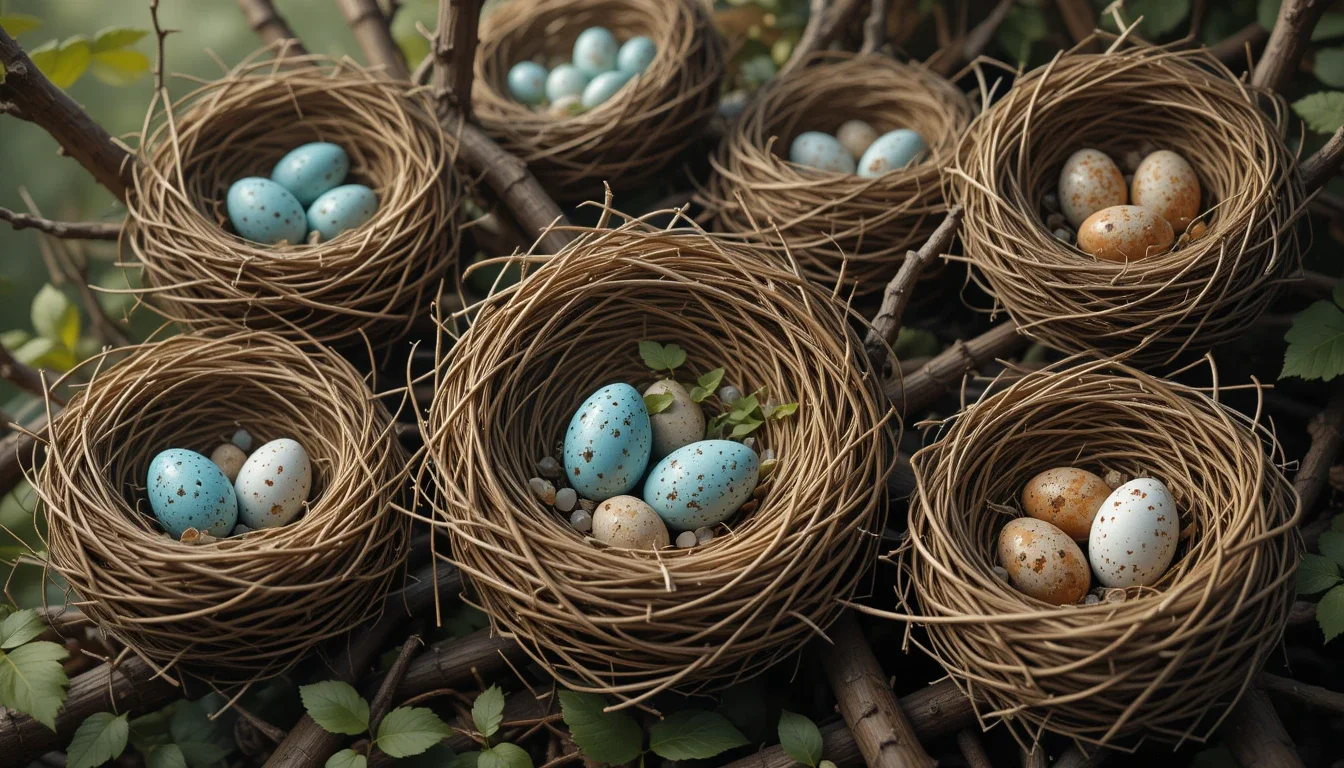
Bird eggs don’t all look the same. Their colors can be very different—from plain white to bright shades of blue and green. And it’s not just the color; some eggs are solid, while others have small spots (called speckles) or random patches (called blotches).
Here are some examples:
- Blue Eggs: These are usually laid by birds like robins, starlings, and bluebirds. Their soft blue color stands out but also blends with sky or shaded areas.
- Greenish Eggs: Birds like finches and warblers often lay pale green eggs. This helps them stay hidden in leafy nests.
- Speckled Eggs: Birds such as sparrows and wrens lay eggs with small brown or gray spots. These speckles help the eggs blend in with twigs or dry leaves.
These colors are not just for decoration. They act like natural camouflage, protecting the eggs from animals that might want to eat them. So, each egg’s color is a smart survival trick from nature..
2. Size and Shape
Size is a strong clue. A small white bird egg found in a shrub is unlikely to be from a hawk. Here’s a general idea:
| Bird Species | Egg Color | Average Size |
|---|---|---|
| Hummingbird | White | ~1.0 cm (tiny) |
| American Robin | Bright Blue | ~2.8 cm |
| Mourning Dove | White | ~2.6 cm |
| House Sparrow | Speckled Cream | ~2.0 cm |
| Blue Jay | Pale Blue/Brown | ~2.7 cm |
3. Nest Type and Location
The place where a bird lays its eggs gives us big clues about what kind of bird it is.
For example:
- Hanging nests (like from a tree branch) are often used by small birds like wrens. They like cozy, hidden places up high—like holes in trees or hanging nests made of grass and twigs.
- Ground nests, on the other hand, are used by birds like the Killdeer. These birds lay their eggs right on gravel or open ground with little to no cover.
So, when you see where the nest is—up in a tree or down on the ground—you can quickly rule out many bird types. It’s like solving part of the puzzle just by checking the location.
Popular Bird Eggs in the US You Might Encounter
American Robin (Turdus migratorius)
The American Robin is one of the most recognizable birds in North America—and so are its eggs!
- Egg Color: The robin’s eggs are a bright turquoise-blue, which is quite famous. This unique color makes them easy to spot and often associated with springtime.
- Egg Size: The eggs are medium-sized, not too small or large—just right for a bird of its size.
- Nest Location: Robins build bowl-shaped nests. You’ll usually find these nests in trees, on window ledges, or even on outdoor shelves and lights. They use mud, twigs, and grass to shape the nest.
So, if you see a turquoise-blue egg in a tree nest, there’s a good chance it belongs to an American Robin.
Eastern Bluebird
The Eastern Bluebird is a gentle songbird, and its eggs are just as delicate and beautiful.
- Egg Color: Most Eastern Bluebird eggs are pale blue, but sometimes they can be white. This light shade can confuse people who are not familiar with bird egg colors.
- Nest Location: These birds don’t build open nests like robins. Instead, they use nest boxes (if available) or natural tree cavities to stay safe and hidden from predators.
- Bonus Tip: Many people mistake their eggs for robin eggs because of the similar blue shade. But here’s the trick—bluebird eggs are smaller in size compared to robin eggs.
So, if you find small pale blue eggs inside a nest box, they likely belong to the Eastern Bluebird.
Northern Cardinal
The Northern Cardinal is a well-known songbird with bright red feathers (in males), but their eggs are more subtle in color.
- Egg Color: Grayish-white or greenish-white, with brown or gray speckles all over. These speckles help the eggs blend into the nest surroundings, making them harder for predators to spot.
- Nest Location: Cardinals build their nests in dense shrubs, small trees, or even thick garden plants. Their nests are cup-shaped and usually placed low, about 3–10 feet off the ground.
- Egg Size: Each egg is about 0.9 inches (2.2 cm) long and 0.6 inches (1.5 cm) wide—so, they’re small and oval-shaped.
Hummingbirds
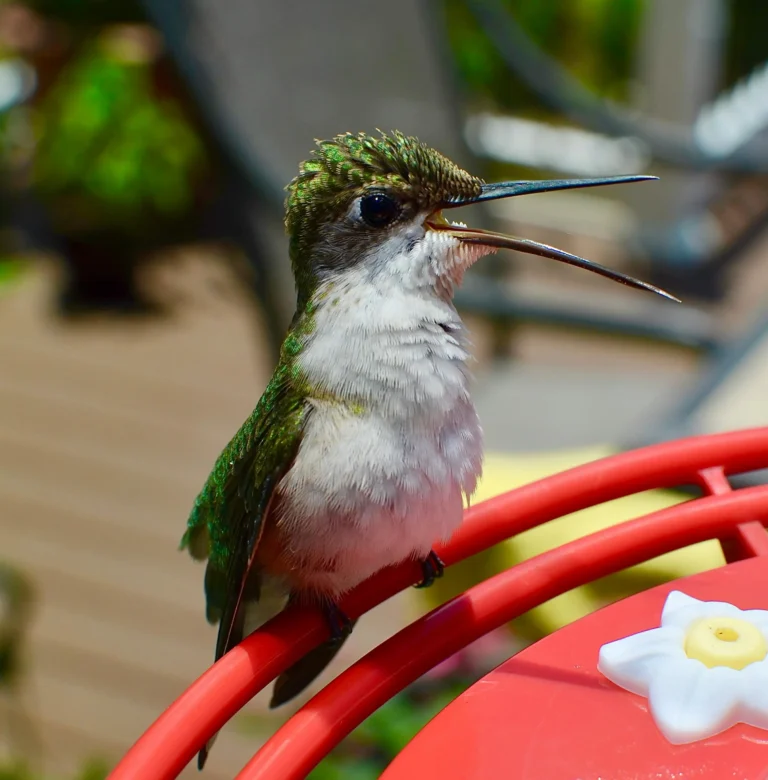
Hummingbirds are among the smallest birds in the world, and their eggs are just as tiny and special.
- Egg Color: Pure white and smooth. These eggs don’t have spots or patterns, just a clean white color.
- Nest Type: Hummingbirds build tiny cup-shaped nests using spider silk, plant fluff, and moss. These nests are flexible and soft, often found on tree branches or in bushes.
- Egg Size: Each egg is no bigger than a jellybean—usually around 0.5 inches (1.2 cm) long. Despite their small size, these eggs hold powerful little creatures!
Hummingbird eggs are some of the smallest in the bird world, weighing less than a paperclip.
Identify Bird Eggs Safely and Responsibly
Discovering a bird nest with eggs in your backyard or garden is a special moment. But it’s very important to watch without disturbing the birds. Even small interference can lead to nest abandonment, which puts the baby birds at risk.
Here’s how you can enjoy the beauty of bird eggs responsibly:
✅ What You Should Do
- Use Binoculars for a Closer Look
Watch from a distance using binoculars. This gives you a close-up view without going near the nest. - Take Photos from Afar
If you want to capture a picture, use zoom. Avoid standing too close or moving branches. - Stay Quiet and Calm
Loud noises or sudden movements can scare parent birds away. - Respect the Nesting Space
Leave the area undisturbed. Don’t try to adjust, move, or clean anything around the nest.
❌ What You Shouldn’t Do
- Don’t Touch the Eggs
Human scent can attract predators like snakes, cats, or raccoons. It also makes birds feel unsafe. - Don’t Handle the Nest
Moving or adjusting a nest can lead to the birds abandoning it completely.
Modern Tools
While most birding apps are mainly used for identifying birds by their appearance or calls, some also include helpful information about bird nests and eggs. These tools are great for curious bird lovers who want to learn more — without disturbing nature.
Here are three trusted apps that can help you:
1. Merlin Bird ID (by Cornell Lab)
- Best for: General bird identification
- How it works: You answer a few questions (like size, color, and location), or upload a photo. The app gives you the most likely birds.
- Bonus: While not focused on eggs, it sometimes includes nest and egg info for common birds.
2. NestWatch (by Cornell Lab)
- Best for: Tracking bird nesting behavior
- How it works: This app is part of a citizen science project. You can log and follow nesting progress — including details about eggs, hatch dates, and baby birds.
- Bonus: Offers egg data and nesting timelines for different bird species.
3. iNaturalist (by National Geographic & California Academy of Sciences)
- Bonus: Works well even for rare sightings or egg identifications.
- Best for: Community-powered identification
- How it works: You take a photo of a bird, egg, or nest. The app suggests matches using AI, and other users can help confirm the species.
The Science Behind Bird Egg Colors and Patterns
Bird eggs aren’t just randomly colored — their appearance is shaped by evolution, environment, and survival needs. Let’s break down the main reasons:
1. Camouflage – Hiding from Predators
One of the biggest reasons bird eggs are colored or patterned is to stay hidden.
- Speckled or brownish eggs blend in with nests or forest floors
- Ground-nesting birds often lay eggs that look like dirt or leaves
- Helps protect eggs from being seen by predators like snakes, crows, or cats
2. UV Protection – Shielding from Sunlight
Eggs exposed to direct sunlight need protection from harmful UV rays.
- Blue and green pigments (called biliverdin) act like natural sunscreen
- These colors help keep embryos safe from damage in open or sunny nests
- Common in species that nest in open areas or with less shade
3. Parental Recognition – Telling Eggs Apart
Some birds use egg colors and markings to recognize their own eggs — especially in places where many birds nest close together.
- Helps prevent mix-ups in crowded colonies
- Protects against “egg dumping” (when another bird lays eggs in a different nest)
- Some birds can spot fakes or remove foreign eggs
Frequently Asked Questions (FAQs)
Look at its color, size, texture, and location. Match it with a bird egg identification chart to narrow down species. Also note if the egg is speckled or plain.
While no app identifies eggs solely, NestWatch and iNaturalist offer features to help with egg and nest identification.
Usually white and extremely small. Their nests are often found on thin branches or vines.
Beauty is subjective, but the American Robin’s bright blue egg is a fan favorite.
In birds, you cannot tell male from female just by the egg. Gender is determined genetically and not visible in egg characteristics.
Final Thoughts
Knowing how to use a bird egg identification chart can turn a moment of curiosity into a learning experience. Whether you’re checking Budgie egg hatching signs, understanding bird eggs colors, or browsing parrot eggs for sale, the key is to observe with care and act responsibly.
From breeders to backyard birders, this knowledge helps you connect better with nature and your feathered friends.