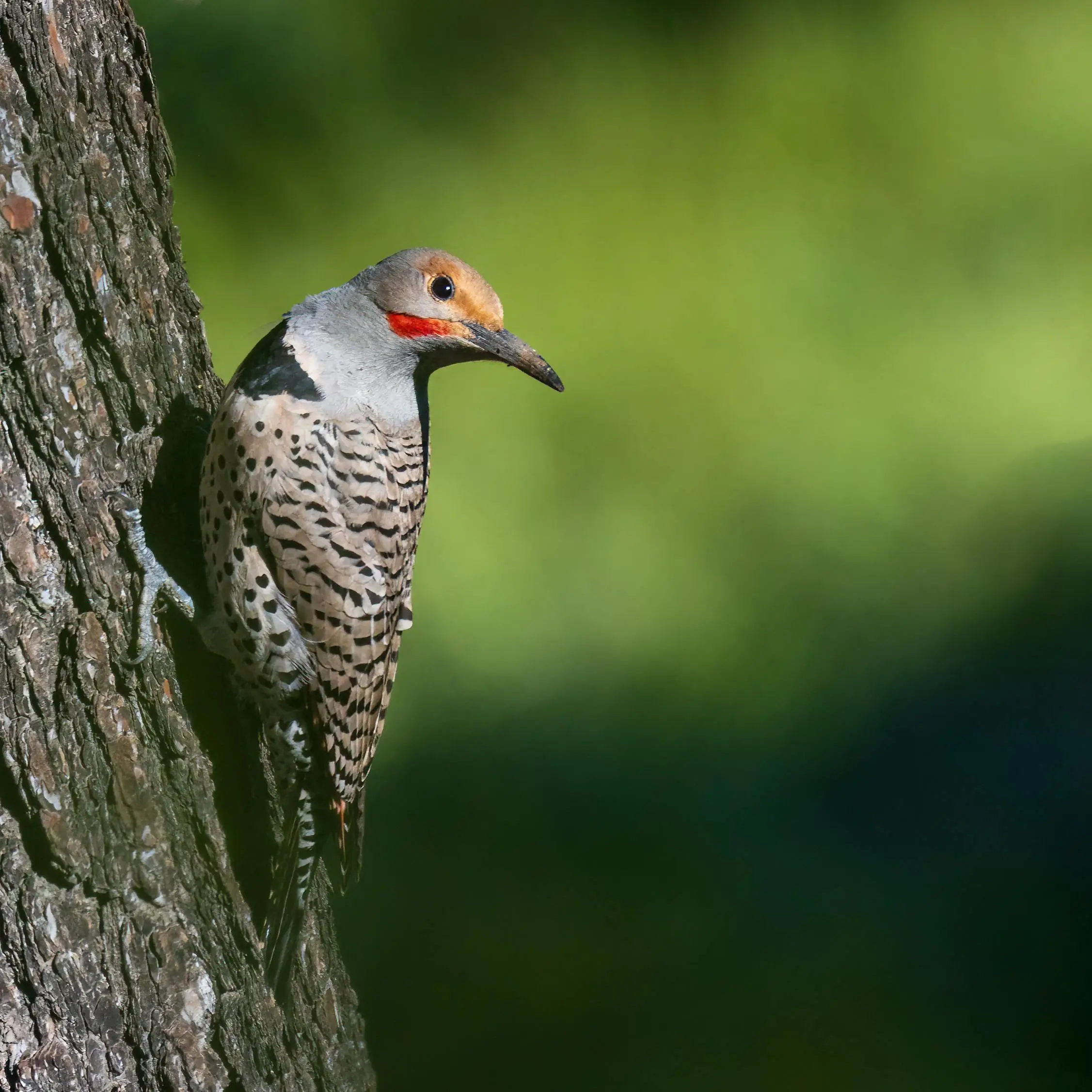
Northern Flicker (Colaptes auratus)
- Color: Brown body, black bars, spotted belly
- Wings: Yellow-shafted (East) or Red-shafted (West)
- Size: 11–14 in (28–36 cm)
- Wingspan: 16.5–20 in (42–51 cm)
- Weight: 3–5.6 oz (85–160 g)
- Call: Loud “wick-wick-wick”
- Lifespan: Up to 9 years
The Northern Flicker is a unique woodpecker that spends much of its time feeding on the ground—especially on ants. With striking plumage and noticeable flashes of yellow or red in flight, it’s one of the most easily recognized and widespread woodpeckers in North America.
Identification
Brownish body with black barring, spotted underparts, and a bold black chest crescent. Eastern birds have yellow wing shafts, while western birds show red. Males typically have a mustache stripe (black or red depending on region).
Range & Habitat
Common across nearly all of North America:
- Open woodlands
- Backyards & parks
- Forest edges
- Fields & grasslands
Often seen foraging on the ground rather than hammering trees.
Diet
Unlike most woodpeckers, Northern Flickers prefer ground-feeding:
- Ants (primary food)
- Beetles
- Termites
- Berries & fruits
Nesting
Nest in cavities of trees, utility poles, or nest boxes:
- Clutch: 5–8 eggs
- Incubation: 11–12 days
- Fledge: 24–28 days
Both parents participate in raising the young.
Behavior
Known for ground-foraging, loud calls, and “drumming” on metal objects during breeding season. Their flight shows bright flashes of yellow or red.
Conservation Status
Least Concern — though some regional declines are linked to habitat changes and competition for nest cavities.
FAQ
Why do Northern Flickers feed on the ground?
They specialize in eating ants, which are abundant at ground level.
What’s the difference between Yellow-shafted and Red-shafted Flickers?
Wing and tail shaft colors differ: yellow in the East, red in the West.
Do Northern Flickers damage homes?
They may drum on structures, but mainly during mating season and rarely cause harm.
Do they migrate?
Some do—northern populations migrate south, while others remain year-round.