
Osprey (Pandion haliaetus)
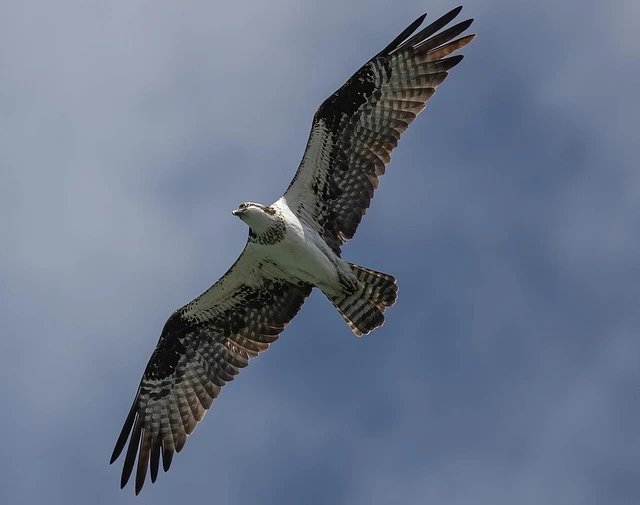
- Color: Brown back, white belly, dark eye stripe
- Size: 21–26 in (53–66 cm)
- Wingspan: 5–6 ft (150–180 cm)
- Weight: 2.0–4.5 lbs (0.9–2 kg)
- Call: High-pitched whistles
- Lifespan: Up to 20+ years
The Osprey is a unique raptor found across coasts, lakes, and rivers in North America. Known for its fishing skills and dramatic head-first dives, the Osprey is one of the only birds of prey that feeds almost exclusively on fish.
Identification
Ospreys have long, narrow wings with a distinct M-shape when seen from below. They show a dark eye stripe, white head, and brown upperparts. Their feet have specialized spiny pads for gripping slippery fish.
Range & Habitat
Found near nearly any water body that supports fish:
- Lakes & reservoirs
- Rivers & streams
- Coastal bays & marshes
- Man-made ponds
Ospreys breed throughout most of the U.S. and Canada and winter in Central & South America.
Diet
Ospreys are 99% fish-eaters, catching prey with dramatic dives.
- Trout
- Bass
- Carp
- Catfish
Nesting
Build large bulky stick nests on elevated platforms:
- Trees
- Utility poles
- Nesting platforms
- Buoys & channel markers
Nesting Details:
- Clutch: 1–4 eggs
- Incubation: 36–42 days
- Fledge: 50–55 days
Behavior
Ospreys hover over water before diving feet-first to catch fish. They carry prey head-first to reduce wind resistance. Known for long-distance migration and strong site fidelity.
Conservation Status
Least Concern — major conservation success story after recovering from pesticide decline.
FAQ
Do Ospreys migrate?
Yes — most migrate to Central and South America for winter.
How do Ospreys catch fish?
They dive feet-first, using sharp talons and spiny pads for grip.
Where do Ospreys nest?
On tall structures near water — trees, poles, platforms, and channel markers.
Are Ospreys related to eagles?
No — they are in their own unique family (Pandionidae).