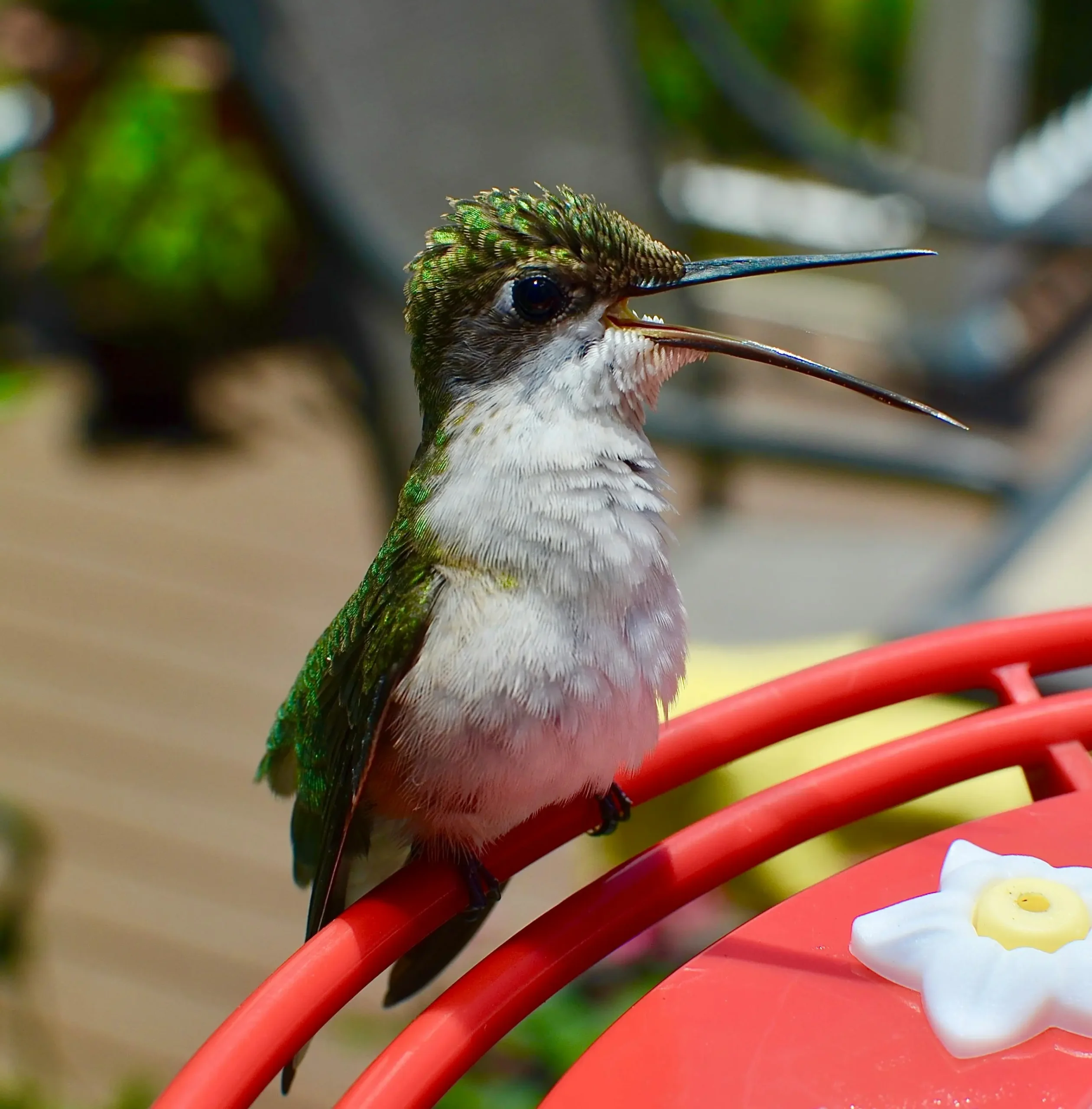
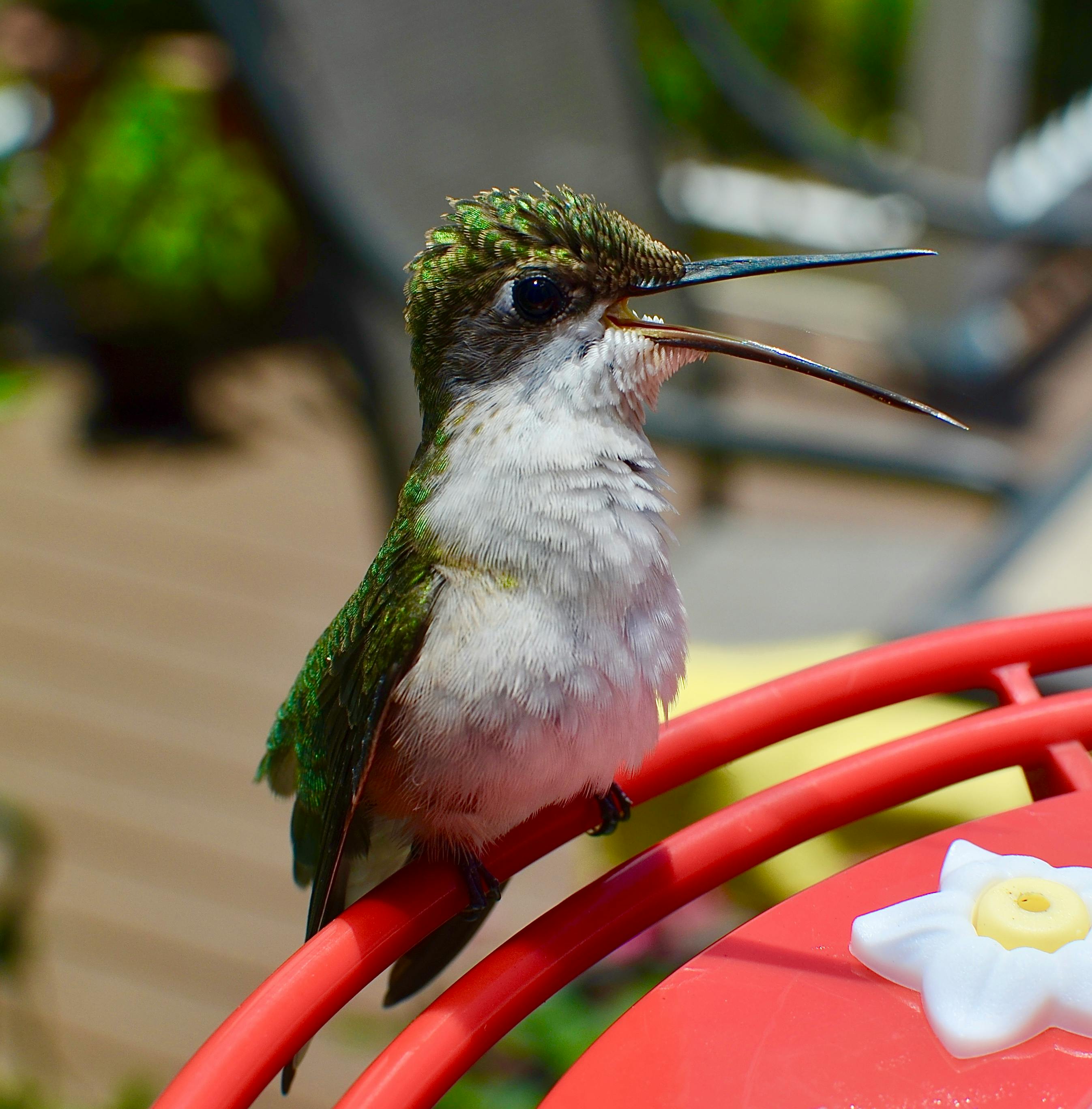
Ruby-throated Hummingbird (Archilochus colubris)
- Color: Male ruby-red throat, green body
- Size: 2.8–3.5 in (7–9 cm)
- Wingspan: 3–4 in (8–11 cm)
- Weight: 0.1–0.2 oz (2–6 g)
- Flight: Capable of hovering & flying backwards
- Speed: ~30 mph; dive >60 mph
- Lifespan: 3–5 years
The Ruby-throated Hummingbird is the only breeding hummingbird in eastern North America. Famous for its dazzling flight skills and ability to hover while feeding, this tiny bird is a favorite visitor to backyard gardens.
Identification
Males have a brilliant ruby-red throat patch (gorget) and metallic green body. Females are green above with white underparts and lack the red throat.
Range & Habitat
Breeds across the eastern United States and southern Canada; winters in Central America.
- Gardens with flowers
- Woodland edges & open fields
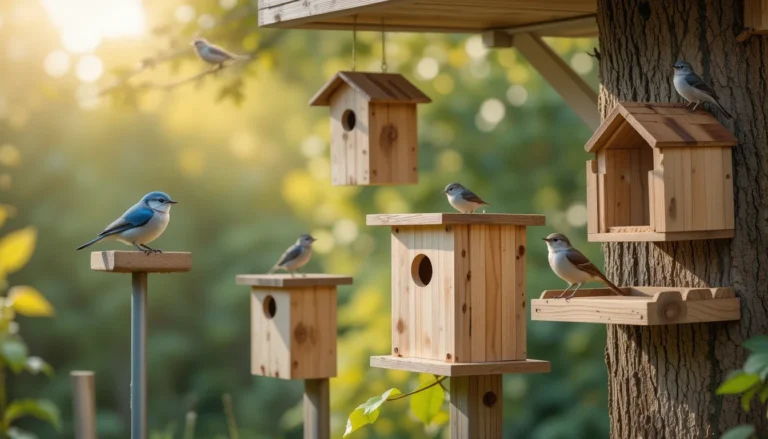
- Backyards with feeders
Diet
Feeds on nectar, small insects, and tree sap.
- Nectar from flowers
- Sugar water feeders (4:1 mix)
- Tiny insects & spiders
Nesting
Tiny cup nests made of plant fibers and spiderwebs on tree branches.
- Clutch: 1–3 eggs (usually 2-egg clutch)
- Incubation: ~12–14 days
- Fledge: ~20 days
Behavior
Aggressive defenders of feeding territory. Capable of rapid wing beats (~50–80 per second). Known to migrate across the Gulf of Mexico (~500 miles nonstop).
Conservation Status
Least Concern — widespread & stable.
FAQ
Do Ruby-throated Hummingbirds migrate?
Yes — many fly across the Gulf of Mexico during migration.
What do they eat the most?
Nectar and small insects for protein.
How do I attract hummingbirds?
Plant nectar flowers, hang feeders (4:1 sugar mix), and avoid pesticides.
Do hummingbirds fly backward?
Yes — they are the only birds that can hover and fly backward.