
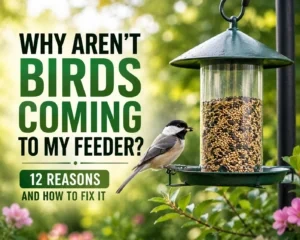
You filled your bird feeder with fresh seed, put it outside, and expected to see birds. But days later, the feeder is still full.
Why aren’t birds coming to my feeder?
This is a common problem, especially with a new bird feeder or a new feeding location. Birds may ignore a feeder because of its location, unfamiliar food, predators, squirrels, dirty seed, or simply because they have not discovered it yet.
Here are 12 common reasons birds aren’t coming to your feeder and what you can do to attract them.
1. Birds Haven’t Found Your Feeder Yet
The most common reason is simple: birds don’t know the feeder is there.
Wild birds usually have established feeding routes. A new feeder may take several days or even a few weeks to become part of their routine.
What to do
- Keep the feeder in the same location.
- Use fresh, attractive bird seed.
- Avoid moving the feeder repeatedly.
- Add a birdbath or water source nearby.
- Scatter a small amount of seed on the ground near the feeder.
Give birds time to discover the new food source.
2. Your Bird Feeder Is in the Wrong Location
Bird feeder placement can make a major difference.
Birds want access to food while still having nearby shelter from predators. A feeder placed in a completely exposed area may make birds feel vulnerable.
At the same time, placing a feeder directly inside dense vegetation can give cats and other predators places to hide.
Better placement
Place your feeder near shrubs or trees while maintaining an open area where birds can see approaching predators.
For many backyard setups, a distance of roughly 10 feet from natural cover can provide a useful balance between shelter and visibility.
3. You’re Using the Wrong Bird Seed
Not every bird eats every type of seed.
For example, Northern Cardinals commonly favor sunflower seeds and safflower seeds, while finches may prefer smaller seeds such as nyjer.
If your feeder contains a seed mix that local birds don’t prefer, they may simply ignore it.
Try these popular options
- Black oil sunflower seeds
- Safflower seeds
- Sunflower hearts
- Nyjer seed
- Peanuts
- Quality wild bird seed
Start with black oil sunflower seeds if you’re unsure what to offer. They attract a broad range of backyard songbirds.
4. The Seed Is Old or Spoiled
Birds can avoid seed that has become stale, wet, moldy, or contaminated.
Rain and humidity can cause bird food to deteriorate, particularly in feeders without adequate drainage or weather protection.
Check your seed for:
- Mold
- Musty odors
- Moisture
- Clumping
- Insects
- Discoloration
Replace questionable seed and keep unused bird food in a cool, dry, airtight container.
5. Your Feeder Is Dirty
A dirty feeder can discourage birds and create unnecessary health risks.
Seed shells, droppings, and moisture can accumulate around feeding ports and the tray.
Keep your feeder clean
Empty old seed regularly and clean the feeder according to the manufacturer’s instructions. Allow it to dry completely before adding fresh food.
A clean bird feeder is more attractive and helps create a healthier backyard feeding station.
6. Squirrels Are Taking Over
Sometimes birds aren’t coming because squirrels are getting to the food first.
Squirrels can quickly empty a feeder and may scare smaller birds away.
Solutions
Consider a:
- Squirrel-resistant bird feeder
- Weight-activated feeder
- Caged feeder
- Baffle-equipped feeding station
You can also experiment with safflower seed, which some birders use because squirrels may show less interest in it than sunflower seed. However, safflower is not guaranteed to keep squirrels away.
7. The Feeder Is Too Small or Difficult to Use
Different birds prefer different feeder designs.
A narrow tube feeder may work well for finches and chickadees but may be less comfortable for larger birds such as cardinals.
If you want to attract larger songbirds, consider a:
- Platform feeder
- Hopper feeder
- Large tray feeder
- Wide-perch feeder
A feeder should provide enough space for birds to land and eat comfortably.
8. Predators Are Scaring Birds Away
Birds constantly watch for danger.
If outdoor cats, hawks, or other predators frequently visit the area around your feeder, birds may avoid it.
Make the feeding area safer
Keep cats away from the feeding station and avoid placing feeders next to dense low vegetation where predators can hide.
Birds need nearby cover, but they also need enough visibility to detect threats.
9. There Is Too Much Human Activity
A feeder located beside a busy door, patio, driveway, or children’s play area may receive fewer visitors.
Birds often prefer quieter feeding locations.
If your feeder gets little activity, move it gradually to a calmer area of the yard.
10. Another Food Source Is More Attractive
Birds have choices.
If your neighbors provide excellent feeders, natural berries are abundant, or wild seeds are plentiful, birds may have less reason to visit your feeder.
This is particularly common during seasons when natural food is readily available.
What to do
Keep offering quality food consistently. When natural food becomes less abundant, your feeder may become more attractive.
11. You Don’t Have a Water Source
Food isn’t the only thing birds need.
A clean birdbath or shallow water source can make your backyard more attractive to wild birds.
Birds use water for drinking and bathing, so adding water can complement your bird feeding station.
Keep the water fresh and clean, and place it where birds have good visibility.
12. You’re Expecting Results Too Quickly
Bird feeding requires patience.
A new feeder can take time to become established. Some birds may discover it quickly, while others may take weeks.
Don’t keep changing the seed, feeder, and location every few days. Make one change at a time and observe what happens.
How to Get Birds to Come to Your Feeder
If birds aren’t visiting, use this simple checklist:
Step 1: Use attractive seed
Start with black oil sunflower seeds or another seed suited to the birds you want to attract.
Step 2: Choose the right feeder
Use a platform or hopper feeder for larger birds and appropriate tube feeders for smaller songbirds.
Step 3: Improve placement
Put the feeder near natural cover while maintaining clear visibility.
Step 4: Add water
A clean birdbath can increase backyard bird activity.
Step 5: Keep everything clean
Remove spoiled food and regularly clean the feeder and surrounding area.
Step 6: Control squirrels and predators
Use appropriate squirrel protection and keep cats away from the feeding area.
Step 7: Be consistent
Keep fresh food available and give local birds time to discover your feeder.
Why Are Birds Coming to Everyone’s Feeder Except Mine?
If birds are visiting nearby feeders but ignoring yours, focus on food, location, feeder design, and safety.
Compare your setup with successful feeders nearby. You may discover that your feeder is too exposed, the seed isn’t attractive to local species, or squirrels and predators are making the area uncomfortable.
Changing one factor at a time makes it easier to identify the problem.
What Seed Attracts the Most Backyard Birds?
Black oil sunflower seeds are one of the most versatile choices for attracting backyard birds.
They can attract species such as:
- Cardinals
- Chickadees
- Titmice
- Nuthatches
- Finches
- Jays
- Woodpeckers
For more variety, use a quality wild bird seed mix containing sunflower seeds and other appropriate ingredients.
Frequently Asked Questions
Why aren’t birds coming to my new feeder?
Birds may simply not have discovered it yet. Keep the feeder in a safe, visible location with fresh seed and give birds time to add it to their normal feeding route.
How long does it take for birds to find a new bird feeder?
There is no fixed timeframe. Some birds may find a feeder within days, while others can take weeks. Location, food availability, local bird populations, and nearby feeders all affect how quickly birds discover it.
What is the best bird seed to attract birds?
Black oil sunflower seeds are a strong all-purpose choice because many common backyard birds eat them. You can also use safflower, sunflower hearts, nyjer, peanuts, or a quality seed mix depending on the species you want to attract.
Why do birds suddenly stop coming to my feeder?
Bird activity can change because of seasonal food availability, weather, predators, feeder cleanliness, spoiled seed, or changes in the surrounding environment. Check the seed and feeder first, then evaluate placement and nearby predators.
Do birds prefer feeders in the sun or shade?
Birds can use feeders in both conditions. A partially shaded location can help keep seed cooler and protect it from direct weather exposure, while nearby cover provides birds with a place to retreat.
Should I move my bird feeder if no birds are coming?
Not immediately. Give a new feeder time to be discovered. If there is still no activity after a reasonable period, try moving it to a quieter location near natural cover.
What attracts cardinals to a feeder?
Cardinals commonly respond well to black oil sunflower seeds, safflower seeds, sunflower hearts, and other suitable large seeds. A platform or hopper feeder with enough space for their larger bodies can also make feeding easier.
Why are birds eating the seed on the ground but not from the feeder?
Some species naturally prefer ground feeding, while others may be uncomfortable with the feeder design or location. Try a platform feeder or ground-feeding area in a safe, clean location.
Final Verdict
If birds aren’t coming to your feeder, don’t assume the feeder itself is the problem. Food choice, feeder placement, cleanliness, predators, squirrels, and patience all matter.
Start with fresh black oil sunflower seeds, place the feeder near safe natural cover, keep it clean, provide fresh water, and give birds time to discover the feeding station.
With the right setup and consistent feeding, your backyard can become a reliable source of food for cardinals, finches, chickadees, nuthatches, titmice, and other wild birds.