Knowing where to hang a hummingbird feeder can make it easier for hummingbirds to find and use your feeder. The right location can also make feeder maintenance easier while helping protect nectar from excessive heat, contamination, and unwanted pests.
You don’t need a large yard or complicated setup. A hummingbird feeder can work well in a garden, on a porch, near a patio, or in another suitable outdoor location.
The key is to choose a spot that is visible, relatively quiet, easy to maintain, and protected from extreme heat and weather when possible.
In this guide, you’ll learn where to place a hummingbird feeder, how high to hang it, whether it should be near flowers, and which locations you may want to avoid.
Where Is the Best Place to Hang a Hummingbird Feeder?
A good hummingbird feeder location should be easy for birds to discover and easy for you to maintain.
Consider a spot that is:
- Visible from the air
- Near natural food sources
- Partially shaded when possible
- Protected from strong winds
- Away from heavy foot traffic
- Easy to reach for cleaning and refilling
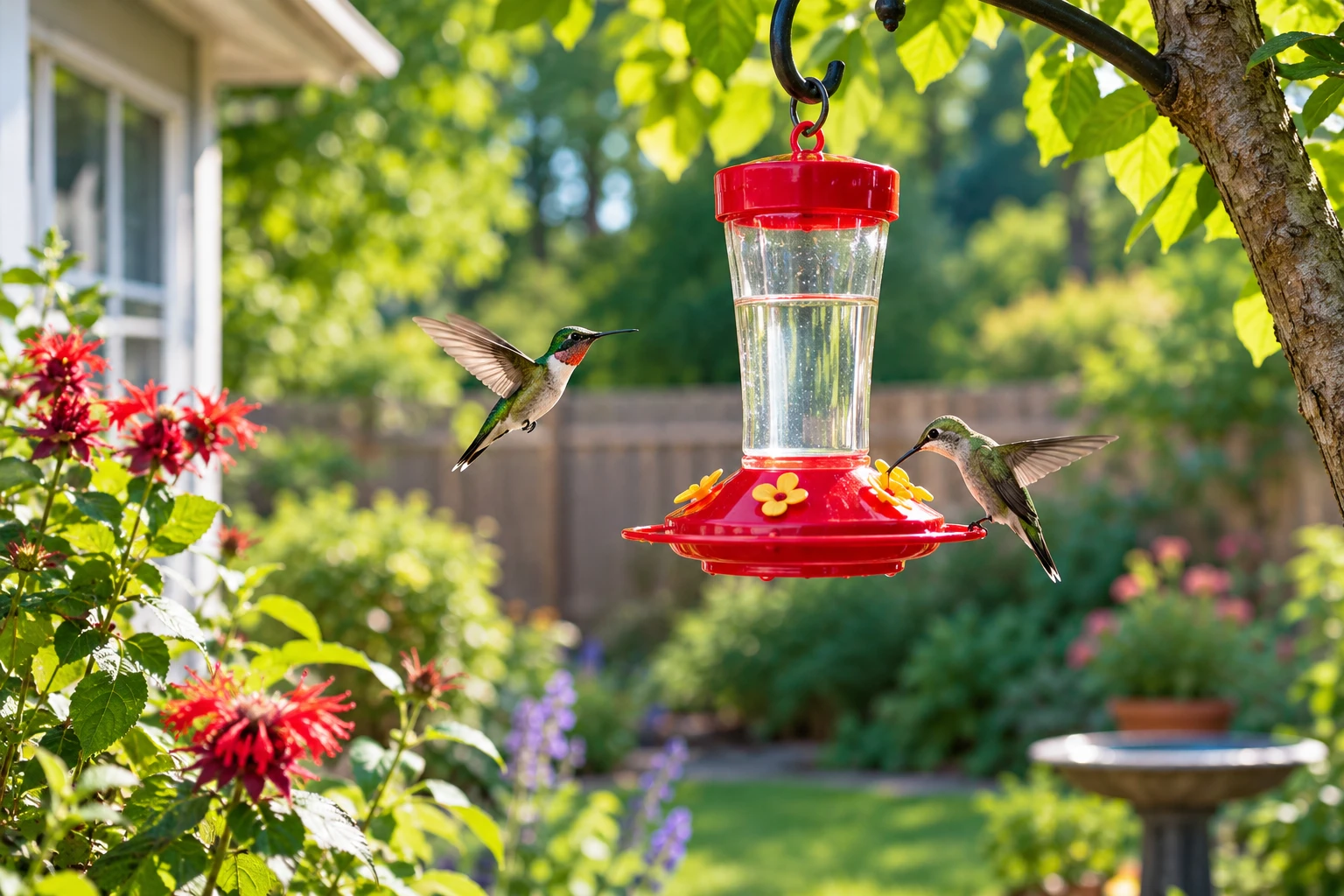
A location near flowering plants can be particularly useful because hummingbirds naturally search for nectar-rich flowers.
However, you don’t need to hide the feeder inside dense vegetation. Hummingbirds need enough space to approach and leave the feeder comfortably.
Should a Hummingbird Feeder Be in the Sun or Shade?
Partial shade is generally a good choice.
Strong direct sunlight can heat the feeder and its nectar. Hot conditions can cause nectar to deteriorate more quickly.
A location with morning sun and afternoon shade can be a practical option, depending on your yard.
You should also make sure the feeder remains visible rather than completely hidden behind leaves or branches.
How High Should You Hang a Hummingbird Feeder?
There isn’t one mandatory height for every hummingbird feeder.
A practical placement is usually around 4 to 6 feet above the ground, where it is easy for you to reach for cleaning and refilling.
The feeder doesn’t need to be placed extremely high. Hummingbirds can feed at different heights depending on the surrounding environment.
If you have pets or other animals that might interfere with the feeder, choose a location that reduces the chance of disturbance.
Should a Hummingbird Feeder Be Near Flowers?
Yes, placing a feeder near flowering plants can make sense.
Flowers provide a natural food source, and hummingbirds may already visit areas where nectar-producing plants are growing.
However, don’t place the feeder directly inside dense foliage.
Leave enough open space around the feeder so hummingbirds can approach, hover, feed, and leave easily.
Can You Hang a Hummingbird Feeder on a Porch?
Yes. A porch can be a convenient location for a hummingbird feeder.
Advantages include:
- Easy access for cleaning
- Protection from some weather
- Convenient viewing
- Easy nectar replacement
However, avoid locations with constant human activity or where doors and windows are frequently opened and closed.
A quieter corner of the porch may be a better choice.
Can You Hang a Hummingbird Feeder Near a Window?
You can place a hummingbird feeder near a window, but you should consider bird safety.
Windows can be dangerous because birds may not recognize the glass as an obstacle.
If you want to watch hummingbirds from inside your home, consider positioning the feeder at a safe distance and using appropriate window-collision prevention measures.
Avoid creating a setup where hummingbirds are likely to fly quickly between the feeder and a reflective window.
How Far Should a Hummingbird Feeder Be From Other Feeders?
If you have several hummingbirds visiting your yard, multiple feeders can sometimes help reduce competition.
Instead of putting every feeder directly next to each other, consider placing them in different parts of your yard.
This can give individual birds more feeding options and may reduce territorial conflicts.
Multiple feeders can also make your yard more attractive to hummingbirds that don’t want to approach a feeder controlled by another bird.
Can You Hang a Hummingbird Feeder Near Other Bird Feeders?
Yes, but spacing can be helpful.
Hummingbirds are small and can be territorial, while larger birds may compete for space around other types of feeders.
Consider placing hummingbird feeders separately from large bird-feeding stations.
This can give hummingbirds their own feeding area and make it easier to monitor their nectar.
Where Should You Not Hang a Hummingbird Feeder?
Some locations are less suitable than others.
Avoid placing your feeder:
In Extreme Direct Sunlight
Strong sunlight can heat the nectar and contribute to faster deterioration.
In a Very Windy Location
Strong wind can make feeders swing and spill nectar.
Next to Heavy Foot Traffic
Constant activity may disturb birds and make feeder maintenance inconvenient.
In Dense Vegetation
Hummingbirds need room to approach and leave the feeder.
Where Ants and Insects Are Common
Some locations may make it easier for insects to reach the nectar.
Too Close to a Busy Window
Bird-window collisions are a serious concern for birds. Take precautions if your feeder is near glass.
How to Protect a Hummingbird Feeder From Ants
Ants are attracted to the sugar in hummingbird nectar.
If ants are reaching your feeder, check whether the feeder location or hanging method is allowing them easy access.
An ant moat designed for hummingbird feeders can help prevent ants from reaching the nectar on compatible feeder setups.
Keep the area around the feeder clean and wipe up spilled nectar.
Don’t put pesticides directly on or around the feeder.
How to Keep Bees and Wasps Away From a Hummingbird Feeder
Bees and wasps may also be attracted to sugary nectar.
If insects become a problem:
- Keep the feeder clean
- Avoid leaking or spilled nectar
- Check for damaged feeder parts
- Move the feeder to a different location
- Consider a feeder designed to reduce insect access
Don’t use insecticides around the feeder where hummingbirds may be exposed.
Can You Hang a Hummingbird Feeder From a Tree?
Yes.
A tree branch can be a convenient place to hang a feeder as long as the branch is strong enough and the feeder remains accessible.
Try to choose a branch that:
- Provides some shade
- Is easy to reach
- Doesn’t sway excessively in strong wind
- Leaves enough open space around the feeder
You can also use a shepherd’s hook, porch hook, or another suitable feeder hanger.
Where to Hang a Hummingbird Feeder in a Small Yard
You don’t need a large garden to attract hummingbirds.
For a small yard, consider:
- A porch railing
- A balcony
- A garden hook
- A sturdy tree branch
- A patio area
- A window-view location with bird-safe precautions
The most important factors are accessibility, cleanliness, visibility, and protection from extreme conditions.
Where to Hang a Hummingbird Feeder in an Apartment
Apartment balconies can work if outdoor bird feeding is permitted by your building or local rules.
A small hanging feeder can be placed where:
- It is easy to clean
- Nectar won’t spill onto people below
- Birds have clear access
- The feeder isn’t exposed to excessive wind
- It doesn’t create a nuisance for neighbors
A small container garden with hummingbird-friendly flowers can also complement a balcony feeder.
Should a Hummingbird Feeder Be Near a Bird Bath?
Hummingbirds don’t use bird baths in exactly the same way as many larger backyard birds.
They may prefer shallow water sources, fine sprays, or dripping water where they can perch or hover.
If you have a water feature, keep it clean and provide a safe environment.
You can also provide flowering plants and shelter to make your yard more attractive.
How Many Hummingbird Feeders Should You Have?
There is no universal number.
One feeder may be enough for a small yard with occasional hummingbird visits.
If several hummingbirds are competing aggressively over one feeder, adding another feeder in a different location may help provide additional feeding opportunities.
Instead of placing all feeders together, spread them around the yard when possible.
How to Choose the Best Location for Your Feeder
Before hanging your feeder, ask these questions:
Is it easy for hummingbirds to see?
Choose a location that isn’t completely hidden.
Is it protected from excessive heat?
Partial shade can help prevent the nectar from becoming unnecessarily warm.
Can I easily reach it?
You’ll need to clean the feeder and replace nectar regularly.
Is there enough open space?
Hummingbirds need room to approach and leave.
Is it protected from strong wind?
A stable feeder is less likely to swing or spill.
Is it safe around windows and pets?
Consider bird-window collision risks and access by cats or other predators.
How to Make Your Feeder Location More Hummingbird-Friendly
A feeder works best as part of a larger habitat.
Consider combining your feeder with:
- Nectar-rich flowers
- Native plants
- Safe perches
- Shelter
- Clean water
- Multiple feeding areas when appropriate
Fresh nectar is also important.
If you’re making nectar at home, see [Homemade Hummingbird Nectar] for the standard recipe.
You can also learn when to replace nectar in [How Often Should You Change Hummingbird Nectar?].
And if you want to compare homemade and commercial options, read [Best Hummingbird Nectar].
Common Hummingbird Feeder Placement Mistakes
Hanging the Feeder in Full Afternoon Sun
Excessive heat can cause nectar to deteriorate faster.
Placing It Too Far Away From Your House
A feeder that’s difficult to reach may be neglected.
Choose a location where you can easily inspect, clean, and refill it.
Hiding It Completely Behind Plants
Flowers are helpful, but the feeder should still be visible and accessible.
Putting It in a Windy Area
Strong wind can cause the feeder to swing and spill nectar.
Ignoring Window Safety
A feeder near glass requires careful consideration of bird-window collision risks.
Putting Too Many Feeders in One Spot
Multiple feeders may work better when distributed around the yard rather than clustered together.
Frequently Asked Questions
What is the best place to hang a hummingbird feeder?
A visible, quiet location with some shade, protection from strong wind, and easy access for cleaning is a good choice. A spot near flowering plants can also work well.
How high should a hummingbird feeder be?
Around 4 to 6 feet above the ground is a practical height for many backyard setups, although hummingbirds can feed at different heights.
Should hummingbird feeders be in the sun or shade?
Partial shade is generally a good option. Strong direct sunlight can heat nectar and contribute to faster deterioration.
Can I hang a hummingbird feeder near a window?
Yes, but take bird-window collision risks seriously. Use appropriate window safety measures and avoid creating a direct high-speed flight path toward reflective glass.
Can I hang a hummingbird feeder from a tree?
Yes. A sturdy tree branch can be a suitable location as long as the feeder is stable, accessible, and has enough open space around it.
Should a hummingbird feeder be near flowers?
Yes. A feeder near flowering plants can complement the natural nectar sources in your yard. However, leave enough open space around the feeder.
How many hummingbird feeders should I have?
There is no fixed number. One may be sufficient for a small yard. If several hummingbirds compete over one feeder, adding another feeder in a separate location may provide additional feeding opportunities.
How do I keep ants away from a hummingbird feeder?
Keep the feeder clean, prevent nectar spills, and consider using an appropriate ant moat designed for hummingbird feeders.
How do I keep bees away from hummingbird feeders?
Keep the feeder clean and free of leaks, and consider a feeder designed to reduce insect access. Avoid using pesticides around the feeder.
Why aren’t hummingbirds coming to my feeder?
It can take time for hummingbirds to discover a new feeder. Make sure it contains fresh nectar, is visible, and is located in a safe, suitable area. Adding nectar-producing flowers can also make your yard more attractive.
Final Thoughts
Knowing where to hang a hummingbird feeder can make feeder maintenance easier and create a more welcoming feeding station for hummingbirds.
A good location is usually visible, relatively quiet, partially shaded, protected from strong wind, and easy for you to access.
Don’t forget that a feeder is only one part of a hummingbird-friendly yard. Combining fresh nectar with flowering plants, safe habitat, and regular feeder cleaning can make your outdoor space even more attractive to hummingbirds.